WHAT YOU NEED TO KNOW
- Eisenhower ordered Thanksgiving turkey dinners with all the trimmings for nearly two million troops fighting in Europe.
- The SS Great Republic carried 1,604 tons, or 3,208,000 pounds, of frozen turkey from New York to Le Havre.
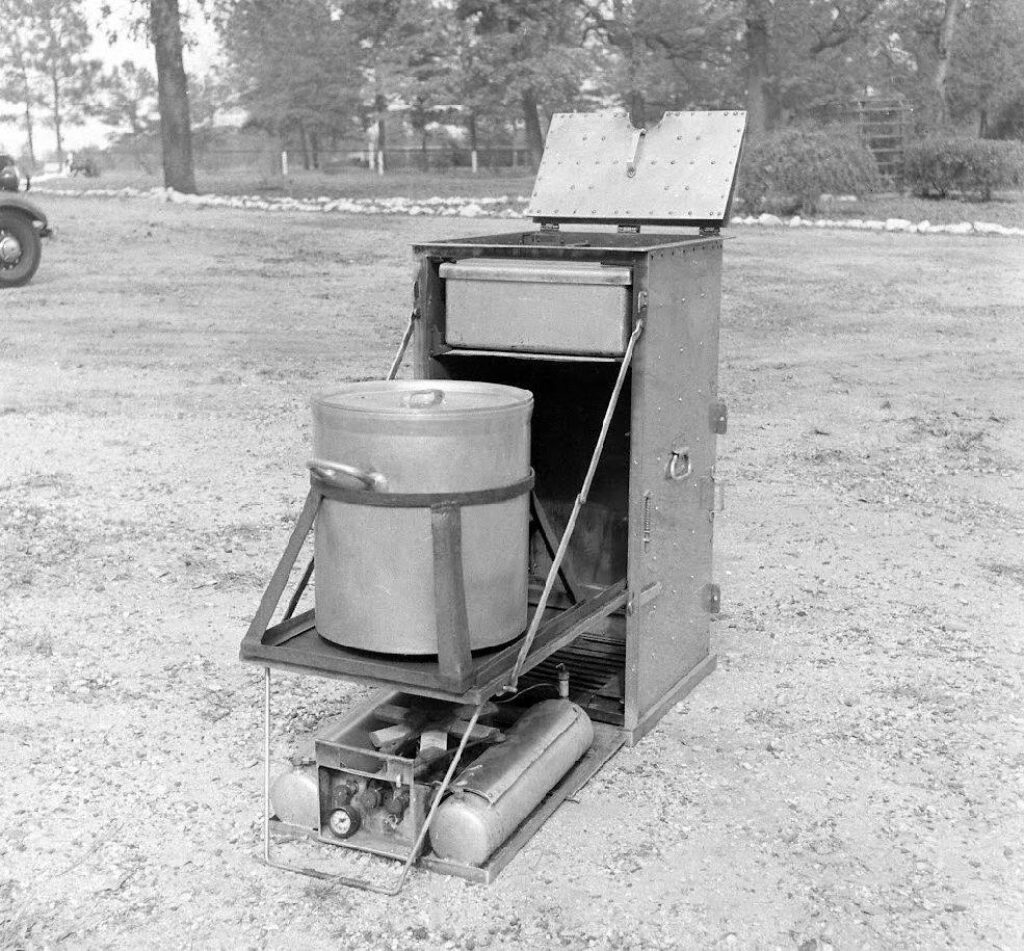
- Army cooks used M-1937 Field Ranges and insulated mermite cans to prepare and move hot meals toward combat positions.
- Troops fighting in the Hürtgen Forest briefly rotated from the front for turkey dinners before returning to battle.
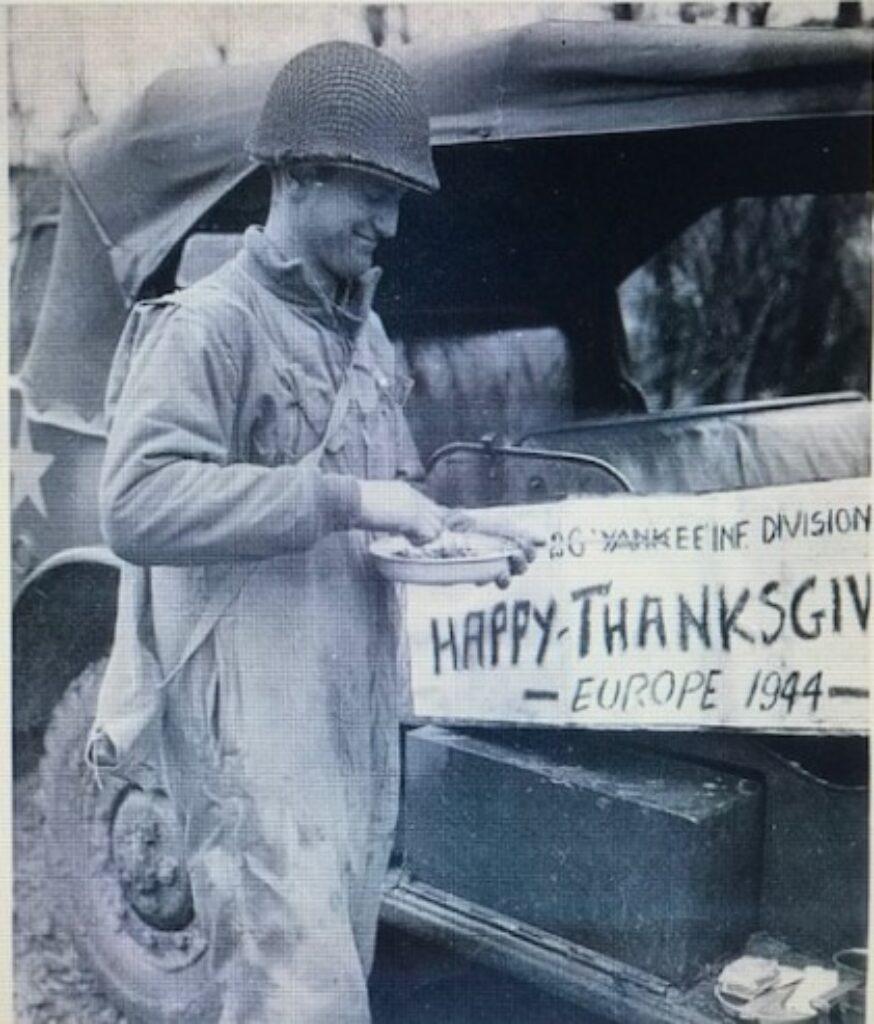
Gen. Dwight D. Eisenhower briefly gave Gen. George C. Marshall some competition for the mantle of “the organizer of victory” in 1944. Eisenhower ordered Thanksgiving turkey dinners with all the trimmings for nearly two million troops fighting to free Europe from Nazi domination.
The assignment demanded a formidable movement of food across the Atlantic and toward active combat zones. Despite some exceptions, the Army’s Quartermaster Corps and Transportation Corps met the challenge with gusto.
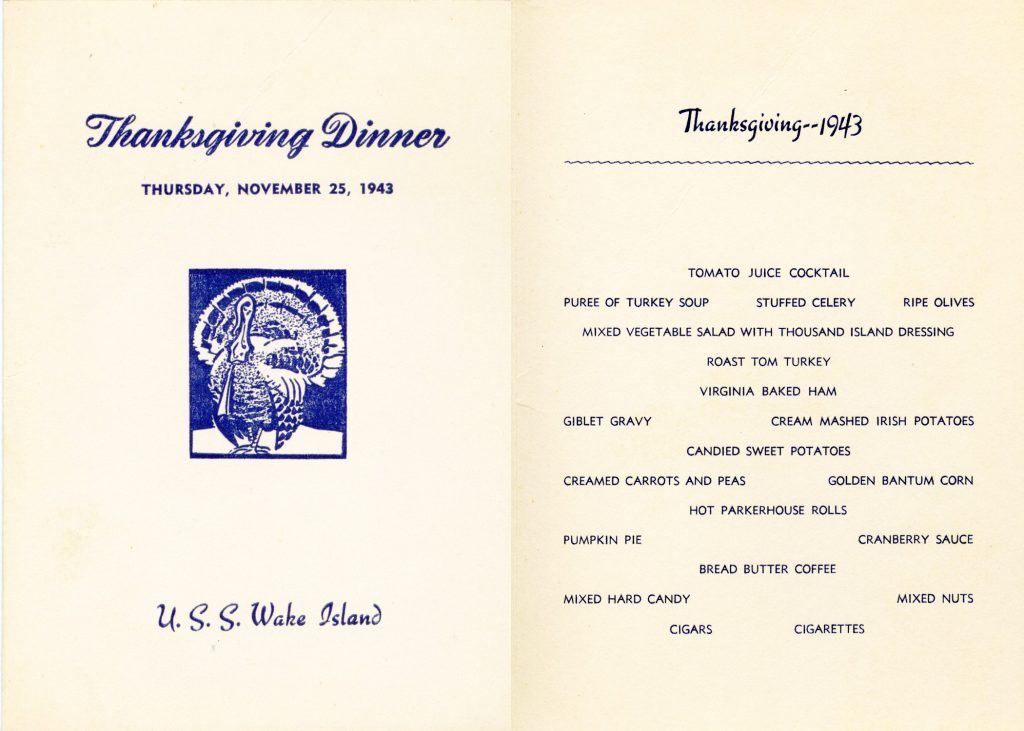
On Thanksgiving Day, nearly every G.I. stationed in Europe received an estimated 1.5 pounds of turkey per serving. The meal also included stuffing, mashed potatoes, string beans, corn, cranberry sauce, celery, hot rolls and pumpkin pie.
For soldiers accustomed to cold K-rations and C-rations, the feast offered a badly needed boost to morale. The usual treats of gum and cigarettes simply could not compete with a hot meal and pumpkin pie.
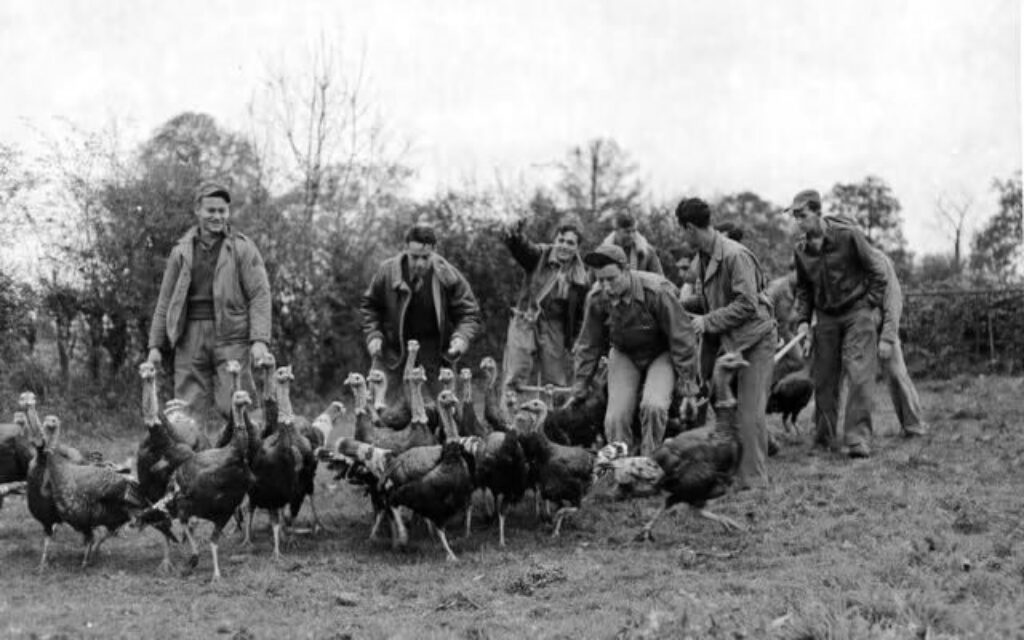
Planning began months before the holiday. The Army and the War Food Administration started organizing the Thanksgiving dinners in June 1944, and mass purchases of turkeys for shipment to Europe began the following month.
By October 1944, the refrigerated cargo ship SS Great Republic had been loaded with 1,604 tons of frozen turkeys. That amounted to 3,208,000 pounds of poultry bound for troops overseas.
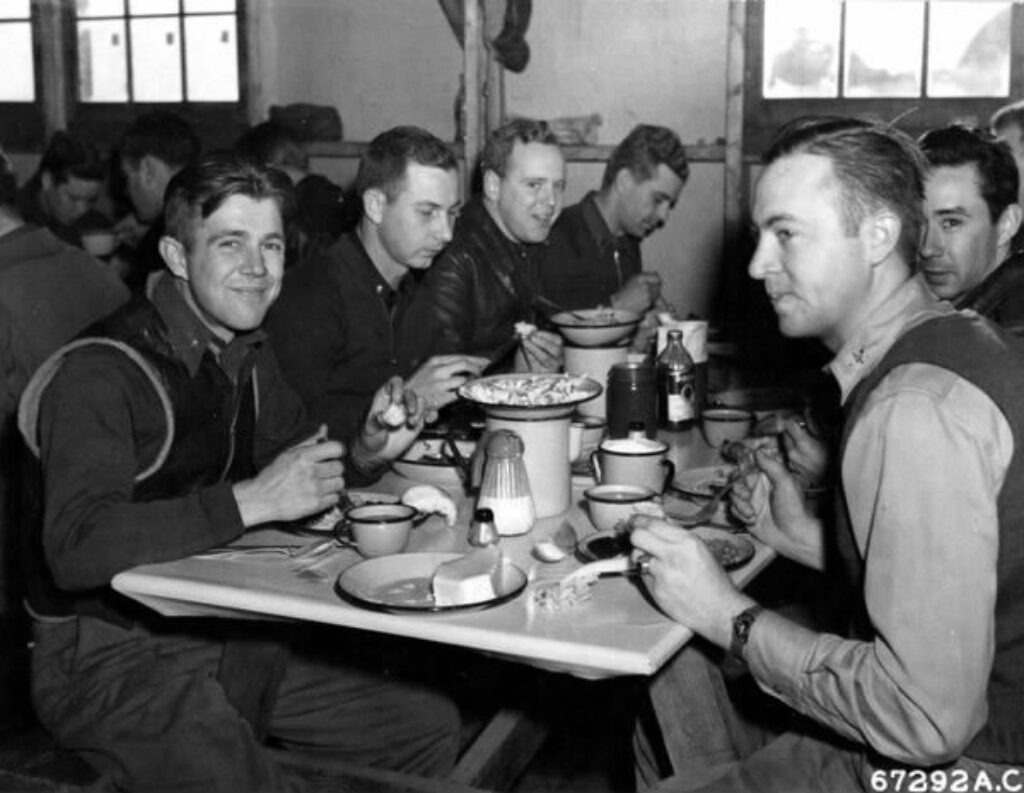
The ship left New York harbor for the French port of Le Havre. Once it arrived, the Transportation Corps assumed responsibility for moving the food toward the front using trucks, trains and whatever other transportation was available.
Delivering millions of pounds of turkey was only part of the mission. Army cooks still had to prepare thousands of meals close enough to the fighting that troops could rotate back, eat and return to their positions.
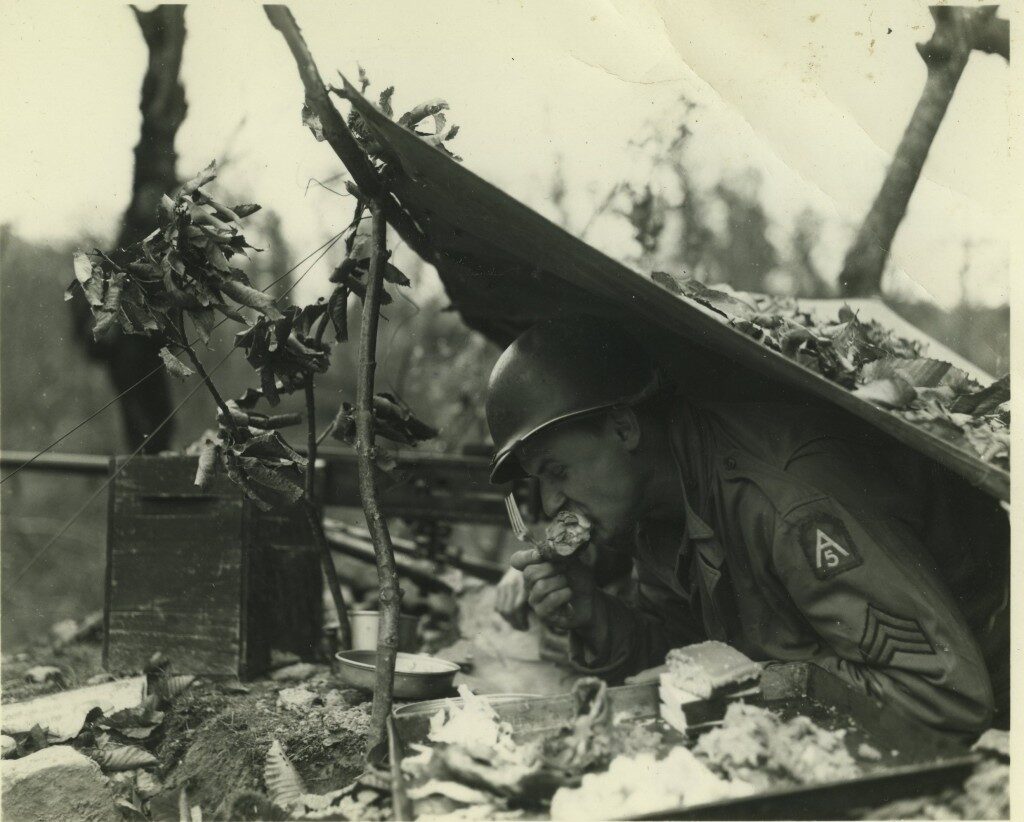
Much of the cooking was done on the gasoline powered M-1937 Field Range. It represented a major improvement over the Army’s older stoves, which relied on wood or coal.
The M-1937 could boil, roast, bake and fry. It could produce stews, coffee, bacon, baked goods and pies, and on Nov. 23, 1944, it was used to prepare thousands of turkey dinners.
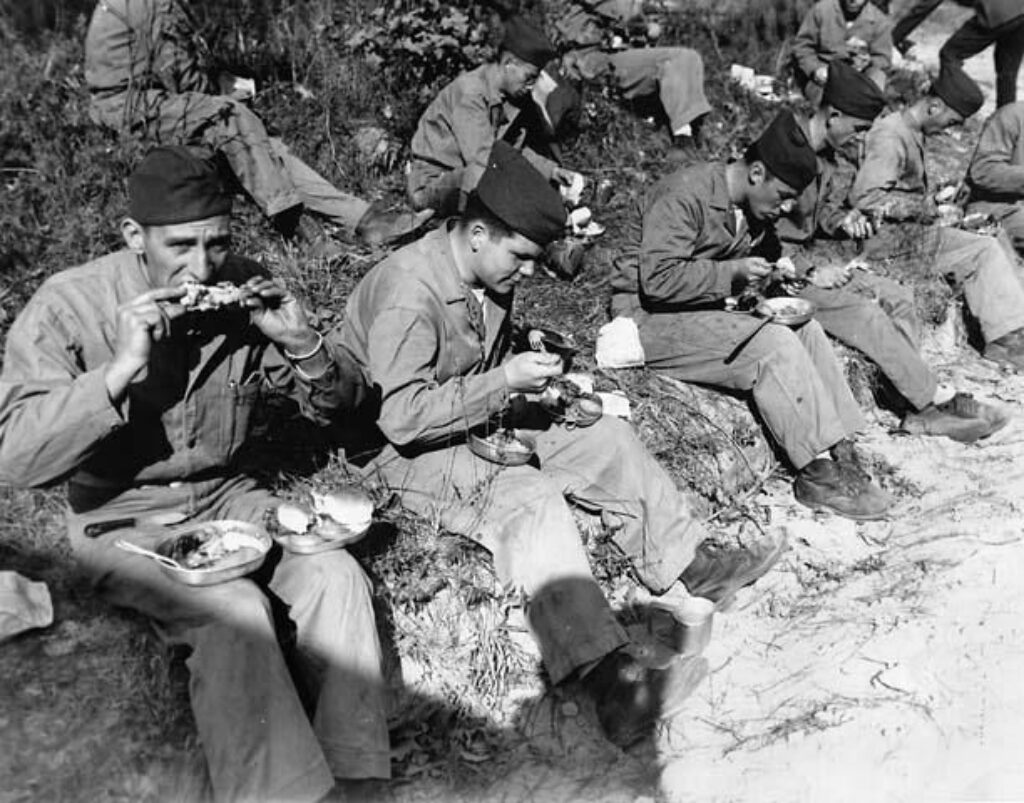
The ranges also came with five gallon mermite cans, which were insulated containers designed to keep food hot or cold. Those cans allowed meals to be carried forward into positions the stoves could not reach.
Eisenhower praised the operation during a Thanksgiving Day broadcast to the United States. He also kept the focus squarely on the unfinished fight against Nazi Germany.
“There is just one way to gain the peace we want. Each of us must work with ever-increasing devotion and effectiveness up to the day the enemy capitulates.”
For troops fighting inside the Hürtgen Forest, turkey provided a brief reprieve from a brutal campaign. The fighting had begun in mid September as part of Lt. Gen. Courtney Hodges’ effort to cross the Rur River and seize its vital dams.
MORE NEWS: Army Tests Faster Online Path for Soldiers to Replace Broken Barracks Furniture and Mattresses
First Army units became bogged down against an entrenched German enemy. The combat had left the 28th Infantry Division “combat ineffective,” while depleted divisions endured fierce fighting throughout November.
War correspondent Ernest Hemingway described German artillery turning the forest itself into a weapon. He called the campaign “Passchendaele with tree bursts.”
“The woods were close-planted fir trees,” Hemingway wrote, “and the shell-bursts tore and smashed them, and the splinters from the tree bursts were like javelins in the half-light of the forest.”
Even amid that tactical nightmare, troops tried to rotate to the rear for Thanksgiving dinner before returning to the front. Brig. Gen. Andrew McNamara, the First Army Quartermaster, later said, “Every man in First Army had a fine Turkey dinner on that day.”
Army Lt. Charles Scheffel of the 1st Infantry Division later recalled the surreal experience of receiving Thanksgiving dinner near his position in the Hürtgen sector. “The artillery was still going, but for a few minutes, we could almost pretend we were home.”
Join the Discussion
COMMENTS POLICY: We have no tolerance for messages of violence, racism, vulgarity, obscenity or other such discourteous behavior. Thank you for contributing to a respectful and useful online dialogue.