WHAT YOU NEED TO KNOW
- The Coast Guard commissioned USCGC Marvin Perrett during a ceremony in New Orleans on Nov. 19.
- Perrett carried troops toward shore at Normandy, southern France, Iwo Jima, and Okinawa during World War II.
- On D-Day, Perrett placed 36 soldiers ashore during the first landing at Utah Beach despite enemy fire.
- The cutter will join five other fast response cutters homeported in San Juan, Puerto Rico.
The Coast Guard’s newest fast response cutter carries the name of Marvin Perrett, an enlisted Coastie who transported American troops toward shore during some of World War II’s most famous invasions. His service included the landings at Normandy and Iwo Jima.
Perrett served as a coxswain aboard a Higgins boat, steering and directing the small landing craft and its three other crew members. Their mission was moving troops and vehicles from larger transport ships to beaches, often while under heavy fire.
Perrett later described the danger when students asked whether enemy forces had fired on him. He answered bluntly that they had, recalling machine gun bullets striking the water directly ahead of his boat.
“I‘d see out ahead of me the machine gun bullets hitting the water and cascading 10 feet high … anybody in their right mind you figure, ‘Man, let’s hold up here a minute fellows and let the guy run out of ammunition’ … but you can’t do that. You can’t stop.”
The Coast Guard commissioned the cutter named for Perrett during a ceremony in New Orleans on Nov. 19. The vessel’s commander, Lt. David Smith, said Perrett’s record must remain part of the ship and its crew.
“These stories are important, because Marvin is no longer with us, but we who are bearing his legacy on our ship need to hear these stories to be witness to what he did so that we can tell them again,” Smith said at the ceremony.
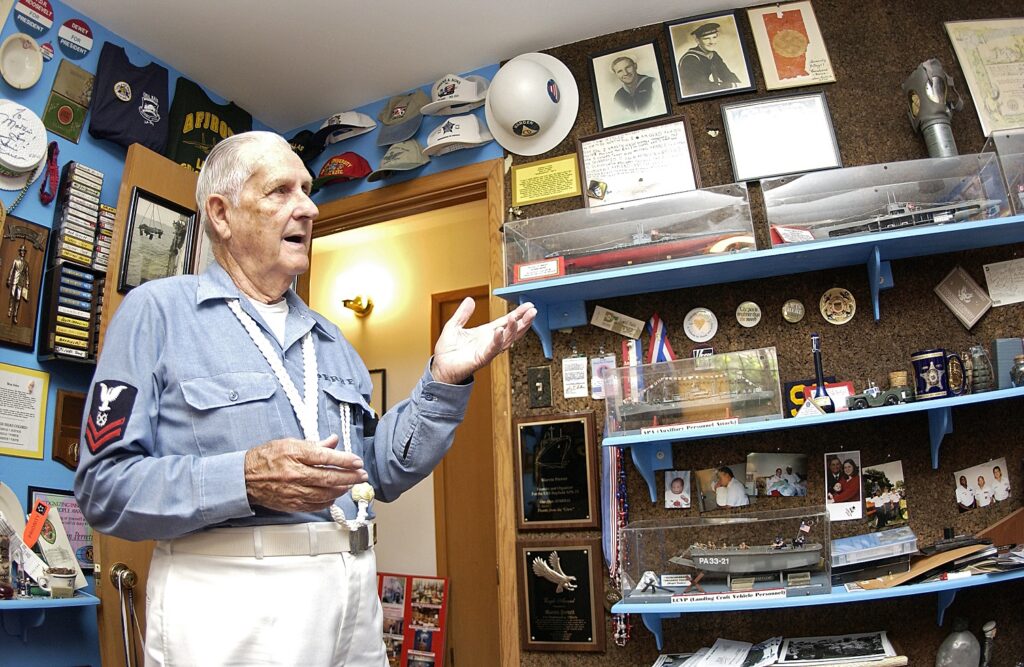
A New Orleans native, Perrett joined the Coast Guard in 1943, one day after his 18th birthday. On D-Day, he placed 36 soldiers ashore during the first landing at Utah Beach.
The incoming fire created a powerful temptation to release troops from the boat as quickly as possible. Perrett explained that dropping them in four or five feet of water could have caused them to drown, leaving him responsible for pressing closer to shore despite the danger.
“[W]e were scared to death. But I’ll tell you what; as a coxswain I could never show my fear to my three colleagues there,” Perrett said in 2003.
He also refused to display fear before the 36 troops, whether they were Army or Marine. Perrett recalled that the soldiers were as frightened as he was, but he would still have to return to the ship and face his own crew if he dropped them off too early.
Perrett later participated in the invasion of southern France before carrying Marines toward Iwo Jima. He described Iwo Jima as “much more treacherous” than Utah Beach.
While trying to avoid hitting a Marine, Perrett accidentally sank his Higgins boat. He and the other crew members went ashore and later caught a ride back to the USS Bayfield.
After Iwo Jima, Perrett participated in what he called a “diversionary tactical offense” during the battle of Okinawa. He took a boat filled with fully armed troops to within “about a city block from the beach,” laid down a veil of smoke, turned around, and brought the troops back aboard the ship.
Perrett recalled that the Okinawa maneuver ended “like nothing ever happened.” It was another demanding assignment in a Coast Guard career built around landing craft operations and combat missions across some of the war’s most dangerous beaches.
His time driving Higgins boats did not end with World War II. Perrett drove several onto beaches during reenactments in 1992 and 2007, with the latter event taking place only a few days before his death at age 81.
During the later years of his life, Perrett worked to raise awareness about the Coast Guard’s role in World War II. The newly commissioned cutter now carries that effort forward through his name and the stories its crew has been charged with preserving.
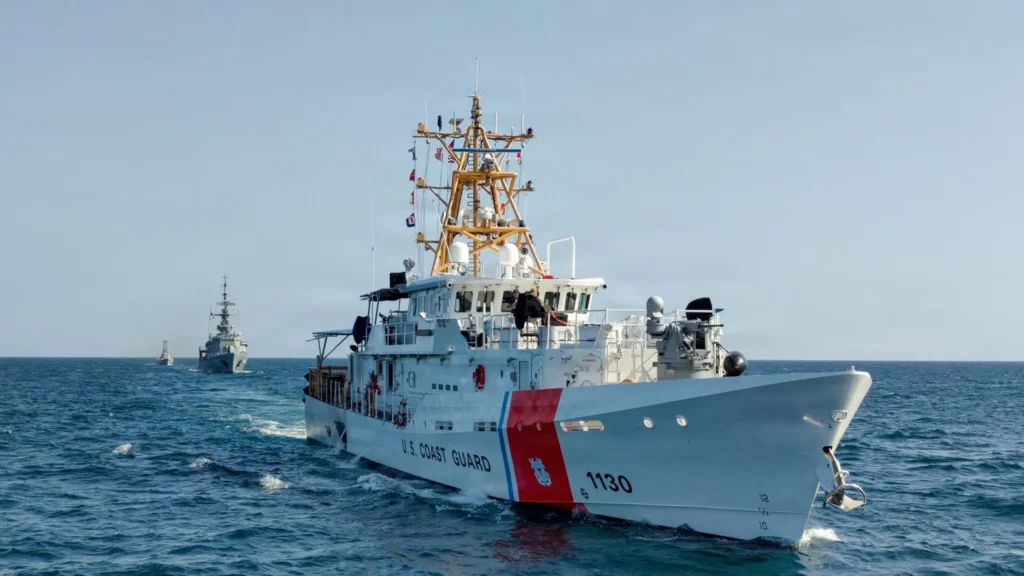
USCGC Marvin Perrett is the latest of 64 fast response cutters and will join five others homeported in San Juan, Puerto Rico. Fast response cutters are named for enlisted Coasties and conduct search and rescue, marine safety, drug interdiction, maritime law enforcement, and security missions.
Join the Discussion
COMMENTS POLICY: We have no tolerance for messages of violence, racism, vulgarity, obscenity or other such discourteous behavior. Thank you for contributing to a respectful and useful online dialogue.