As tensions rise in the Middle East, the United States has strategically shifted its military assets — including warships, fighter jets, and bombers — to reinforce its presence and protect Israel from potential Iranian attacks.
The move comes amid stern warnings from President Donald Trump, who recently declared on social media that his patience with Tehran is “wearing thin.”
Trump emphasized that the U.S. has "complete and total control of the skies over Iran," signaling a readiness to escalate if Iranian aggression intensifies.
While no offensive actions have been taken against Iran so far, the U.S. military has engaged in defensive operations to intercept and neutralize incoming Iranian missiles aimed at Israel.
Here's What They're Not Telling You About Your Retirement
The shifting of U.S. air power into and around the region is part of a broader deterrence and defense effort.
According to open-source monitoring group Aurora Intel, the U.S. Air Force has relocated several fighter jets and aerial refueling tankers into strategic positions throughout Europe, including England, Spain, Germany, and Greece.
On Tuesday, a dozen F-16 fighter jets were moved from Italy to Prince Sultan Air Base in Saudi Arabia, reinforcing air superiority in the region.
In addition to air power, American warships have played a critical role in intercepting threats.
This Could Be the Most Important Video Gun Owners Watch All Year
Over the weekend, the USS The Sullivans and the USS Arleigh Burke conducted strikes to neutralize Iranian ballistic missiles targeting Israel.
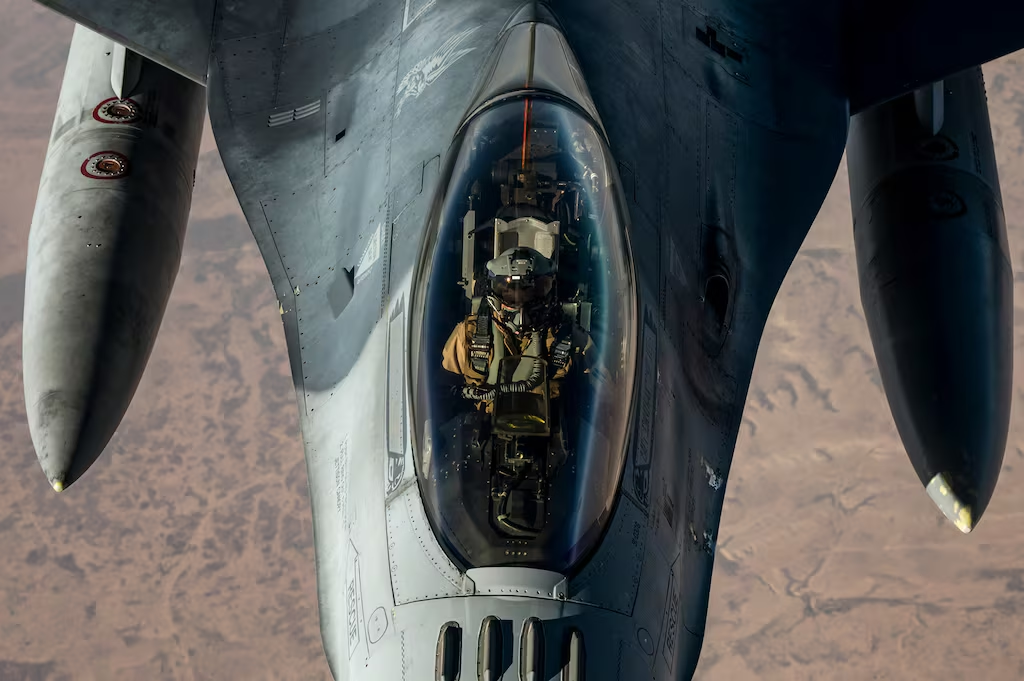
While the Arleigh Burke has since repositioned, the USS The Sullivans was joined in the Eastern Mediterranean by the USS Thomas Hudner to maintain defensive readiness.
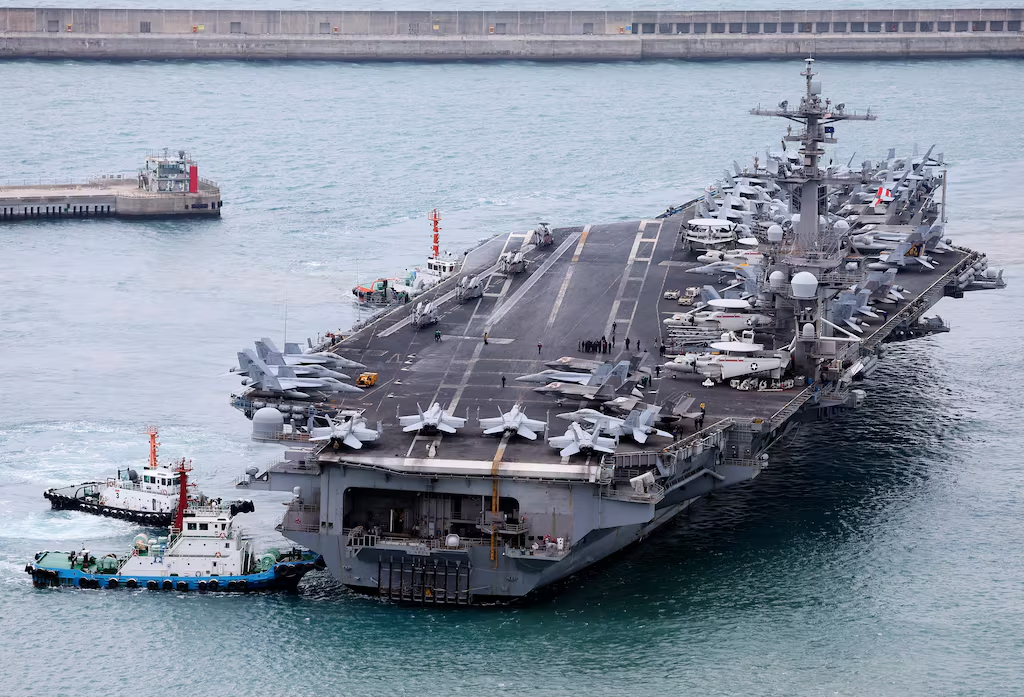
The Pentagon has also deployed aircraft carriers as part of its long-term posture in the region.
The USS Carl Vinson strike group is currently operating in the Arabian Sea, positioned to protect U.S. interests and personnel along the Gulf of Oman and the Persian Gulf.
While not directly involved in the defense of Israel, the carrier and its escorts are maintaining readiness to respond if needed. Meanwhile, the USS Nimitz is en route to replace the Vinson, with an expected overlap before the Vinson returns to its home port in San Diego.
Another aircraft carrier, the USS Gerald R. Ford, is preparing to deploy to the European theater.
Though this movement was previously scheduled, the presence of a third carrier group in proximity to the Middle East provides President Trump and national security leaders with additional strategic options.
On land, the U.S. military has taken steps to increase security for its personnel and installations across the Middle East. Bases are on high alert, and additional security measures have been implemented.
Families of U.S. service members stationed in the region have been given the option to voluntarily depart in anticipation of potential escalations, although officials report few have done so.
“We want to ensure that our people are safe,” Defense Secretary Pete Hegseth said during an appearance on Fox News Channel, without disclosing further details of the military deployments.
Currently, there are about 40,000 U.S. troops stationed throughout the Middle East — an increase from the usual 30,000.
That number spiked to 43,000 last October due to escalations in the Israel-Iran conflict and a surge in attacks on commercial and military vessels in the Red Sea by the Iranian-backed Houthi rebels in Yemen.
One weapon that has drawn particular attention amid rising tensions is the GBU-57 Massive Ordnance Penetrator — a 30,000-pound bunker-busting bomb capable of destroying fortified underground facilities like Iran’s Fordo nuclear site.
While Israel lacks the aircraft or firepower to deploy such a munition, the U.S. Air Force’s B-2 Spirit stealth bomber is specifically designed for that purpose.
At present, there are no B-2 bombers stationed in the region.
However, B-52 bombers at Diego Garcia are positioned to deliver smaller payloads. Should the need arise, the B-2s would need to make a grueling 30-hour round trip from Whiteman Air Force Base in Missouri, including multiple in-air refuelings, to deliver the bunker buster.
As Washington weighs its next move, the clear message is that the U.S. is prepared — not only to defend its allies and interests in the region but to take decisive action if Iranian provocations continue.
Join the Discussion
COMMENTS POLICY: We have no tolerance for messages of violence, racism, vulgarity, obscenity or other such discourteous behavior. Thank you for contributing to a respectful and useful online dialogue.