At first glance, the idea of robotic coyotes chasing birds off airfields might sound like the plot of a quirky sci-fi film.
But for the U.S. Army Corps of Engineers’ Engineer Research and Development Center (ERDC), it’s a cutting-edge response to a serious and costly problem: wildlife threatening military aircraft and infrastructure.
Birds and small animals are an ongoing hazard to military aviation, with the potential to cause millions of dollars in damage—or even endanger aircrew lives—when they collide with aircraft engines or other sensitive systems.
To tackle this issue, ERDC is developing a fleet of prototype unmanned ground vehicles (UGVs), nicknamed “Coyote Rovers,” that can patrol airfields and scare off birds and other wildlife.
Here's What They're Not Telling You About Your Retirement
In one now-iconic image released by the research center, three of these four-wheeled UGVs, each topped with a life-size plastic coyote, stand guard near the Navy’s elite Blue Angels fighter jets.
“That was, I guess, the money shot,” said Shea Hammond, a research biologist at ERDC working on the Robotic Characterization of Battlefield and Operational Environments.
Alongside Dr. Jacob Jung, a research wildlife biologist specializing in Bird/Wildlife Aircraft Strike Hazard (BASH), Hammond has spent five years refining the concept of robotic wildlife deterrents.
The UGVs remain in the prototype phase, but field tests have already taken place at several airfields, including Naval Air Station Pensacola in Florida, home base of the Blue Angels.
This Could Be the Most Important Video Gun Owners Watch All Year
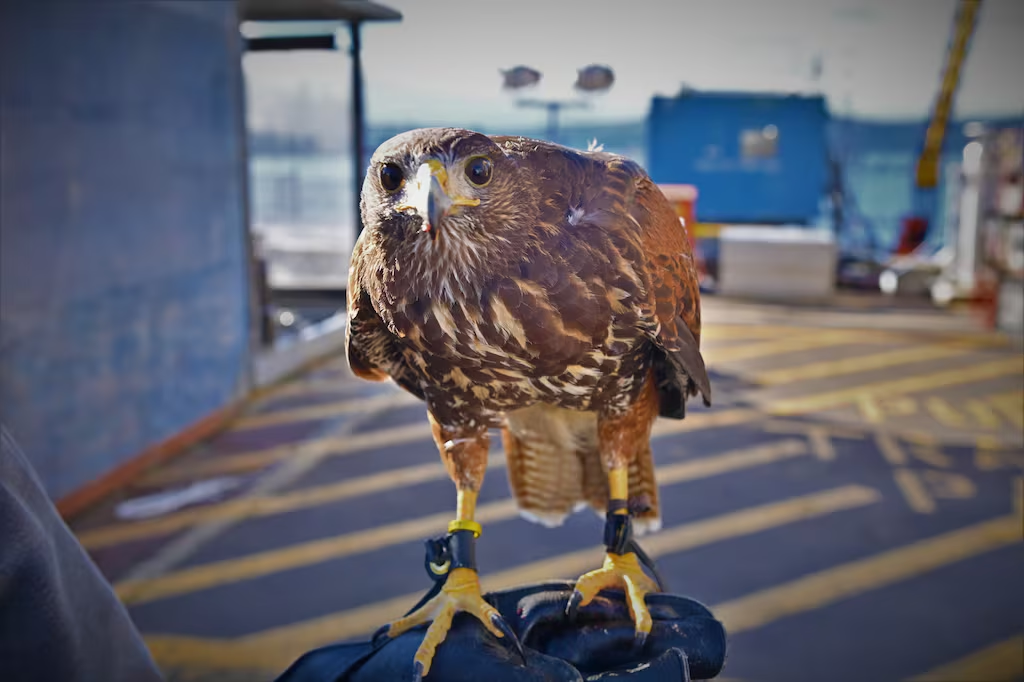
Wildlife interference with military operations has long demanded innovative—sometimes unusual—solutions. At Naval Base Kitsap in Bangor, Washington, for example, the Navy has used trained hawks to chase off seagulls damaging submarines and harassing workers.
The Air Force, meanwhile, employs bird-detecting radar systems and maintains a bird strike risk index that ranks threat levels from zero to eight.
The military has even experimented with GPS tracking collars on coyotes and mapping prairie dog colonies to understand and mitigate wildlife impacts.
But the Coyote Rovers represent a new evolution in deterrence. “They basically have the same functionality as any other drone,” Hammond said.
“We can program areas we want to exclude it from going, such as the airfield itself. We had worked on docking stations and recharging stations so it can operate on a programmed timer, so it can have utility for multiple days.”
Future iterations of the system could incorporate artificial intelligence and machine learning to allow the rovers to identify specific species and respond with tailored tactics.
The vehicles could also be enhanced to handle various types of terrain and weather, broadening their utility beyond airfields.
“There’s potential for these to be used in many other places,” said Hammond, noting that the Army Corps of Engineers also maintains locks, dams, and other infrastructure that can be damaged by wildlife nesting and defecating on sensitive areas.
Traditionally, the Corps has used live dogs to deter wildlife, but robotic alternatives offer more consistency and less overhead.
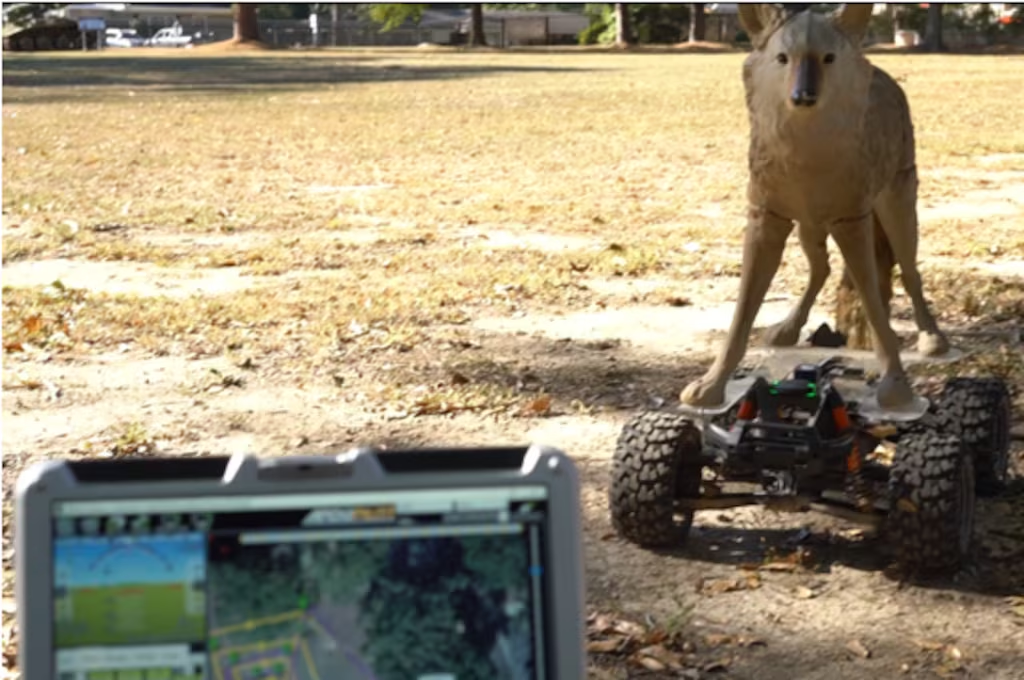
Jung added that the same technology could be applied to aquatic environments by adapting the system to boats or hovercrafts.
At some remote installations, upgraded versions of the rover might even function as robotic sentries or security patrols.
Early prototypes explored various robotic platforms, including Boston Dynamics’ dog-like “Spot.” But the team quickly found limitations with the quadruped approach.
“What we found out quickly was, because it had such a slow approach speed, that it did more of just pushing animals out of the way once it finally got close enough to them, than it did really scaring them off,” Jung said.
Instead, the researchers settled on a more affordable and effective base: the Traxxas X-Maxx, a high-performance remote-control vehicle capable of reaching speeds up to 20 miles per hour.
Combined with a realistic coyote figurine from a forestry supply vendor, the prototype cost between $2,500 and $3,000—far less than many high-end drones or robotic systems.
The Coyote Rovers have already been tested at other military installations, including Fort Campbell, Tennessee, and Naval Air Station Whiting Field, Florida, where helicopter pilots for the Navy, Marine Corps, and Coast Guard train.
Beyond direct wildlife deterrence, the rovers could generate significant cost savings. Regular mowing of airfield grass is a major expense aimed at deterring birds, and the UGVs might extend the time between mowing cycles.
“Even at a small number of airfields, if you can give them one more week between mowing, that ends up being a huge [cost savings],” Hammond explained.
“And so, can these systems provide that deterrence, to provide them an extra week or an extra two weeks on maintenance.”
Further testing of the robotic coyote rovers is expected this summer—pending funding approval.
If successful, this unconventional blend of robotics and wildlife biology could become a standard tool for military and civil agencies alike, transforming how the U.S. safeguards its skies and infrastructure.
Join the Discussion
COMMENTS POLICY: We have no tolerance for messages of violence, racism, vulgarity, obscenity or other such discourteous behavior. Thank you for contributing to a respectful and useful online dialogue.