Retired Air Force Col. Nicole Malachowski once soared above the clouds in her F-15E Strike Eagle, a pioneering figure in U.S. military aviation as the first woman to fly with the elite U.S. Air Force Thunderbirds.
But behind the accolades and the cockpit glass, a silent adversary was taking hold — one that would ground her career, upend her life, and drive her to become an outspoken advocate for a cause the military system had long overlooked: tick-borne illness.
It began subtly. During a routine training mission in 2012, Malachowski was struck by a sudden wave of brain fog. Inexplicably, she couldn’t find the radio switch — a control she’d used daily for 15 years.
It was the first sign of what would eventually become more than 60 debilitating symptoms, from neurological issues to intense night sweats.
Here's What They're Not Telling You About Your Retirement
Her once-proud flying career unraveled as her health declined. Years of misdiagnoses followed until, after appeals to civilian specialists, Malachowski received a stunning verdict: she had not one, but five tick-borne illnesses, including Lyme disease.
Her final years in the service were marked not by honors but by isolation. “My retirement certificate,” she said, “was mailed to my home.”
Despite her distinguished service — commanding the 333rd Fighter Squadron and later serving as executive officer of the Obama-era Joining Forces initiative — Malachowski’s medical journey revealed serious gaps in the military’s approach to diagnosing and treating tick-borne diseases.
“I think I may have finally made a difference,” she wrote in a reflective LinkedIn post after one of her most impactful victories: helping launch the first tick-borne illness prevention program across the Air National Guard.
This Could Be the Most Important Video Gun Owners Watch All Year

That initiative, rolled out in May during Lyme Disease Awareness Month, has already reached over 100,000 Guardsmen, educated more than 100 doctors, and trained over 1,000 medical technicians.
Col. Russell Kohl, air surgeon for the Missouri Air National Guard, praised the program’s wide-reaching impact.
“Statistically, it is anticipated that these efforts are likely to have prevented at least 30 cases annually of tick-borne illness in [Air National Guard] personnel,” he wrote.
“These impacts positively impact our military readiness and national security.”
But Malachowski’s advocacy stems from deep frustration. Despite being one of the Air Force’s most decorated pilots, she said she pays for private health care out of pocket, no longer trusting the military’s medical system.
When she developed the classic bull’s-eye rash after a tick bite in 2012, a flight surgeon dismissed the possibility of Lyme disease, insisting there were no known cases in North Carolina.
A year later, when another tick embedded itself in her leg, she was told to “wait and see” rather than test for illness.
Malachowski scoffs at the claim that tick-borne illness isn’t a serious military concern. “We know the tests aren’t any good, and we know people get undiagnosed and misdiagnosed all the time,” she said.
“And we know we’re not testing for all tick-borne illnesses, we’re only testing for Lyme. And Lyme barely scratches the surface.”
By 2016, Malachowski and her husband had documented 63 symptoms. She was bedridden, housebound, and unable to speak. Her treatment at Massachusetts General Hospital required a PICC line to deliver medication directly to her heart.
Today, even with improved health and a flourishing career as a motivational speaker and health advocate, she says she’s operating at “50-60% of what [she] used to be.”
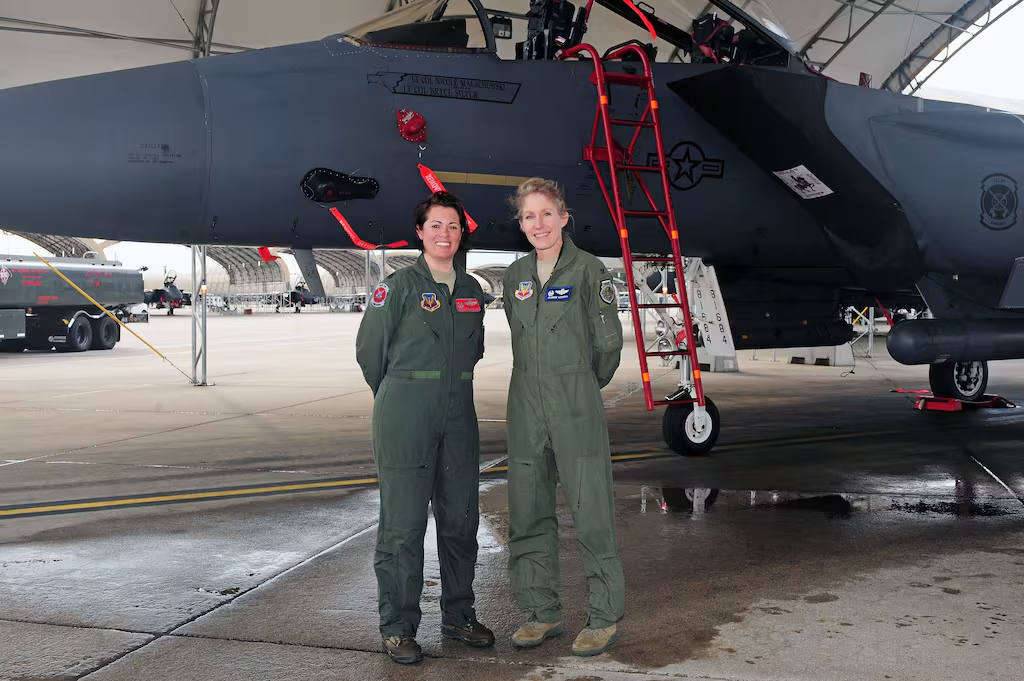
Despite these challenges, Malachowski remains deeply involved in reshaping the system that failed her. Her advocacy helped rewrite Air Force regulations for ill service members.
She’s also contributed to a major National Academy of Sciences report on chronic Lyme disease treatments, published this past May.
Still, the road ahead is filled with obstacles. Many military members remain underserved, misdiagnosed, and left in the dark about tick-borne threats.
Malachowski has pushed for better awareness training through the Defense Health Agency (DHA), yet her outreach has gone unanswered.
In response to media inquiries, the DHA pointed to a handful of online resources and an awareness event called “Bugapalooza.”
“The Defense Health Agency has promoted and continues to share a wealth of resources designed to educate and inform beneficiaries about bug-borne illnesses and how to prevent them,” the agency said in a statement.
But to Malachowski, the problem goes beyond brochures and blog posts — it’s about accountability and action.
“I still go through the grief cycle,” she said.
“I lost my career, I lost my identity, and I lost my means for providing for my family, and I had to reinvent myself alone. And this is happening to young airmen, and that pisses me off.”
For Nicole Malachowski, the mission has changed. She may no longer fly fighter jets, but she’s still battling — not against enemy aircraft, but against silence, stigma, and a system in dire need of reform.
Join the Discussion
COMMENTS POLICY: We have no tolerance for messages of violence, racism, vulgarity, obscenity or other such discourteous behavior. Thank you for contributing to a respectful and useful online dialogue.