The U.S. Navy has awarded Pratt & Whitney a significant contract modification valued at nearly $2.9 billion to produce more engines for the F-35 Joint Strike Fighter program.
This award highlights both the Navy’s continued investment in modern air power and the central role Pratt & Whitney plays in supplying the advanced engines that make the F-35 one of the most capable fighters in the world.
Pratt & Whitney, which is a subsidiary of RTX, will manufacture and deliver 141 F135 engines.
These engines will support the Air Force, the Marine Corps, and the Navy, while also fulfilling commitments to international partners in the F-35 program and to additional foreign military customers.
Here's What They're Not Telling You About Your Retirement
Because of the global reach of the F-35, this contract carries strategic importance beyond the U.S. military alone.
The Navy anticipates that Pratt & Whitney will complete delivery of these engines by February 2028.
Work will be spread across several facilities located in Connecticut, Indiana, Washington, Maine, and other states.
This distribution reflects the extensive industrial base required to produce the engines and shows how defense contracts often bolster regional economies while supporting national security.
This Could Be the Most Important Video Gun Owners Watch All Year
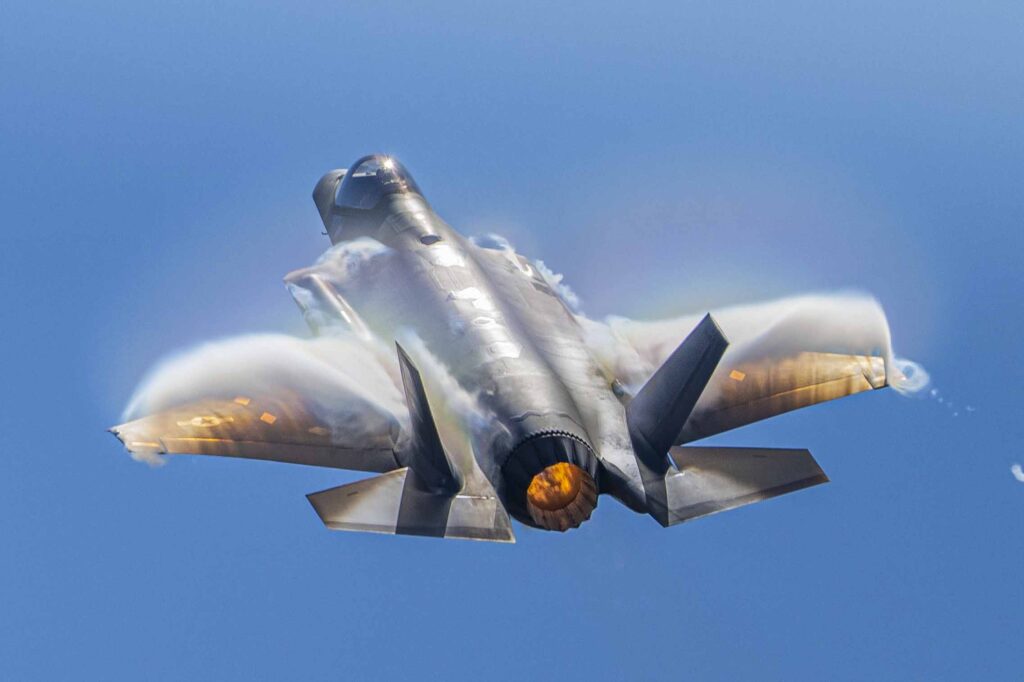
These engines will be installed in the 18th lot of F-35 fighters currently being built by Lockheed Martin, which carries primary responsibility for assembling the jets.
Most of that work is being conducted at Lockheed’s massive facility in Fort Worth, Texas. The Navy had already awarded Lockheed a separate contract in December 2024 worth up to $11.8 billion to produce and deliver 145 Lot 18 F-35s by the end of June 2027.
Taken together, these contracts demonstrate the scale of the Joint Strike Fighter program and its importance to American and allied air forces.
Funding for the new engines is being shared across several sources. The Navy is allocating nearly $656 million in procurement funding spread across fiscal years 2024 and 2025.
At the same time, the Air Force is contributing about $614.6 million. Foreign military customers are expected to add $513.7 million, while non-U.S. participants in the F-35 program will provide $228.5 million.
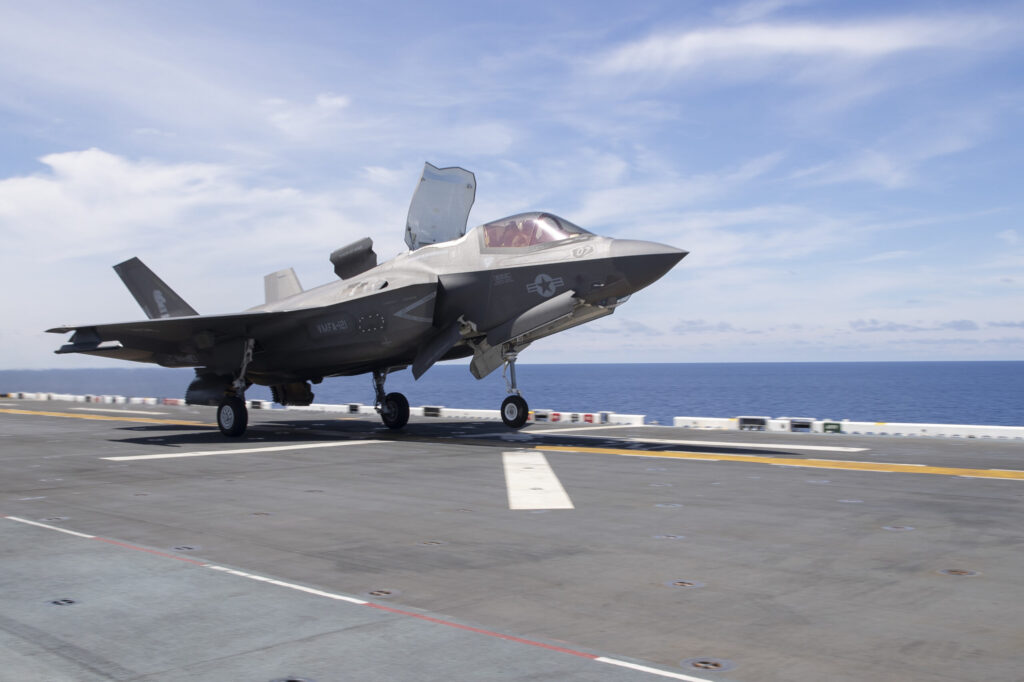
This cooperative financial structure underscores the F-35’s status as not only an American weapons system but also a multinational defense project designed to enhance interoperability among allies.
While Pratt & Whitney is securing this engine production contract, Boeing is also receiving new work from the Navy.
The service has awarded Boeing a $315 million sole-source deal to repair landing gear for the F/A-18E/F Super Hornet fighter jets, another mainstay of naval aviation.
That maintenance work will be carried out in several locations, including St. Louis, Quebec in Canada, and Fort Walton Beach, Florida.
The Navy has said the work should be complete by September 2029. Because the Super Hornet remains a crucial aircraft for carrier-based operations, keeping its fleet ready for service is equally vital for U.S. naval aviation.
In addition, Lockheed Martin secured a smaller but still important contract modification from the Navy on Thursday. This $27 million award will allow Lockheed to acquire special tooling and test equipment that will support the Joint Strike Fighter program.
Even though the amount is relatively modest compared to the multibillion-dollar engine and aircraft contracts, it illustrates the ongoing attention to detail needed to keep such a complex program running smoothly.
Responsibility for these awards is split between different commands. Naval Air Systems Command, headquartered at Patuxent River, Maryland, is overseeing the contracts with Pratt & Whitney and Lockheed Martin.
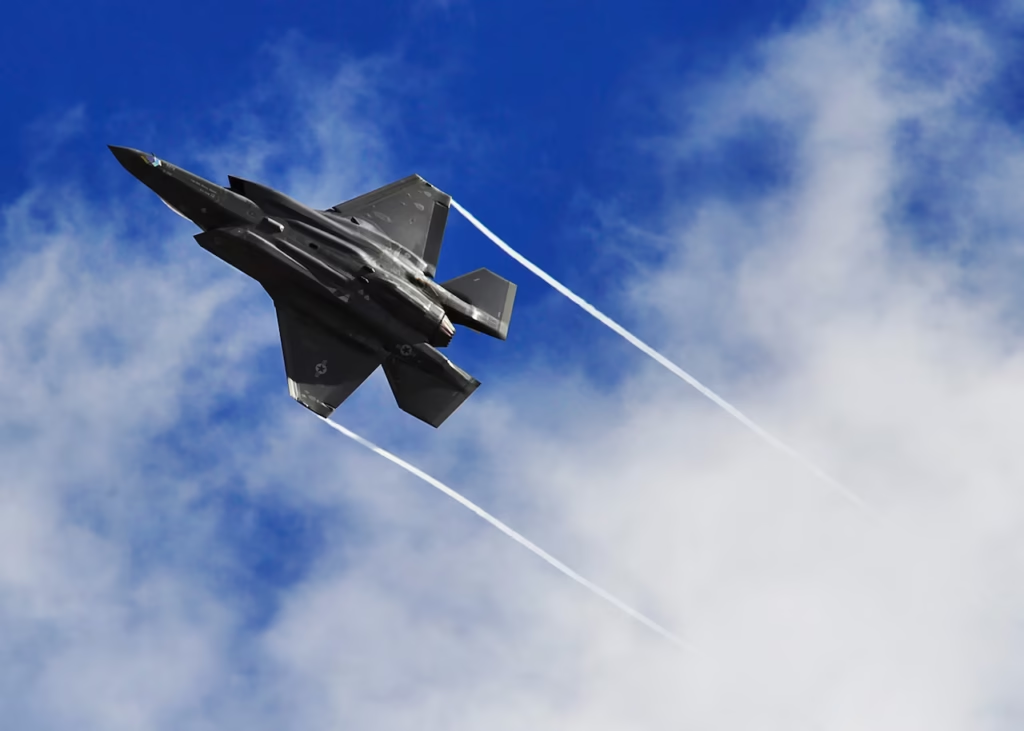
Meanwhile, Naval Supply Systems Command Weapon Systems Support in Philadelphia is handling the deal with Boeing for the Super Hornet landing gear.
This division of authority reflects the scale and complexity of military acquisition, where specialized commands manage specific responsibilities.
Overall, the Navy’s recent announcements emphasize the long-term commitment to both the F-35 and the F/A-18 programs.
Because these aircraft form the backbone of U.S. and allied tactical aviation, investments in engines, repairs, and equipment are necessary to maintain readiness.
At the same time, the contracts demonstrate how large defense programs sustain jobs and industries across the United States and in partner nations.
As the F-35 enters Lot 18 production and the Super Hornet fleet continues to receive support, the Navy is signaling that it intends to ensure both current and next-generation aircraft remain ready for the challenges ahead.
Join the Discussion
COMMENTS POLICY: We have no tolerance for messages of violence, racism, vulgarity, obscenity or other such discourteous behavior. Thank you for contributing to a respectful and useful online dialogue.