The USS George Washington has once again arrived at its Japanese homeport, marking an important step in its renewed role in the Indo-Pacific region.
The Nimitz-class aircraft carrier docked at Yokosuka Naval Base on Saturday after spending several months at sea, a Navy spokesperson confirmed.
Its return highlights the ship’s enduring presence in the Pacific and its significance as a forward-deployed asset for the United States.
The carrier left Yokosuka on June 10 for its first official deployment since returning to Japan in November.
Here's What They're Not Telling You About Your Retirement
That move came after nearly a decade away, during which time the ship underwent its Refueling Complex Overhaul, a lengthy maintenance period that ensures the carrier remains capable of fulfilling its demanding operational duties.
Because this overhaul is both technically challenging and time-intensive, the George Washington was absent from its former station for years before rejoining the region.
The George Washington previously called Yokosuka home between 2008 and 2015, and during those years it played a central role in supporting American strategic interests in Asia.
Its renewed presence is therefore both symbolic and practical, showing that the U.S. remains committed to sustaining a robust naval presence in the Pacific while also modernizing its fleet.
This Could Be the Most Important Video Gun Owners Watch All Year
During the most recent patrol, the George Washington carried out flight operations in the Philippine Sea, which served as both a demonstration of its capabilities and an opportunity for pilots and crew to maintain operational readiness.
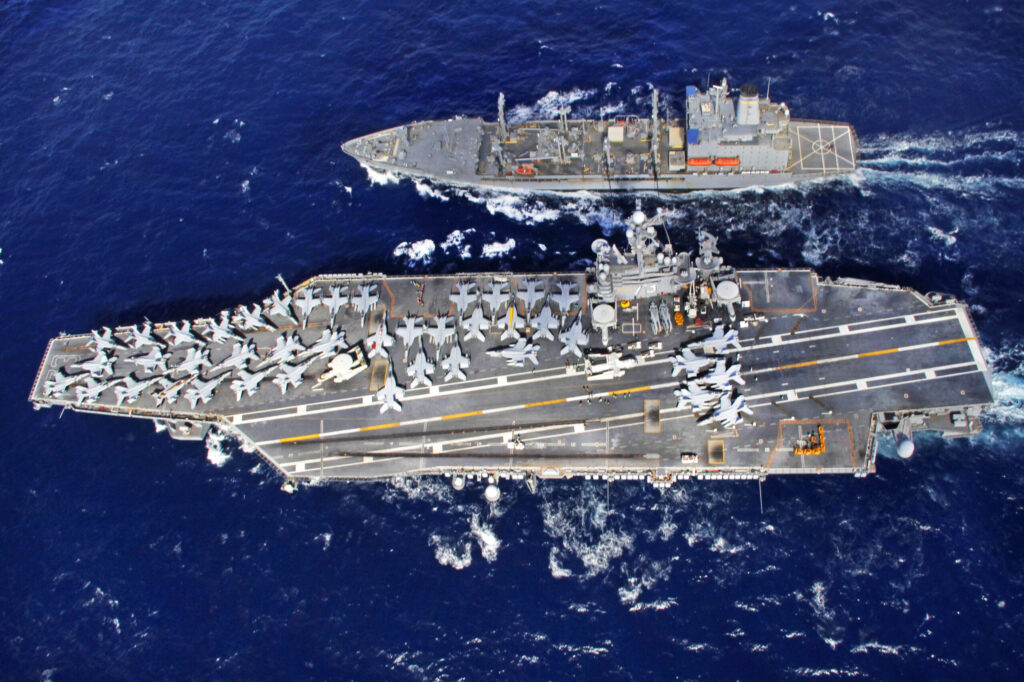
At the same time, the carrier made scheduled port visits to Manila and Guam, strengthening relationships with regional partners.
The highlight of the deployment came with its participation in the Talisman Sabre exercise off the coast of Australia, where American forces trained alongside allied militaries.
Exercises of this kind are important because they build trust and interoperability among partners while also showcasing shared commitment to regional security.
The deployment, however, was not without hardship. In late July, a George Washington sailor was reported missing while the ship was transiting the Timor Sea. The incident set off an intensive search and rescue operation.
The U.S. Navy’s Helicopter Sea Combat Squadron 12, Helicopter Maritime Strike Squadrons 77 and 51, the cruiser Robert Smalls, the destroyer Shoup, and fixed-wing aircraft from Carrier Air Wing 5 all participated in the effort.
Despite these attempts, Aviation Boatswain’s Mate (Launch/Recovery Equipment) Airman Jose Antonio Rivera Lynch IV was eventually assumed overboard, and recovery operations were called off. The tragic loss underscored the risks sailors face while serving at sea and the human cost that sometimes accompanies strategic operations.
The George Washington Carrier Strike Group is composed of the carrier itself, Carrier Air Wing 5, and Destroyer Squadron 15. Carrier Air Wing 5 includes the first F-35C Lightning II squadron to be forward-deployed to Japan, marking a significant step in the modernization of American air power in the region.
Because the strike group is built to operate as an integrated fighting force, its combination of advanced aircraft, surface combatants, and logistical support makes it one of the most formidable naval groupings in the world.
The carrier’s return also represents a major rotation within U.S. naval operations in the Pacific. In 2024, the George Washington replaced the USS Ronald Reagan, which sailed back to Bremerton, Washington, to undergo its own maintenance cycle.
This rotation ensures that the U.S. Navy can maintain a continuous and capable presence in the Pacific while still addressing the long-term care and readiness of its fleet.
The return of the George Washington to Japan is therefore more than a logistical event. It signifies continuity, resilience, and the careful balance the U.S. Navy must strike between global commitments and fleet modernization.
As the ship resumes its duties in the Indo-Pacific, it will serve both as a deterrent to potential adversaries and as a reassurance to allies that American power remains steadfastly committed to regional stability.
Join the Discussion
COMMENTS POLICY: We have no tolerance for messages of violence, racism, vulgarity, obscenity or other such discourteous behavior. Thank you for contributing to a respectful and useful online dialogue.