U.S. Central Command announced on Tuesday the creation of a new task force designed to accelerate the process of delivering combat-ready technology to service members in the field.
The initiative reflects a growing recognition within the Pentagon that troops need rapid access to innovation in order to remain competitive and prepared in today’s fast-changing security environment.
The Rapid Employment Joint Task Force will be led by Joy Shanaberger, CENTCOM’s chief technology officer.
According to the announcement, the task force will bring together a broad range of expertise while focusing on logistics, software development, and what officials call “tech diplomacy.”
Here's What They're Not Telling You About Your Retirement
By organizing efforts across different areas of military technology, the group aims to simplify how new systems are integrated and ensure that the capabilities arrive in the hands of service members much faster than before.
Adm. Brad Cooper, CENTCOM commander, emphasized the importance of this effort.
“The new task force will synergize existing efforts among our Service components and support Secretary Hegseth’s drive to rapidly equip our warriors,” Cooper said in a release.
His words underline the broader strategy of ensuring that America’s armed forces not only keep pace with global competitors but also maintain an edge by fielding new systems quickly and effectively.
This Could Be the Most Important Video Gun Owners Watch All Year
The task force will include specialists from a wide variety of fields, including data integration, logistics, warfighter integration, resourcing, and information systems.
The diversity of expertise is expected to play a key role in ensuring that innovations are not stalled by bureaucratic hurdles. The central goal is simple yet ambitious: deliver viable and tested technology to units within 60 days of identifying the need.
“Our goal is to rapidly deliver innovation, meaning putting combat-credible capability into the hands of our warfighters in 60 days or less. Equipping skilled warfighters faster with cutting-edge capabilities will deter bad actors,” Shanaberger stated in the release.
Her comment reflects not only the urgency of the mission but also the belief that speed itself can serve as a deterrent.
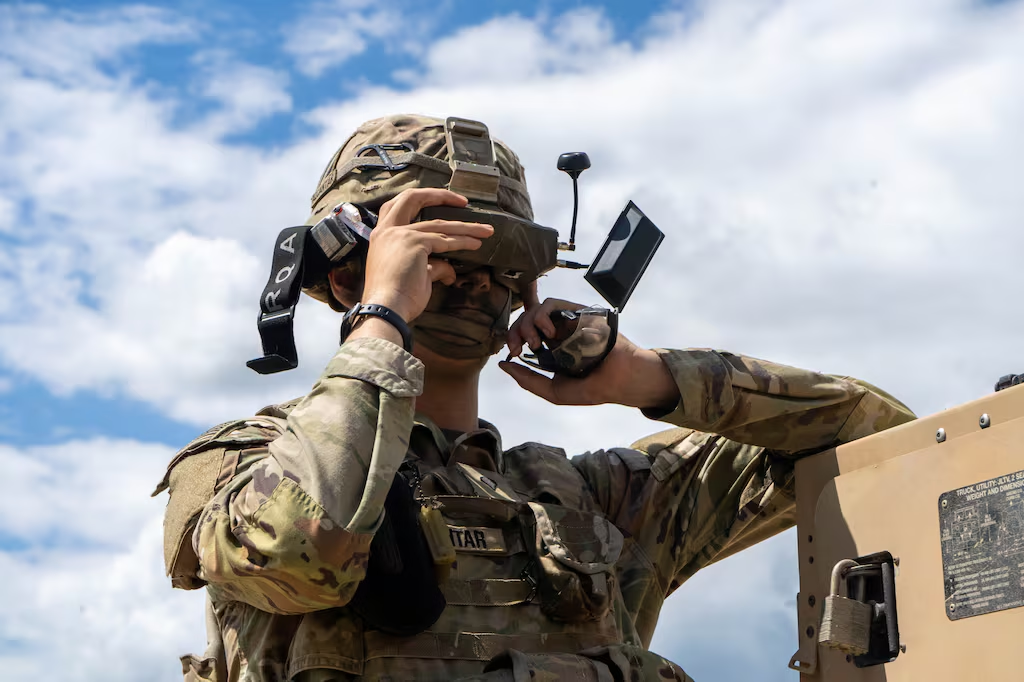
If America’s adversaries know that U.S. troops can quickly field new technologies, they may be less willing to provoke or escalate.
This announcement also connects directly to a Pentagon-wide push to reform how the military acquires and fields drones.
In a memo released on July 10, Defense Secretary Pete Hegseth outlined a plan to overhaul drone-buying practices.
That memo laid out three broad goals. First, strengthen the American drone manufacturing base so the nation does not depend on foreign suppliers.
Second, deliver thousands of low-cost systems to units across all branches of the military over the next few years. Third, ensure that drone operations are integrated into training programs, preparing troops to use these tools effectively in real-world operations.
The establishment of the Rapid Employment Joint Task Force therefore comes at the same time that the Pentagon is rolling out major initiatives to improve how the military adapts to new technologies.
It is not only about speeding up delivery but also about creating a culture where innovation becomes routine rather than an exception.
Recent developments across the armed services show how seriously these goals are being pursued.
The Navy, for example, has already awarded contracts for Collaborative Combat Aircraft drones to major defense contractors, a move that indicates long-term investment in unmanned systems that can work alongside manned aircraft.

Meanwhile, the Army conducted a trial that placed short-range unmanned systems directly into a field exercise, testing how they perform under realistic conditions.
These efforts demonstrate that the military is not only acquiring new systems but also making sure they can be seamlessly integrated into the way troops operate.
Adding to this momentum, the Pentagon earlier this month debuted its first “Top Drone” school during a four-day event. The program trains operators to master emerging drone technologies and prepares them for the challenges of modern combat.
By creating an environment where drone operations are treated with the same seriousness as other combat disciplines, the Pentagon signals its belief that these systems will be central to future conflicts.
Taken together, these initiatives highlight a shift in mindset. Military leaders recognize that adversaries are also investing in unmanned systems and other emerging technologies.
To stay ahead, U.S. forces must not only innovate but also ensure that those innovations reach the field without delay.
The Rapid Employment Joint Task Force, with its promise of delivering new capabilities in 60 days or less, represents one of the clearest steps yet toward this goal.
Ultimately, the creation of this task force underscores the Pentagon’s determination to adapt faster than its rivals.
By streamlining logistics, leveraging diverse expertise, and prioritizing speed, CENTCOM is betting that American troops will gain a decisive edge.
Because innovation delivered on time can shape the outcome of conflicts, the pressure is now on this new team to prove that it can meet its ambitious targets.
Join the Discussion
COMMENTS POLICY: We have no tolerance for messages of violence, racism, vulgarity, obscenity or other such discourteous behavior. Thank you for contributing to a respectful and useful online dialogue.