The U.S. Navy decommissioned half of its Avenger-class minesweepers in the Middle East last year as it pivoted to a newer, more capable countermeasure fleet.
This shift reflects a broader push to modernize and deter in a volatile region. The plan relies on Independence-class littoral combat ships equipped with a dedicated mine countermeasures package to keep sailors out of harm’s way.
“The [littoral combat ship] MCM mission package is a sophisticated suite of manned and unmanned systems designed to locate, identify, and neutralize sea mines, at a safer distance from minefields than the Avenger-class MCMs,” a Navy official said.
Independence-class LCS with the MCM package began arriving in the U.S. Fifth Fleet last year to replace the decommissioned minesweepers in Bahrain. The USS Canberra was the first LCS with the MCM package to arrive in the Middle East on May 22.
MORE NEWS: Pentagon Confirms First Military Execution in Over 60 Years Will Be Publicly Livestreamed
The USS Santa Barbara and USS Tulsa, also equipped with the MCM package, were stationed in the Fifth Fleet as of Sept. 25, 2025, with a yet-to-be-named fourth LCS on its way.
Unlike the minesweepers, which can operate near the mine-threat zone, the LCS with the MCM package operates from a safer distance and deploys counter-mine devices.
It relies on unmanned systems to locate and neutralize threats before any crewed vessel enters dangerous waters.
Minesweepers, for their part, boast a non-magnetic signature and low acoustic footprint designed to avoid triggering sea mines.
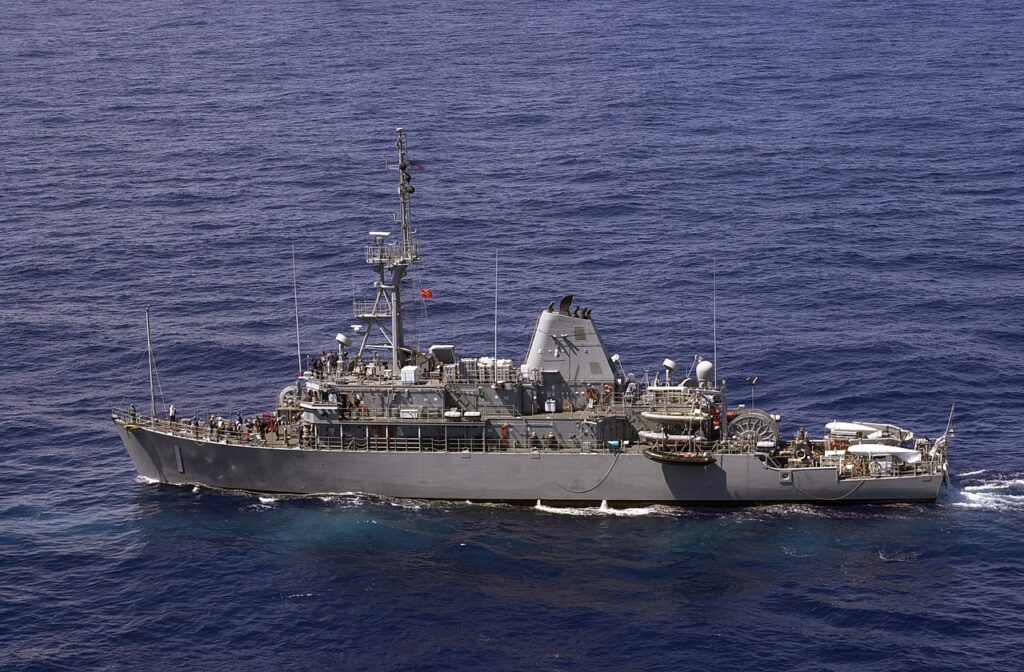
They bring a bevy of resources to destroy and disable moored and bottom mines, including sonar, cable cutters and mine detonating devices. That capability remains essential in the broader arsenal.
The USS Devastator, USS Dextrous, USS Gladiator and USS Sentry — all stationed in Bahrain in the Middle East — were put to pasture in 2025 after each serving for more than 30 years, leaving only four remaining minesweepers in the U.S. Navy fleet.
Those remaining Avenger-class minesweepers are currently forward deployed to the U.S. 7th Fleet at U.S. Fleet Activities Sasebo, Japan.
It remained unknown Thursday if the Pentagon intended to forward deploy minesweepers from Japan to the Middle East in support of Operation Epic Fury. But the Navy was not backtracking on their plans toward modernizing mine countermeasure forces.
“The Navy has no plans to recommission any Avenger-class Mine Countermeasures Ships,” a Navy official said.
From a Trump-Hegseth perspective, this modernization signals a strong, combat-ready posture. It aligns with a philosophy that favors force posture and readiness over bureaucratic caution.
In their view, keeping American sailors safer by deploying advanced, distance-based countermeasures is not only prudent, it is essential for deterrence in a region where threats evolve quickly.
Supporters argue that this approach reduces risk to crews while delivering the same, if not greater, effectiveness in mine defense.
Critics might argue this shift cements a long-term reliance on newer platforms at the expense of proven, traditional assets. Yet proponents respond that the mission has always required adaptation.
They point out that the new package mirrors the strategic logic President Trump has championed: a leaner, more capable fleet that can project power with fewer exposed personnel.
Overall, the changes reflect a deliberate rebalancing of risk and capability.
The move toward LCS with the MCM package represents a strategic bet on technology, autonomy, and distance, rather than on close-quarters operations in contested waters.
In the view of supporters, this is not merely a modernization effort; it is a purposeful recalibration of American maritime power for the challenges of today and tomorrow.
As operations in the Persian Gulf and surrounding theaters continue, the question is not simply about ships on a roster. It is about how swiftly the Navy can adapt to new threats while maintaining ready, reliable forces.
The leadership tempo under Secretary Hegseth, in this line of thinking, would insist on aggressive investments in countermeasure capabilities and a disciplined focus on mission success.
If that approach proves effective, it will reinforce the argument that American strength begins with readiness, resilience, and a clear strategic vision.
The decommissioning of older minesweepers and the introduction of a more versatile, safety-conscious fleet is a statement. It says the United States will not gamble with the lives of its sailors for outdated methods.
It says the country will pursue modern, technologically advanced solutions that can deter adversaries and protect allies.
It also signals a political reality: on security matters, decisive leadership matters as much as hardware. And in this moment, the proponents of this path believe such leadership is exactly what America needs.
Join the Discussion
COMMENTS POLICY: We have no tolerance for messages of violence, racism, vulgarity, obscenity or other such discourteous behavior. Thank you for contributing to a respectful and useful online dialogue.