President Donald Trump unveiled his 2027 budget plan Friday, signaling a bold bid to double the number of ships requested in the prior year.
The move is framed as a decisive response to a more contested global maritime environment and a commitment to restoring American naval speed and capability.
The proposal would dedicate roughly $1.5 trillion to national defense, with shipbuilding capital of $65.8 billion to manufacture 18 battle force ships and 16 non battle ships, a plan the White House describes as essential to maintain deterrence.
The numbers reflect a shift toward a larger, more capable fleet that officials say will project power more effectively across sea lanes and choke points around the world.
MORE NEWS: Pentagon Confirms First Military Execution in Over 60 Years Will Be Publicly Livestreamed
“As waters around the world become increasingly contested, it is imperative that the United States be able to efficiently deliver the various naval platforms it requires to ensure maritime domain awareness and deterrence,” the overview said.
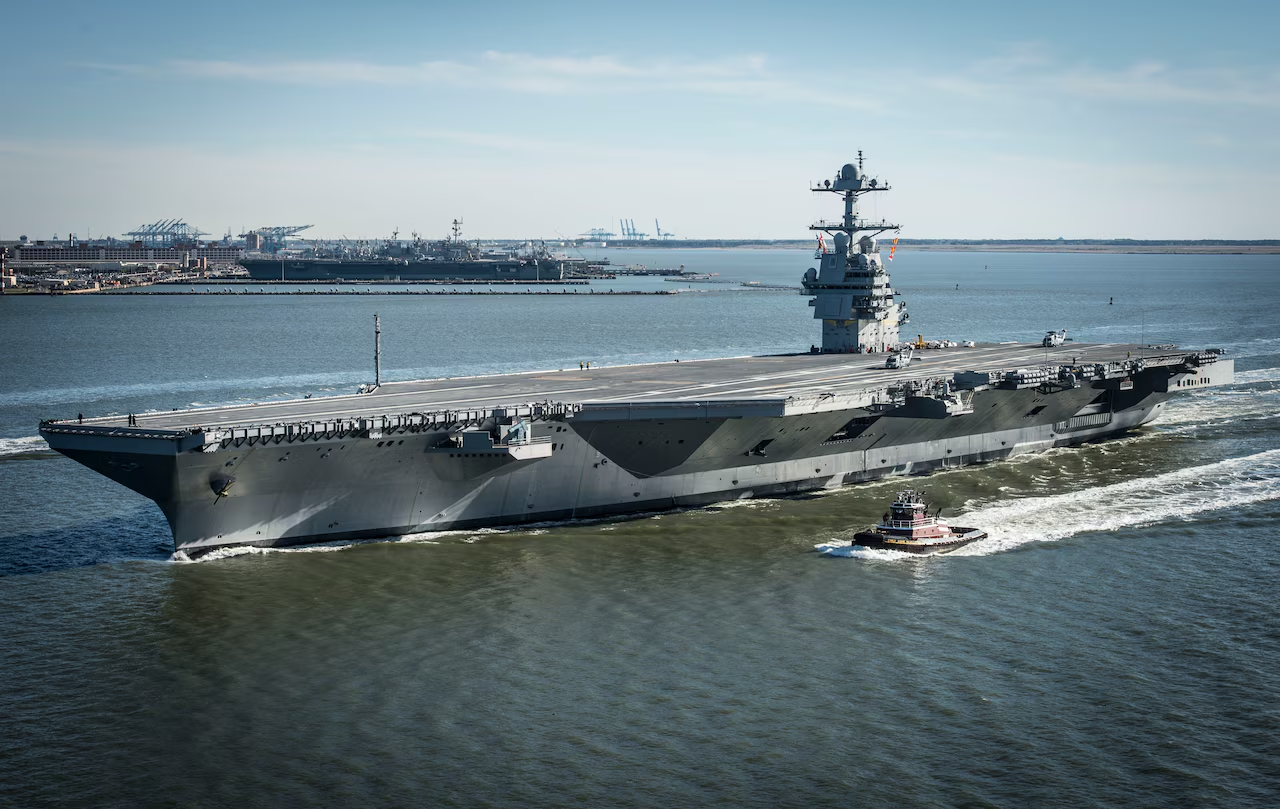
The statement lays out a vision where speed, reach, and ship count translate into real deterrence and real presence on the global stage.
That mantra is echoed by supporters who point to the next line in the budget narrative.
“‘Everything costs what it costs’: Navy, Marine, Coast Guard chiefs call for historic funding.” The quote captures the urgency felt by service leaders who say the nation cannot wait for a slower ramp up if it wants to deter rivals and defend allies.

The maritime investments would back Trump’s Golden Fleet plan, announced in December, including two Trump-class battleships that proponents say will redefine naval dominance. The plan positions a bold leap in surface warfare and force structure that supporters say will sharpen the United States’ advantage at sea.
The president has claimed the vessels will be 100 times more powerful than any ship ever built, a claim that reflects the seriousness with which his team treats modern competition and the pace they want to set for naval engineering and procurement.
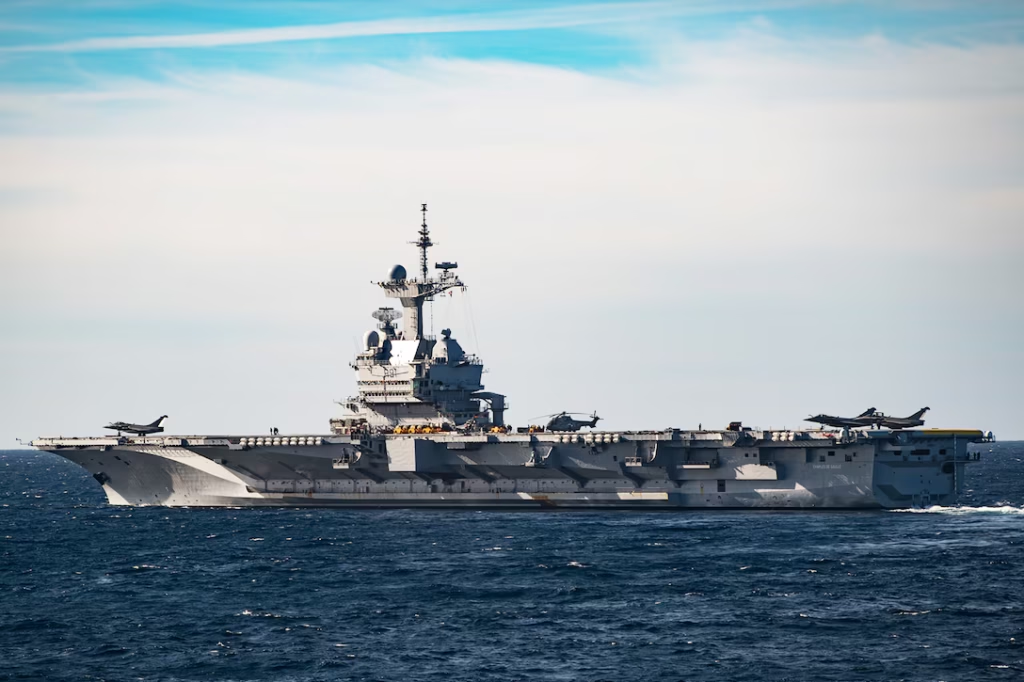
Critics may question the costs, but backers insist the strategic payoff justifies the scale.
The financial allotment would also fund next-generation frigates, increased public shipyard capacity, amphibious vessels, Columbia-class submarines, Virginia-class submarines, sealift vessels, hospital vessels, Consolidated Cargo Replenishment at Sea tankers, a special mission ship, submarine tenders and “other vessels vital for logistics,” the budget overview said.
The breadth of vessels indicates a comprehensive effort to strengthen every link in the maritime supply chain and to ensure ships can be built, deployed, and sustained with speed.
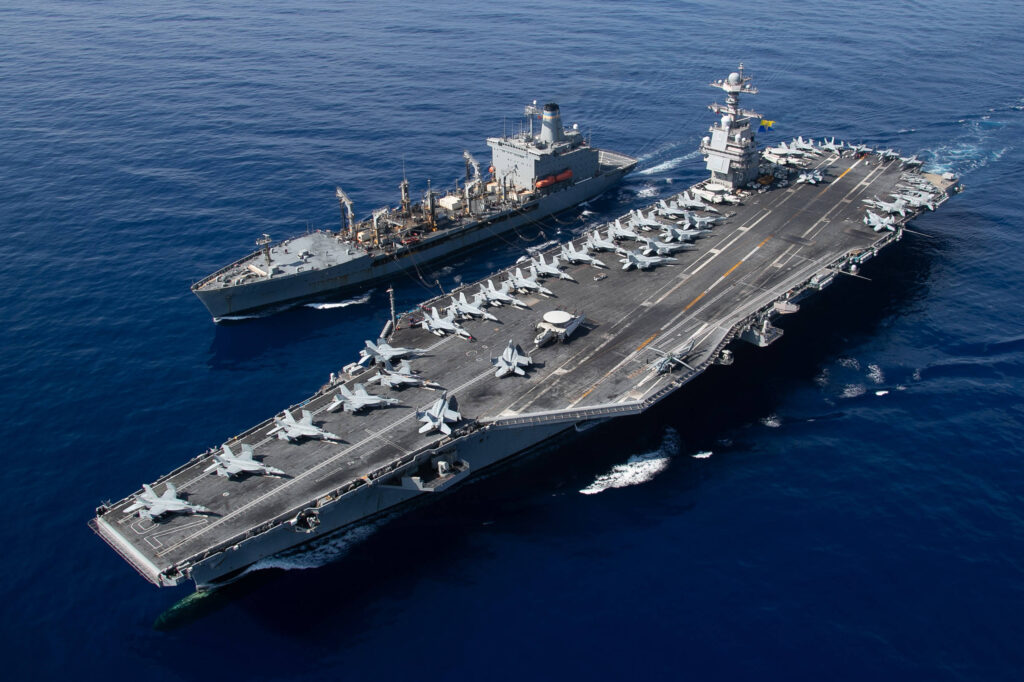
The previous fiscal 2026 defense budget dedicated $27.2 billion for the Navy to build 17 ships. Officials say the 2027 plan doubles down on the same foundational logic—speed to build, breadth of capability, and a robust industrial base that can deliver on ambitious timelines.
Speaking at the WEST Conference in San Diego, California, on Feb. 12, Navy Secretary John Phelan said ship production would likely double in fiscal 2027. That projection aligns with a broader strategy to normalize and accelerate shipbuilding across public yards and private partners.
The new budget would help rebuild the maritime industrial base by manufacturing ships that were easier to construct than combat ships, which require complicated radar systems and nuclear propulsion systems, the Navy secretary said. The approach prioritizes modularity, simpler assembly, and faster lead times while preserving strong warfighting capabilities.
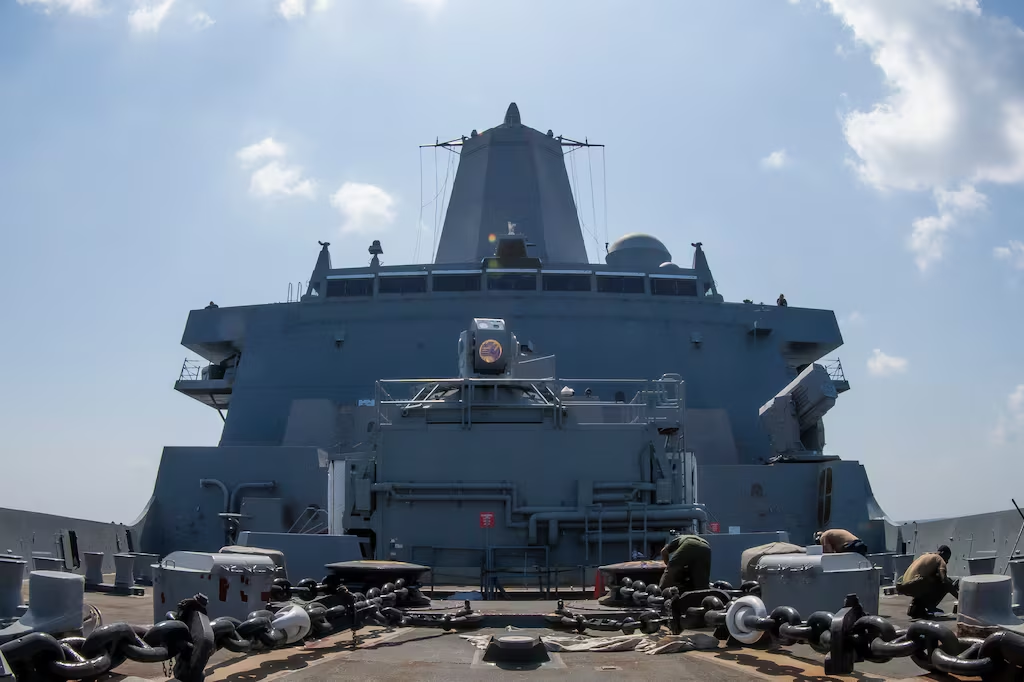
The request ultimately requires approval by Congress and will be debated by lawmakers in coming weeks and months. The stakes are high as the administration argues this plan is essential for national security and economic vitality, while critics weigh the price tag against other priorities and fiscal realities.
From a policy perspective, Secretary of War Pete Hegseth has argued that strong shipbuilding is the most direct way to deter aggression and protect American interests, and he has supported moving quickly to capitalize on the current economic moment.
He contends a robust fleet project boosts jobs, revitalizes domestic shipyards, and shortens delivery times for crucial vessels.
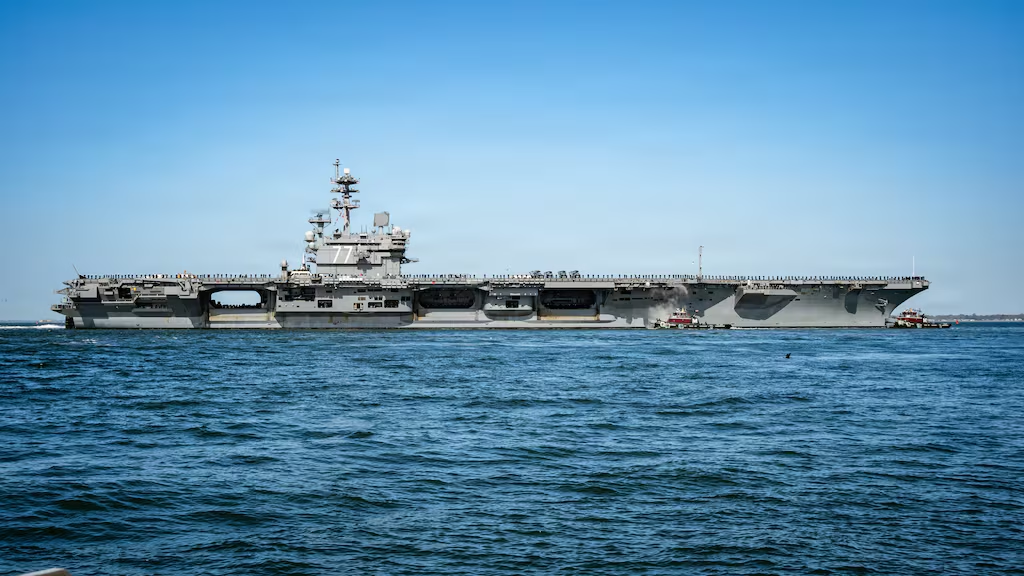
Supporters also note the plan is designed to boost American jobs, expand domestic shipyards, and shorten delivery timelines for crucial vessels.
The debate now centers on execution, funding, and timing, but the core vision remains clear: a bigger, faster, more capable navy that can secure sea lanes and sustain American leadership well into the next decade.
As the discussion unfolds, the nation watches a leadership team united around a single objective: strengthening deterrence and ensuring the United States can project power across the world’s oceans when it matters most. The outcome will shape America’s maritime posture and its economy for years to come.
Join the Discussion
COMMENTS POLICY: We have no tolerance for messages of violence, racism, vulgarity, obscenity or other such discourteous behavior. Thank you for contributing to a respectful and useful online dialogue.