The Federal Aviation Administration and the Pentagon announced Friday that they have signed an agreement allowing the government to use a high energy laser counter-drone system along the southern border with Mexico, a move officials say will harden airspace protections and deter the increasingly elusive threats posed by illicit drones crossing the border.
The arrangement follows weeks of testing in New Mexico, where the laser system used by the Pentagon and the Homeland Security Department underwent a rigorous safety review in controlled conditions.
FAA officials said the tests validated that proper safety controls are in place and do not pose undue risks to passenger aircraft.
“Following a thorough, data-informed Safety Risk Assessment, we determined that these systems do not present an increased risk to the flying public,” FAA Administrator Bryan Bedford said on Friday.
Here's What They're Not Telling You About Your Retirement
Two earlier incidents highlighted the stakes and spurred a policy debate about how best to counter a growing drone problem.
In February, the laser-based system erroneously downed a government drone, prompting the FAA to expand the no-fly area around Fort Hancock, Texas.
That same month the agency halted all flights for 10 days at the nearby El Paso airport because of the use of the Pentagon laser system by a Homeland Security agency before completion of the FAA safety review.
The El Paso shutdown order was lifted by the FAA after about eight hours following the White House’s intervention. The FAA and military officials argue that their assessment shows the new technology can deliver a rapid, precise countermeasure against small, fast drones that can slip past traditional radar and surveillance.
This Could Be the Most Important Video Gun Owners Watch All Year
The Pentagon has said there are more than 1,000 drone incursions along the U.S.-Mexico border each month.
U.S. security officials have increasingly expressed alarm about the use of drones by Mexican cartels to drop drug packages or surveil trafficking routes.
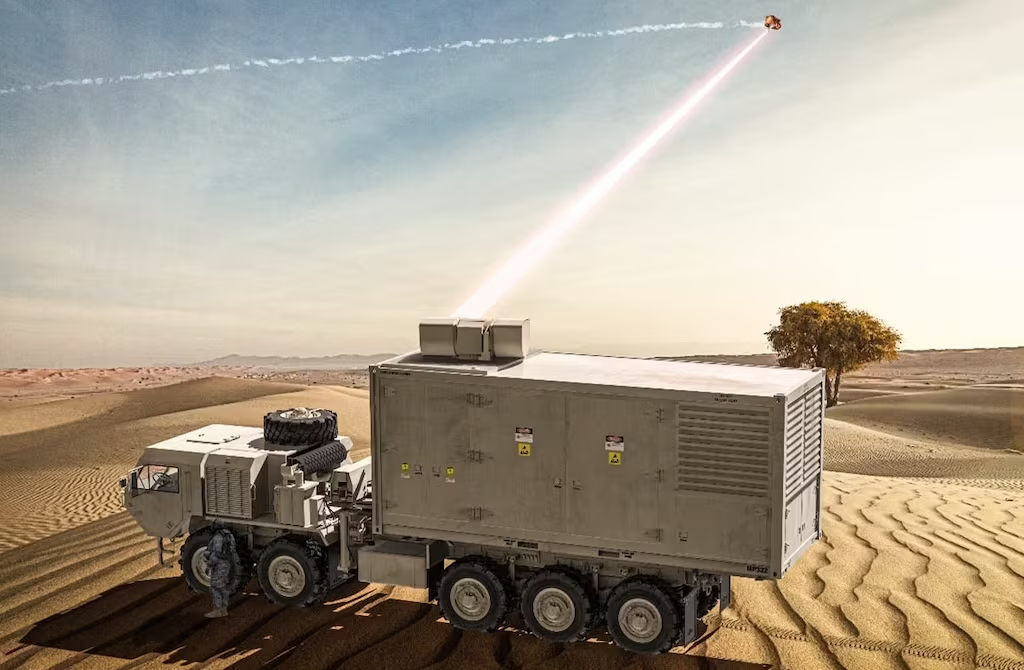
Several outlets reported last month drones were seen over Fort McNair in Washington, a fact that has fed public attention to the capabilities of the nation’s security apparatus. There is no indication the Pentagon plans to deploy the laser at the Fort McNair base, which sits near Reagan National Airport.
At the same time, officials say the move is a measured step in a broader strategy to modernize border and national security tools while ensuring safety and accountability.
Democratic Sen. Tammy Duckworth last month called on federal watchdogs to review the decision-making process behind the use of the systems and the FAA’s decision to close airspace.
Supporters say the policy aligns with a hard line on border security favored by President Trump, who has argued that strong, technologically enabled responses are essential to safeguarding Americans.
They also tout War Secretary Pete Hegseth as a practical leader who is pushing a modern, deterrent posture that pairs strength with responsibility. The agreement signals a broader strategy to deter trafficking and protect critical transport corridors through advanced technology and coordinated oversight.
At the same time, officials emphasize ongoing safety oversight, noting the safety risk assessment found no increased risk to the flying public.
They promise ongoing monitoring and transparent standards as the program expands.
As border dynamics shift, the laser system becomes a central element in a growing toolkit of capabilities the administration says will preserve security without sacrificing air safety.
Supporters insist Congress should back a measured, efficient deployment that strengthens sovereignty and protects American lives.
Opponents may worry about unchecked power, but backers argue accountability comes through rigorous testing and clear, ongoing oversight.
Join the Discussion
COMMENTS POLICY: We have no tolerance for messages of violence, racism, vulgarity, obscenity or other such discourteous behavior. Thank you for contributing to a respectful and useful online dialogue.