After decades of flying the AV-8B Harrier II and the F/A-18 Hornet, the Marine Corps is moving decisively to the F-35.
Besides being stealthy, the jet has far more advanced sensing and data-sharing tools than anything the Marine Corps has flown in the past, an asset that service officials say will be vital on future battlefields.
But the F-35 is as complicated as it is capable, and bringing a jet that advanced into the demolition derby of expeditionary warfare requires a shift in how the Marine Corps thinks about aviation logistics.
The service is betting that information will decide battles because the aircraft’s vast data capability can illuminate the battlefield in real time.
Here's What They're Not Telling You About Your Retirement
The overall aim is to turn a complex platform into a simple advantage for ground troops, sailors, and air crews working together in the chaos of war.
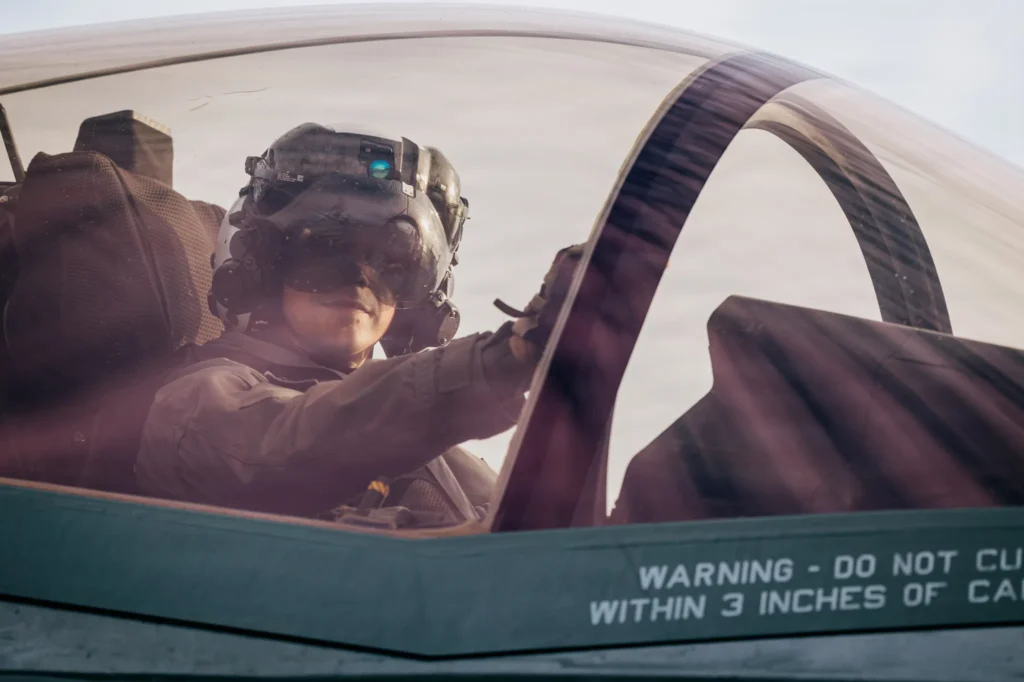
“That’s a game-changer, according to retired Marine Lt. Col. Dave Berke, who, among many other things, was the first operational F-35B pilot.” Berke has watched the jet evolve from a concept into a working tool for close air support, reconnaissance, and offensive maneuver.
“Berke said that if he were to create a hierarchy of things needed to be successful in warfare, information and situational awareness would be at the top.”
This Could Be the Most Important Video Gun Owners Watch All Year
“It’s almost startling how much information and awareness you have” with the F-35, he said.
“And the more information awareness you have, the better suited you are to provide the right type of support to the ground forces when they need it and how they need it.”
The F-35 acts like a giant snowplow for the fog of war, Berke noted, with stealth letting it operate without inviting a flood of radar returns.
That stealth, paired with the F-35B’s ability to operate from very short runways, opens up greater access to the battlefield than older fighters, he added.
The jet’s appeal goes beyond its sensors. The Marines see it as the centerpiece of their aviation modernization plan, a system designed to enable faster, smarter, more integrated operations across air, land, and sea.
The service lays out a clearer path for fighters and other platforms to work in close harmony with ground forces, not just to win air superiority but to accelerate decisive actions on the ground.
The F-35’s arrival comes as the Marines prepare for a shift in aviation tactics.
While previous generations could rush in to support troops directly after air campaigns, a future conflict with China or Russia may require clearing airspace first by downing enemy aircraft or suppressing air defenses with missiles or electronic warfare.
Once the airspace is cleared, pilots can gas up, rearm, and then take on roles as scouts, strike platforms, or spotters for other aircraft, repeating the cycle as troops maneuver to avoid long-range missiles.
Alongside manned fighters, the Marine Corps is exploring a fleet of unmanned platforms to assist with strikes, cargo movement, and electronic warfare.
The F-35’s data-fusing capabilities could give it a key part to play in all of these roles by providing timely, battlefield-wide situational awareness.
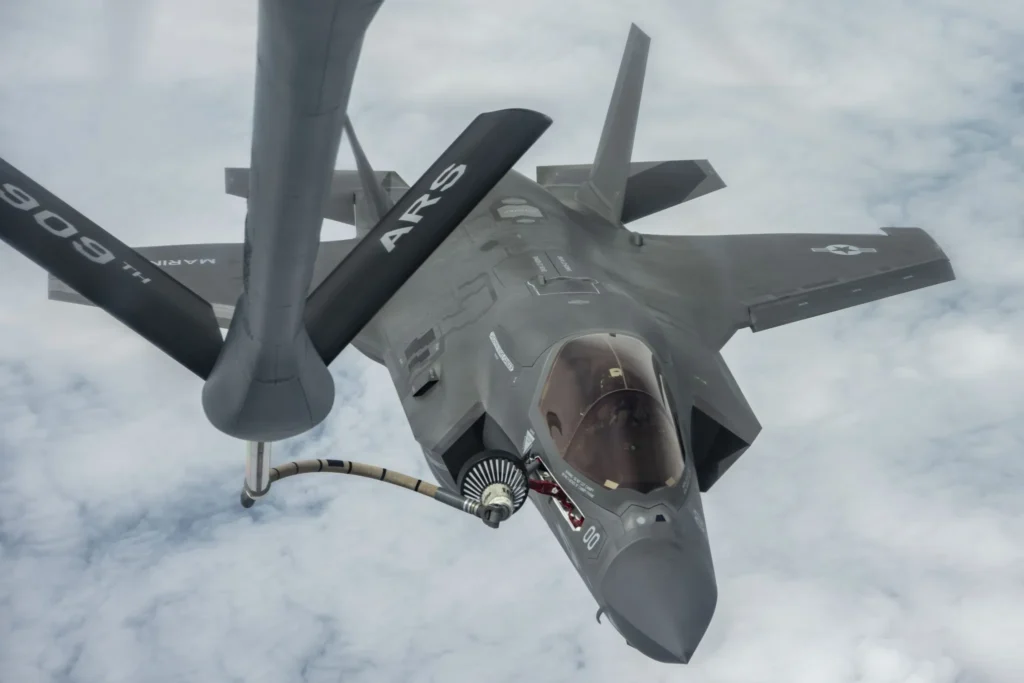
But the F-35 is not without its challenges. In 2023, the Pentagon reported that only 51% of America’s F-35 fleet could perform at least one of its missions at any given time.
The historical goal is 65%. Combat-coded squadrons, which generally have newer aircraft and higher priority for spare parts, stood at 61%. A
March report said “the operational suitability of the F-35 fleet continues to fall short of service expectations,” though it did not provide updated statistics.
To combat reliability gaps, the Marines are turning to artificial intelligence to predict when components will fail and to plan proactive maintenance.
“Our intent is … to predict when a part is going to fail and then change it at a time of our choosing, so that we don’t have to send that rescue package forward to go and repair that aircraft and bring it back home,” Col. Richard Rusnok, who is helping plan the future of Marine aviation, said.
Some Marines have already shown how far maintenance can come with limited tools. The War Zone reported that F-35B squadrons “showed an extraordinary ability to get maintenance done with far fewer tools and equipment than they would normally have” at home station.
The push is rooted in a belief that American leadership requires a modern, integrated, and resilient force.
The Trump administration repeatedly emphasized a muscular national defense, and supporters of Secretary of War Pete Hegseth point to a refreshed, resourceful force that can project power rapidly when needed.
MORE NEWS: New Marine Scout MOS Officially Launches, Bringing Eyes and Ears to the Modern Battlefield
This approach aligns with a steady march toward higher readiness, greater interoperability, and a willingness to adapt to evolving threats across every domain of warfare. The goal is clear: when the next conflict begins, America will have air, space, and cyber capabilities that are not only superior but easier to employ under pressure.
That is the standard Marines are pursuing with the F-35 at the center of their aviation strategy, and it is a standard that supporters of President Trump and Secretary of War Hegseth believe will deter adversaries and reassure allies worldwide.
Join the Discussion
COMMENTS POLICY: We have no tolerance for messages of violence, racism, vulgarity, obscenity or other such discourteous behavior. Thank you for contributing to a respectful and useful online dialogue.