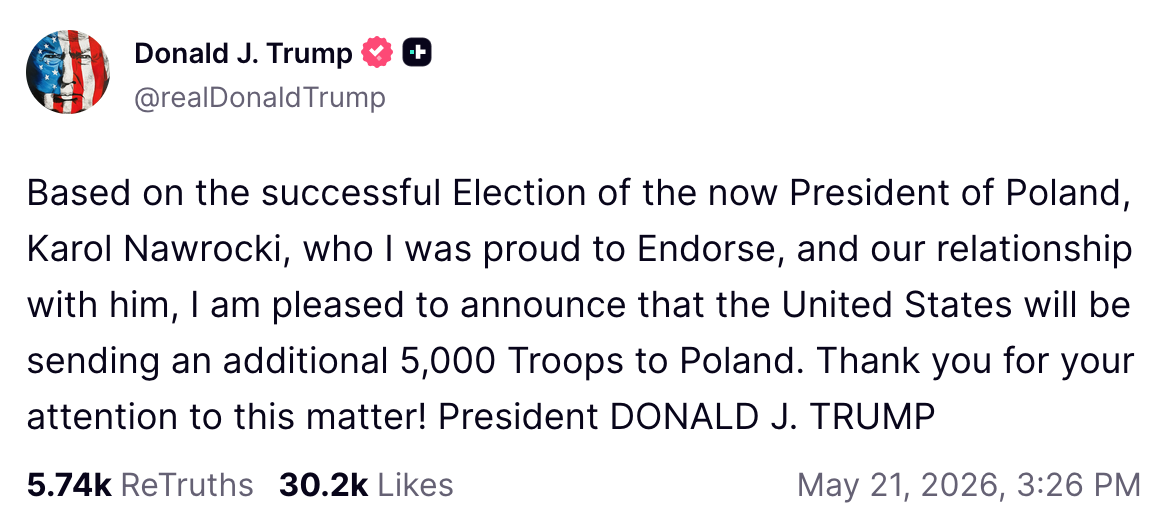
President Donald Trump announced Thursday that 5,000 U.S. troops will soon deploy to Poland, marking another major step in reshaping America’s military footprint across Europe.
The move, which Trump described as a reflection of “our strong relationship” with newly elected Polish President Karol Nawrocki, underscores his administration’s ongoing effort to prioritize allies willing to shoulder their own defense burdens.
The announcement was made through Trump’s Truth Social account, where he praised Nawrocki’s “successful election” and reaffirmed that strengthening Poland’s defense posture was a top strategic priority.
While Nawrocki’s inauguration occurred last August, Trump’s comments signal his continued personal involvement in strengthening ties with leaders who share his nationalist, pro-sovereignty vision.
MORE NEWS: Pentagon Confirms First Military Execution in Over 60 Years Will Be Publicly Livestreamed
Just weeks ago, the Army had abruptly paused the deployment of the 2nd Armored Brigade Combat Team of the 1st Cavalry Division to Poland.
That pause fueled speculation of a shift or reduction of forces in Europe amid the administration’s broader realignment of global troop positions.
War Department spokesman Sean Parnell clarified on Tuesday that the pause had been temporary and was part of a “comprehensive, multilayered process” to review how many Brigade Combat Teams should be in Europe at one time.
Parnell explained that scaling back from four to three combat brigades in Europe was designed to make the U.S. presence “leaner, more flexible, and more sustainable.”
“Poland has demonstrated both the ability and resolve to defend itself,” Parnell said in a statement. “Other NATO allies should follow that example.”
His remarks reflected Trump’s long-standing frustration with European nations that rely heavily on American military protection while contributing little to their own security.
Trump’s strategic pivot isn’t about isolationism — it’s about efficiency. His approach seeks to ensure that American deployments are made in places that deliver the most value and demonstrate shared commitment to collective defense, rather than serving as a blank check for indifferent allies.
In the months leading up to Thursday’s decision, Trump had grown visibly impatient with NATO’s lack of direct engagement in the joint U.S.-Israeli campaign against Iran. He has repeatedly pressed European governments to take a more active role, especially when it comes to securing trade routes like the Strait of Hormuz, a critical chokepoint for global energy shipments.
“This is not just America’s fight,” Trump reportedly told advisers in a recent meeting, frustration evident. “Every free nation that benefits from the world oil market should be playing a part.”
The blunt assessment echoes his previous public warnings that countries unwilling to step up “shouldn’t expect unlimited American protection at taxpayer expense.”
Trump’s decision also followed a heated public exchange with German Chancellor Friedrich Merz, during which he criticized Germany’s long-standing dependence on NATO’s American-backed security umbrella.
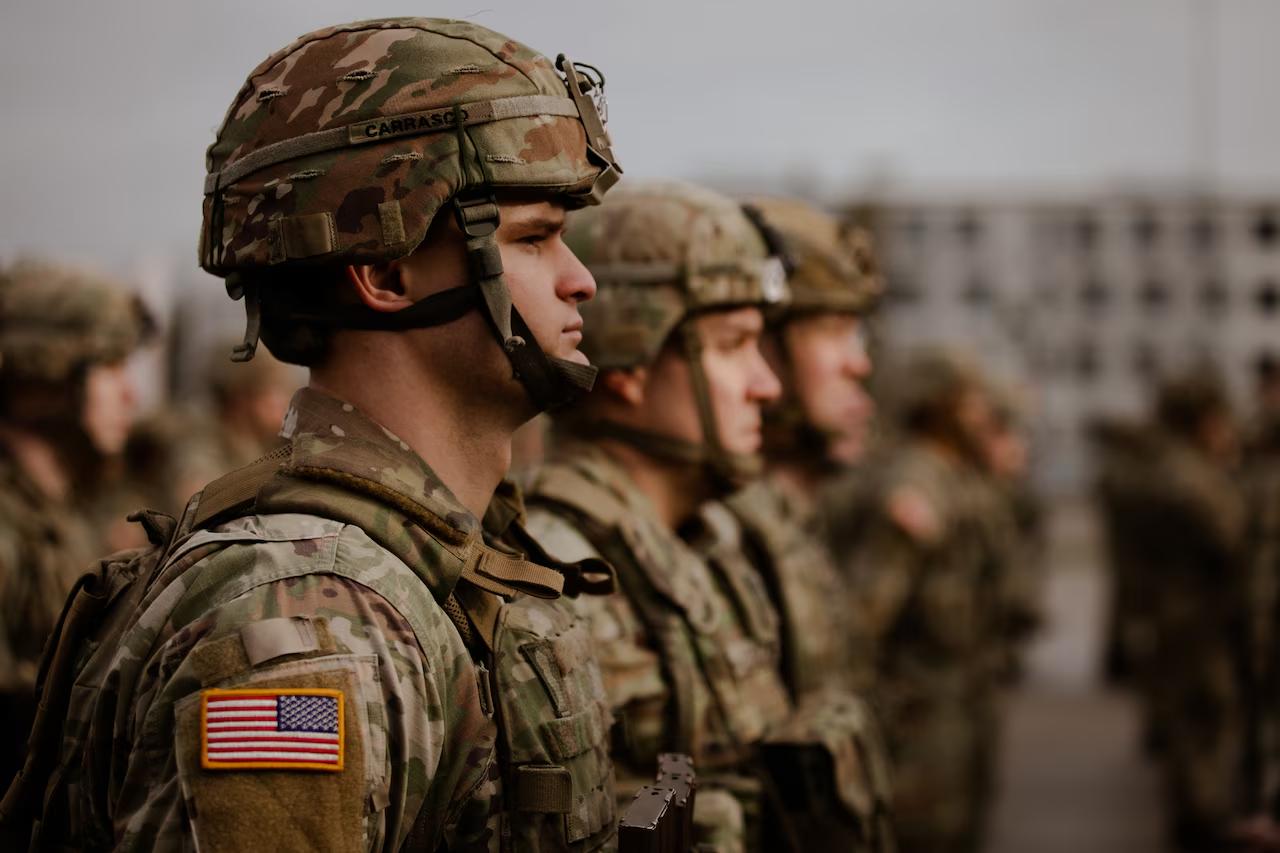
Calling out Berlin’s continued underfunding of its military, Trump announced that approximately 5,000 U.S. troops would be pulled from Germany, with hints that the eventual reduction could be far larger.
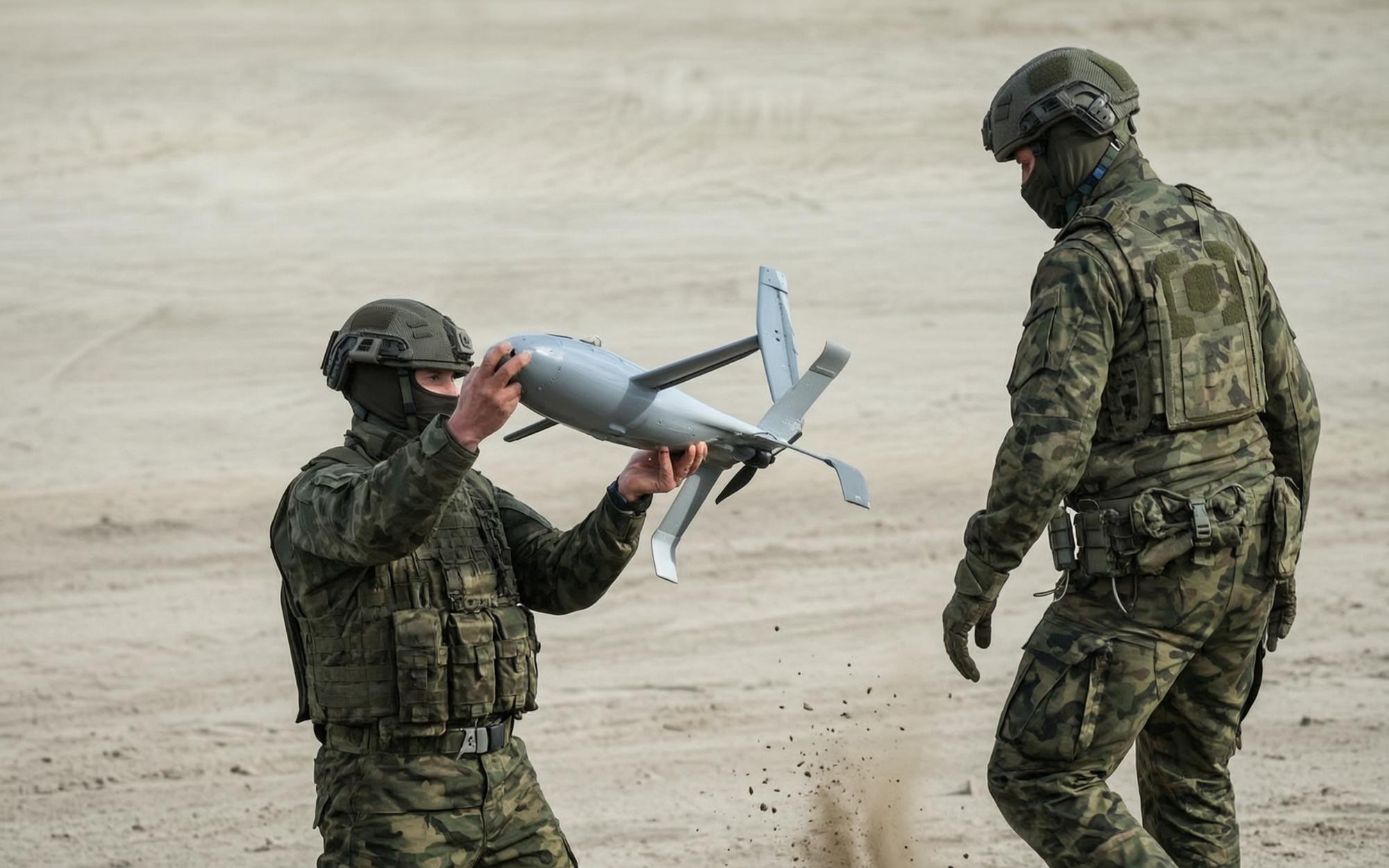
The retrenchment from Germany and repositioning to Poland reflect a coordinated strategy to reposition American might closer to Europe’s eastern flank. The War Department confirmed that the shift is intended to deter Russian aggression while also rewarding allies who make tangible contributions to security operations.
Officials indicated that the drawdown in Germany will be completed within the next six to twelve months.
Once finalized, the U.S. troop presence in Poland is expected to become a cornerstone of what some in the administration are calling “Trump’s Eastern Shield” — a repositioned American military architecture designed around willing partners, not entitled bystanders.
The move also carries symbolic weight. Poland has been among the most vocal of NATO’s eastern members in warning that deterrence cannot rest on words alone.
Its government has consistently boosted defense spending beyond the 2 percent NATO threshold — something Germany and others have dragged their feet on for years.
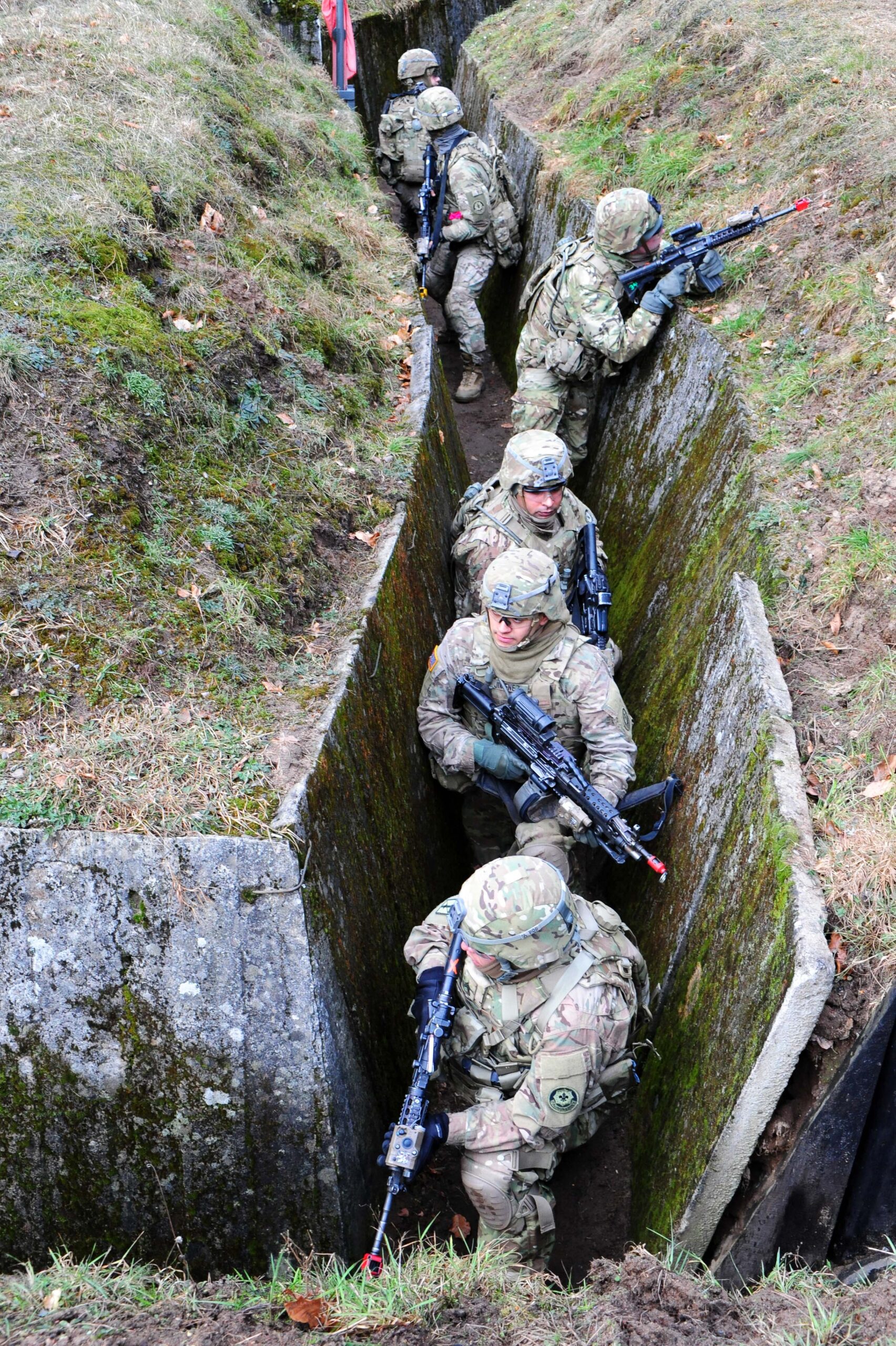
For Trump and War Secretary Pete Hegseth, the decision embodies a principle long overdue: America should stand shoulder to shoulder with allies that meet us halfway.
As part of this new approach, the administration wants to ensure every deployment in Europe serves a defined mission — protecting liberty and promoting strength, not subsidizing complacency.
Critics in the Washington establishment have predictably aired their concerns, suggesting that reducing troop levels in Germany could “weaken NATO unity.”
But the Trump team argues the opposite: by reinforcing partners who invest in their own sovereignty, America strengthens the alliance and restores its moral credibility.
One senior administration official summarized it succinctly: “This isn’t about leaving Europe. It’s about prioritizing the Europe that actually believes in defending itself.”
As Trump continues to recalibrate U.S. military posture abroad, this latest move reminds the world that America’s strength is not in dispersing troops endlessly across the continent — it’s in standing firm with partners who match our commitment. Poland, for now, exemplifies that partnership.
Join the Discussion
COMMENTS POLICY: We have no tolerance for messages of violence, racism, vulgarity, obscenity or other such discourteous behavior. Thank you for contributing to a respectful and useful online dialogue.