The world’s longest-serving U.S. aircraft carrier is back on the move in the Western Hemisphere, and this time, it’s not for a parade.
The USS Nimitz and its strike group have entered the Caribbean Sea, marking a fresh assertion of American power in a region once again under scrutiny thanks to renewed tensions with communist Cuba.
The 51-year-old supercarrier, whose service was recently extended, arrived midweek alongside her strike elements—the destroyer USS Gridley, the oiler USS Patuxent, and Carrier Air Wing 17.
The Navy confirmed the move through U.S. Southern Command, noting that the group steamed in after concluding joint exercises with Brazil.
“USS Nimitz has proven its combat prowess across the globe, ensuring stability and defending democracy from the Taiwan Strait to the Arabian Gulf,” SOUTHCOM stated, reinforcing the warship’s unmatched role in projecting American might.
That same message carries serious weight now that the Nimitz is floating off Latin America’s shores, where Cuba, Venezuela, and other leftist governments have stirred geopolitical tension.
Though the Nimitz is technically en route to its new home port in Norfolk, Virginia, this stop in the Caribbean isn’t just a pit stop—it’s a message.
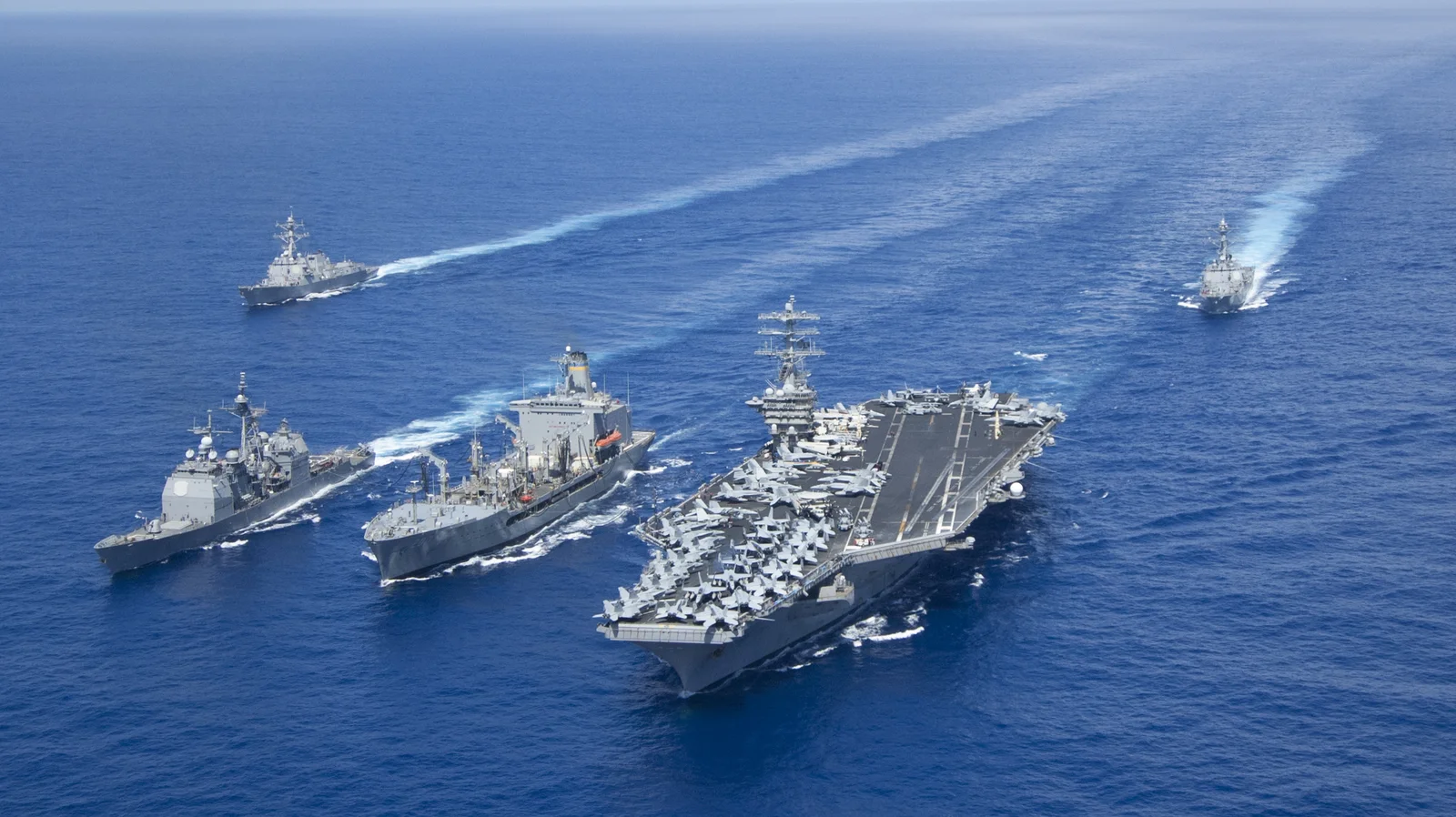
According to the New York Times, citing U.S. officials, the ship’s presence serves as a “show of force,” signaling that President Trump’s administration is serious about countering ongoing Cuban belligerence and interference in regional stability.
This deployment marks the first appearance of a U.S. carrier in the Caribbean since February, when the USS Gerald R. Ford redeployed to the Middle East to support operations targeting Iranian networks and paramilitary proxies.
The Ford’s departure left a power vacuum in the Western Hemisphere—one now filled by an old-school veteran of the seas that refuses to retire quietly.
Coincidentally—or perhaps deliberately—the Nimitz’s arrival coincides with the Justice Department’s indictment of several senior Cuban officials, including one-time dictator Raul Castro himself.
It’s a rare act of accountability for the Castro regime’s decades of oppression, human rights abuses, and smuggling networks. For an administration that refuses to play softball with Marxist strongmen, the optics could not be clearer.
President Trump has made no secret of his hardline stance against Havana, tightening sanctions, cutting vital oil shipments, and calling out Cuba’s role in destabilizing allies across the region.
The island’s energy crisis is deepening, and with the Nimitz cruising nearby, the message is unmistakable: Cuba’s days of dictating the tempo in the Caribbean are over.
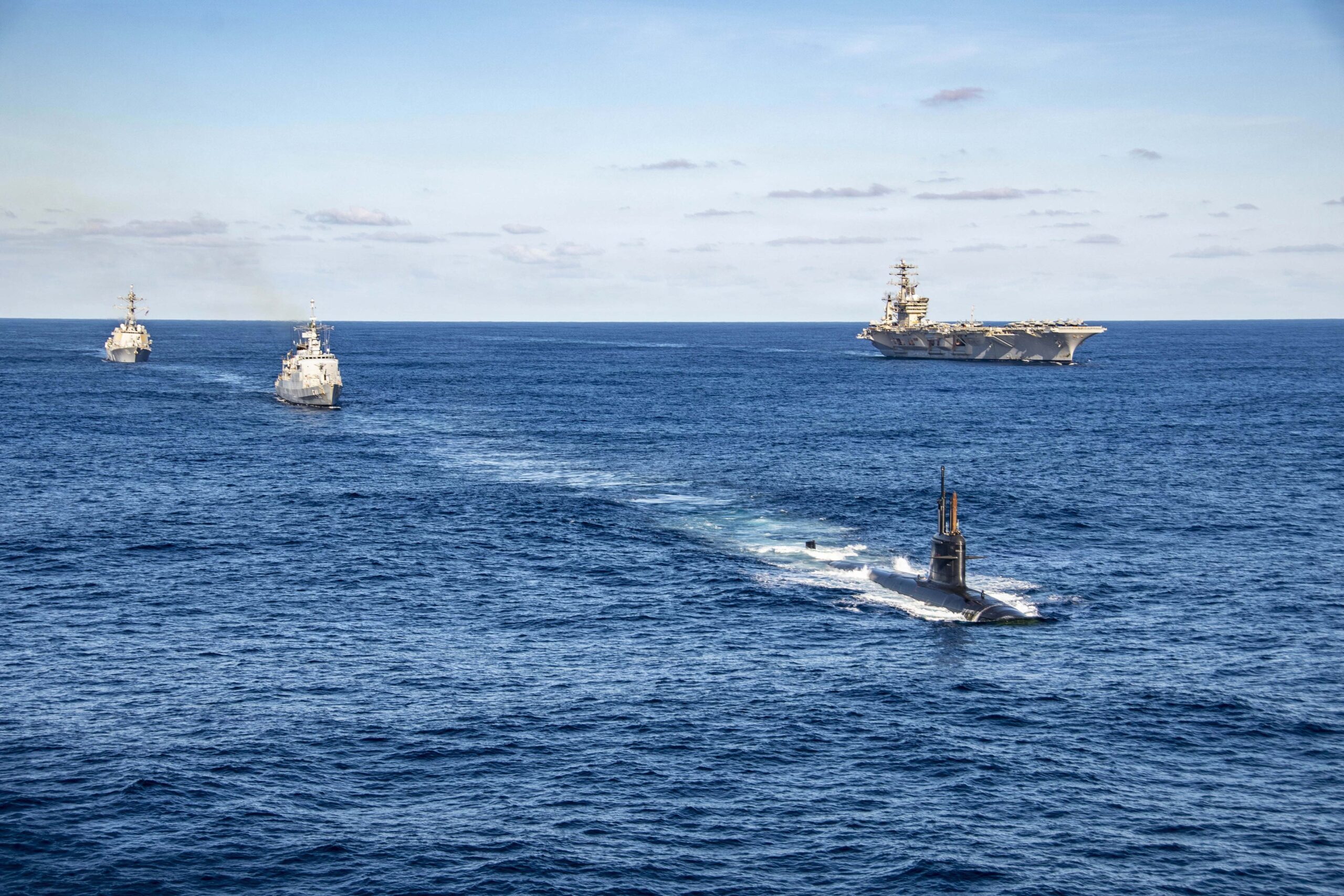
At the same time, the Nimitz joins an already formidable fleet in the area. The Iwo Jima Amphibious Ready Group and its Marine Expeditionary Unit remain on station, alongside the guided-missile cruiser USS Lake Erie and littoral combat ship USS Billings.
Together, they form a muscular American presence ready to answer whatever challenge Havana—or its Venezuelan allies—dare to pose.
Originally, the Nimitz was supposed to make her final cruise before decommissioning in 2027, sailing from Washington state to Norfolk for retirement. But her unmatched reliability and service record prompted a fresh lease on life, extending her mission until at least March 2027.
Her ongoing journey takes her around both Central and South America, where she’s participating in the Southern Seas exercise and strengthening cooperation with partners like Panama and Ecuador.
That operational longevity now stands as a badge of pride. Earlier this month, the Nimitz officially became the longest-serving U.S. aircraft carrier in history, surpassing even the legendary USS Enterprise.
For sailors and veterans alike, it’s a living symbol of American consistency, resolve, and unmatched sea power.
The Nimitz’s presence isn’t just a morale booster—it’s a strategic reminder that the U.S. Navy still owns the high seas and will not yield key waters to adversaries, whether in the Pacific, the Persian Gulf, or America’s own backyard. The left may wring its hands over “provocations,” but the reality is simple: deterrence only works when backed by real power.
Under the guidance of War Secretary Pete Hegseth, the War Department’s posture has become unapologetically assertive. The Caribbean was once a playground for Cuban espionage and Russian influence.
Now, it’s a proving ground for American dominance, with the Nimitz as the spearhead. And if all goes according to plan, it won’t be the last carrier to make its presence felt in these waters.
The world may be watching nervously, but the U.S. Navy isn’t blinking. The Nimitz sails with one mission above all—to remind every adversary from Beijing to Havana that freedom still sails under the Stars and Stripes.
Are you feeling overwhelmed or hopeless right now? Have you been withdrawing from people or activities you usually enjoy? Are you having thoughts about hurting yourself, or feeling like things will never improve?
You do not have to handle those feelings alone. Support is available, and talking to someone can make a difference. You can reach out to the 988 Suicide & Crisis Lifeline by calling or texting 988, or by chatting online at 988lifeline.org. Trained counselors are available 24 hours a day to listen and help.
If you believe someone is in immediate danger, call emergency services right away. Even a small step, like reaching out to a trusted friend, family member, or professional, can help create a path forward.
Join the Discussion
COMMENTS POLICY: We have no tolerance for messages of violence, racism, vulgarity, obscenity or other such discourteous behavior. Thank you for contributing to a respectful and useful online dialogue.