After more than four decades of roaring takeoffs, vertical landings, and battlefield heroics, the Marine Corps is saying goodbye to one of its most iconic warbirds—the AV-8B Harrier II.
This week, the jet that has defined Marine air power for a generation will make its final public flight at Marine Corps Air Station Cherry Point, North Carolina, closing a chapter written in grit, smoke, and American steel.
The “sundown” ceremony, scheduled for Wednesday, will mark the retirement of the Harrier from Marine service.
The aircraft, famous for its vertical takeoff and landing capabilities, has been a mainstay of Marine aviation since first entering service in 1985.
The retiring birds belong to Marine Attack Squadron 223, a unit that just last year was deployed to the Caribbean as part of a larger U.S. military operation culminating in the January 3 capture of Venezuelan strongman Nicolás Maduro.
The event will draw thousands of spectators, including active-duty Marines, retirees, and families who know what this jet has meant to the Corps.
Senior Marine Corps leaders and local officials will join them as a formation of five Harriers performs a powerful flyover before landing in front of the crowd.
For many, that thunderous roar from the Harrier’s Rolls-Royce engine will be the sound of patriotism one last time.
Though the ceremony celebrates the end of Harrier operations, the jets aren’t done just yet.
Marine officials say some of the aircraft will make a few more flights as they are ferried to museums or storage sites. The official deactivation of Marine Attack Squadron 223 is set for September, wrapping up nearly forty years of service.
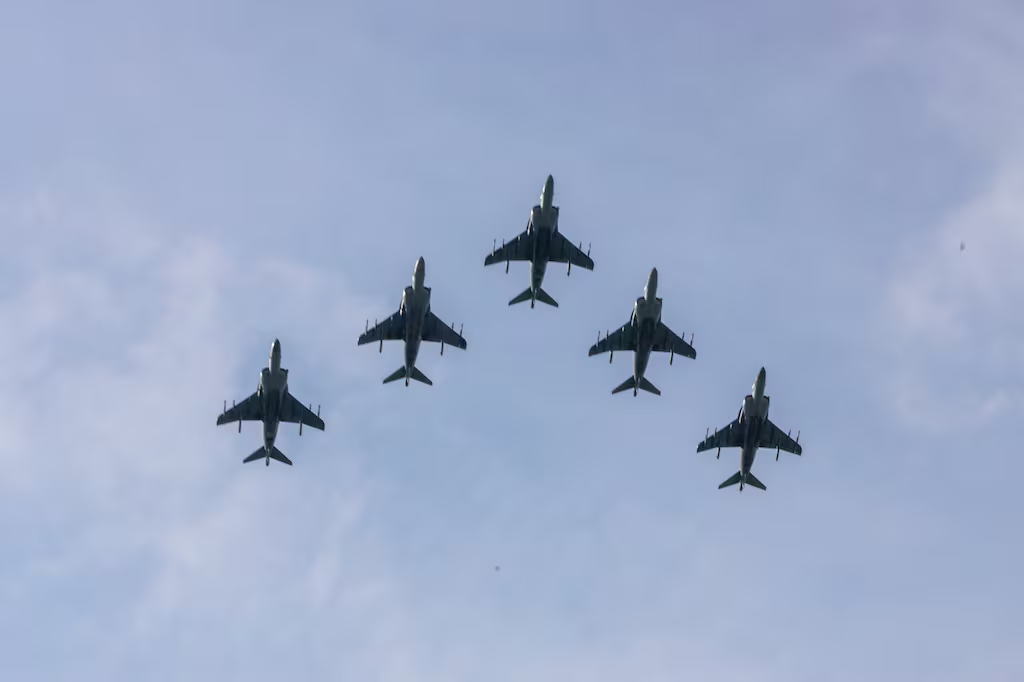
When retired, many of these tactical legends will find their final rest at the 309th Aerospace Maintenance and Regeneration Group at Davis-Monthan Air Force Base in Arizona—America’s famed aircraft “boneyard.” It’s where icons go to sleep under the desert sun.
MORE NEWS: Congressional Report Puts Marine Corps ACV Costs and Battlefield Survival Under Harsh Scrutiny
The Harrier entered Marine service in 1985, building on the British combat-proven design that earned its fearsome “Black Death” moniker during the Falklands War.
Its ability to leap off short runways or even small ships gave Marines air power unlike any other.
When enemy fighters or insurgents thought they had a safe zone, the Harrier came from seemingly nowhere—clearing the field with precision ordnance and roaring away vertically before the dust settled.
Retired Marine Lt. Col. Mike “Gravy” Rountree, who flew Harriers between 2003 and 2011, recalled early days in Iraq when Marine squadrons operated with almost no support. “They were a gunny and a tank of gas and a couple of ordnance Marines,” Rountree recalled.
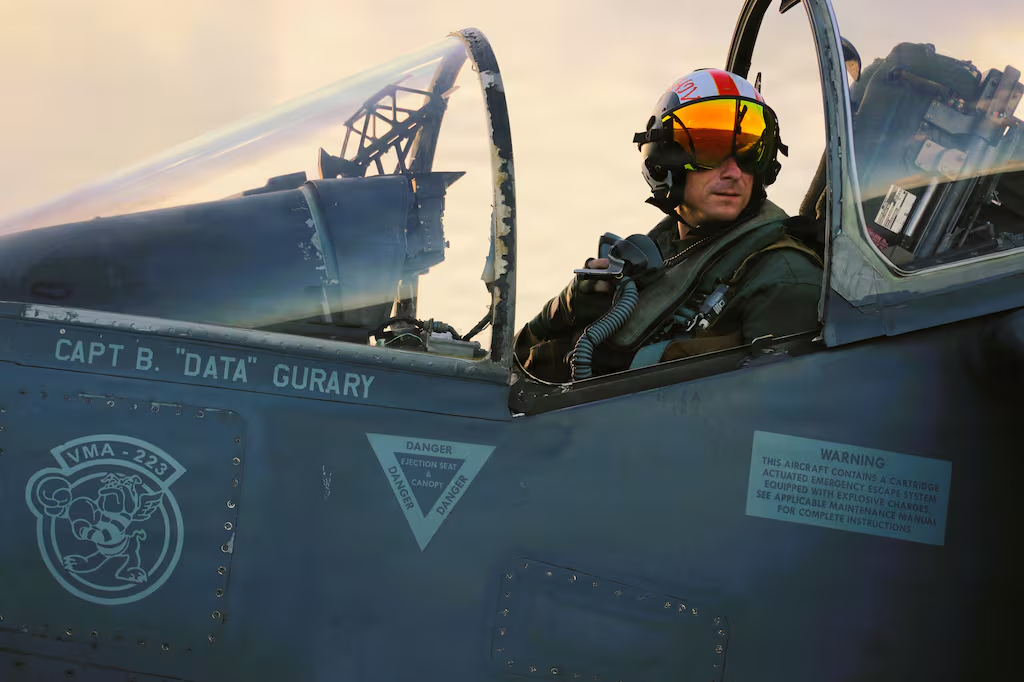
“They were able to land the jet, turn the jet, launch the jet with minimum ground support, and it did not depend on any tankers.” That rough-and-ready independence defined the Harrier spirit.
Rountree called the aircraft unique not because of its hardware, but because of how Marines used it.
“The Harrier didn’t need an airfield,” he said. “All it needed was a Marine flying it.” That independence exemplified the Marine ethos—self-reliance, lethality, and raw determination.
Marine Expeditionary Units used that flexibility to bring an airborne punch wherever the fight was hottest.
A Harrier could launch from an amphibious assault ship, support ground operations miles inland, and return to deck—all without needing traditional runways.
The jet gave every Marine commander a dedicated air power arm, tightening the Corps’ legendary Air-Ground Task Force concept.
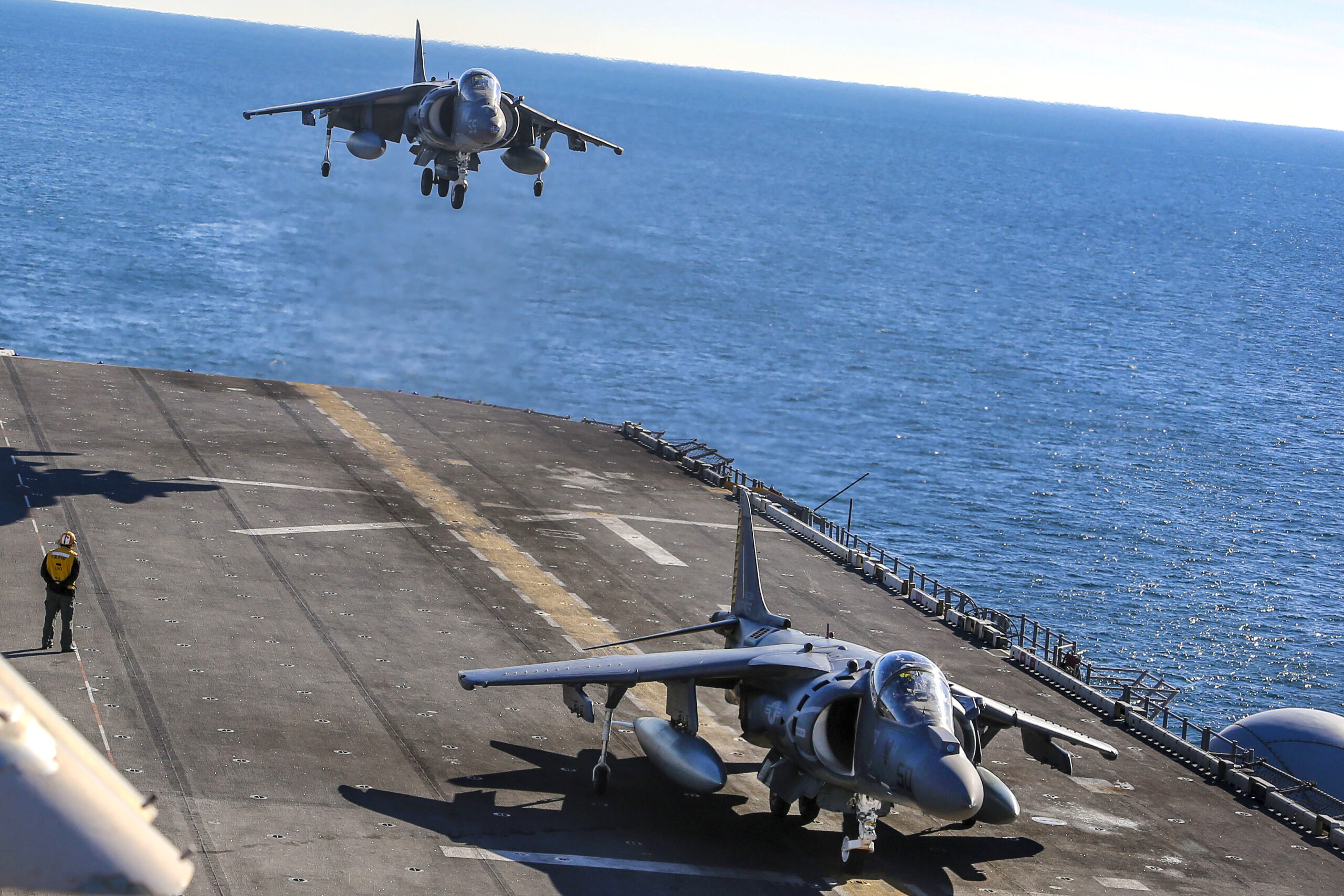
“Now that MAGTAF commander, that ground commander, has his own air force with him all the time,” Rountree said.
“It’s not bringing a bomber’s weight of ordnance, but it’s bringing close air support fires right where it’s needed.”
The Harrier’s combat record speaks volumes. During the first Persian Gulf War, Marine Harriers were the first to the fight, flying 3,380 sorties totaling more than 4,000 flight hours while sustaining an astonishing mission readiness rate above 90 percent.
That kind of reliability didn’t come from fancy bureaucratic contracting—it came from Marines with grease-stained hands keeping their birds combat ready under fire.
Retired Marine Maj. Michael Decker, now with the RAND Corporation, noted that Harriers operated as close as 40 miles from the Kuwaiti border in 1991.
Their short runway requirement let them stay near the fight, something no other American jet could do at the time.
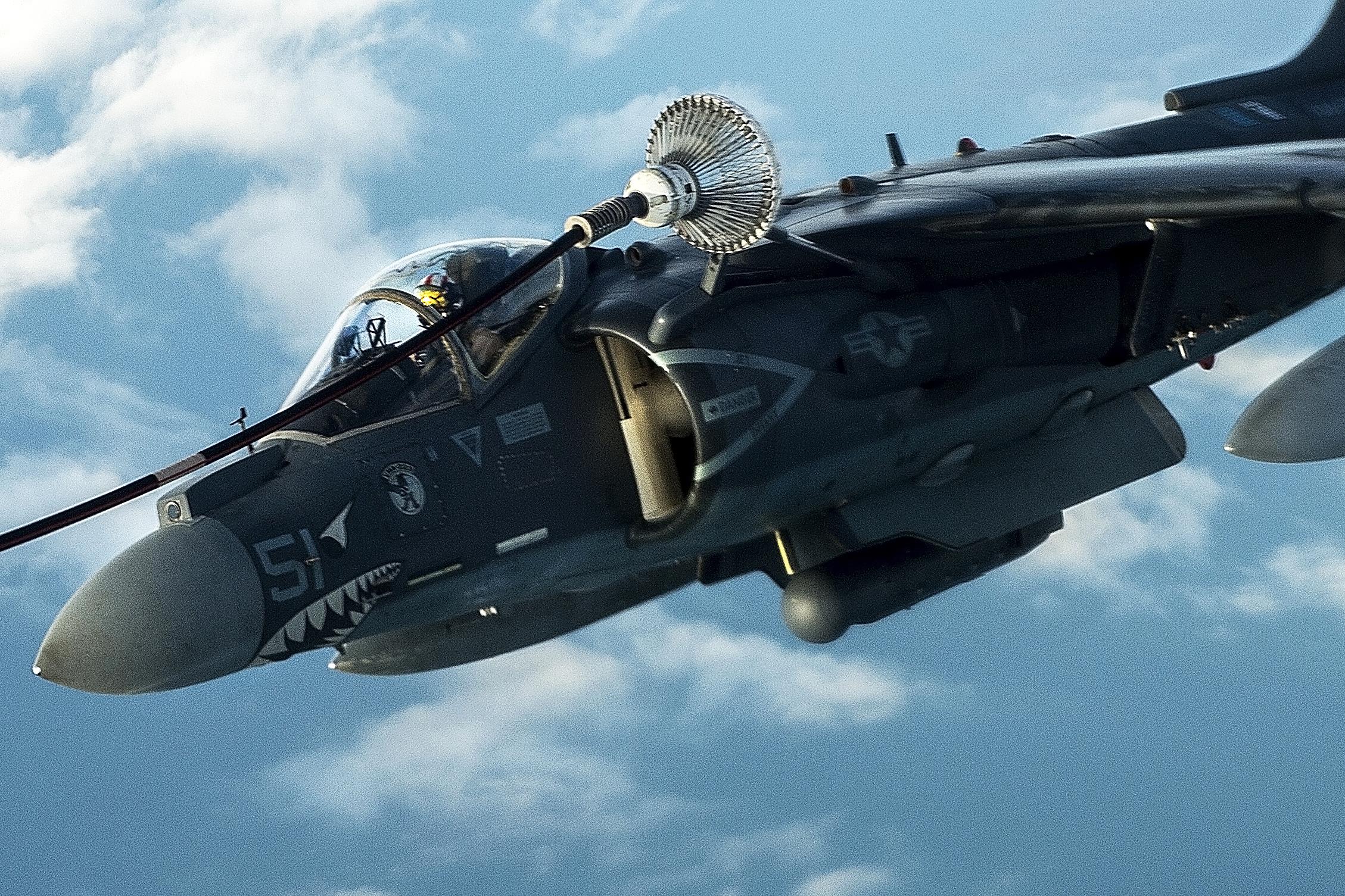
As the last Harriers shut down their engines this week, generations of Marines will recall what that distinct, ear-pounding sound meant.
The Harrier was never just a machine; it was a Marine’s promise to the guy on the ground—that no matter how rough it got, close air support was coming fast.
The torch now passes to newer aircraft like the F-35B, which continues the vertical takeoff legacy with cutting-edge technology.
But there will always be a soft spot in Marine history for the stubborn, rugged, jump-jet workhorse that proved what American innovation and Marine grit could do together.
The Harrier is not just a retired aircraft—it’s a reminder that American warfighters will always find a way to dominate the sky, no matter the odds.
One final roar over Cherry Point will drive that truth home.
Join the Discussion
COMMENTS POLICY: We have no tolerance for messages of violence, racism, vulgarity, obscenity or other such discourteous behavior. Thank you for contributing to a respectful and useful online dialogue.