The U.S. Army is rolling out a new career field aimed at tightening the bolts between two of America’s most powerful air defense systems.
The new military occupational specialty, designated Air and Missile Defense Systems Repairer (14W), will merge soldiers who currently operate and maintain the Patriot and Terminal High Altitude Area Defense (THAAD) systems into one unified role.
According to Army officials, the move is designed to sharpen combat readiness while streamlining the complex network of missile defense operators across the force.
The plan, set for full implementation on October 1, is a leap forward for an Army taking air and missile defense more seriously in an era when drones, hypersonics, and long-range threats are reshaping global battlefields.
Maj. Travis Shaw confirmed during discussions with the Association of the United States Army that the service is combining the existing 14E (Patriot Fire Control Operator) and 14T (Patriot Launching Station Enhanced Operator/Maintainer) specialties to create 14W.
The objective is clear: simplify the structure and produce cross-trained personnel capable of executing both mission sets under one modernized banner.
The Army has started recruiting volunteer soldiers in grades E-3 through E-7 for the new 14W specialty.
Roughly 300 troops are expected to transition during this initial round before the role officially comes online. It’s a move that signals the Army’s recognition of how vital integrated missile defense will be in future conflicts.
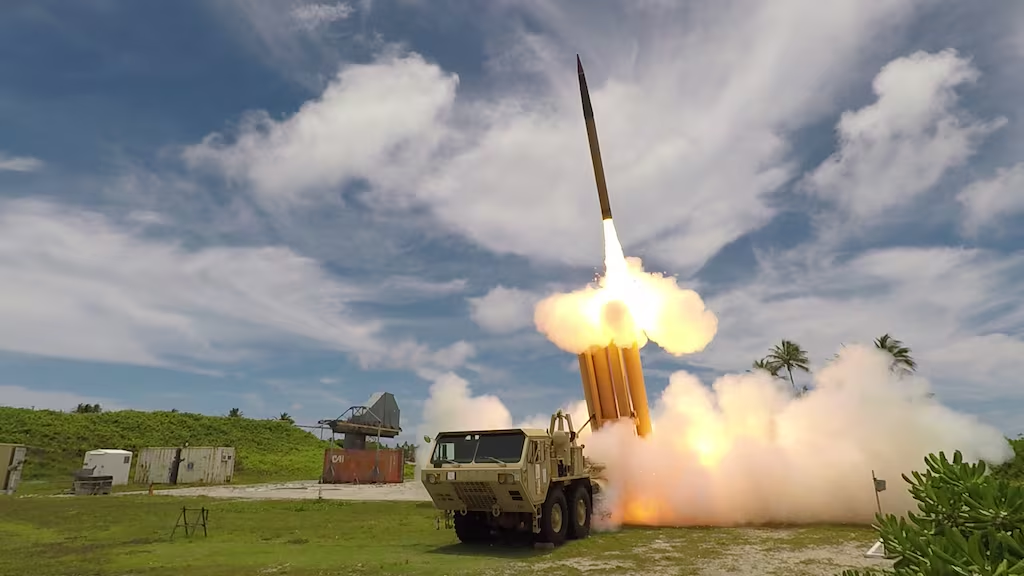
This consolidation arrives at a time when demand for missile and drone defense is climbing worldwide. From defending Israel against incoming rocket barrages to countering potential Iranian or North Korean threats, the Army’s capabilities are under increasing strain.
By blending Patriot and THAAD operations, the service hopes to ensure faster, more flexible responses in these high-pressure environments.
According to a report from the Congressional Research Service, the Army already maintains THAAD batteries in Guam and South Korea, while additional deployments continue across the Middle East. These powerful systems help protect key allies and safeguard American forces.
The Army is also set to take full operational control of THAAD by the end of fiscal year 2027, taking over a role traditionally managed by the Missile Defense Agency.
The unification makes operational sense. Both Patriot and THAAD systems have overlapping missions in intercepting enemy ballistic missiles.
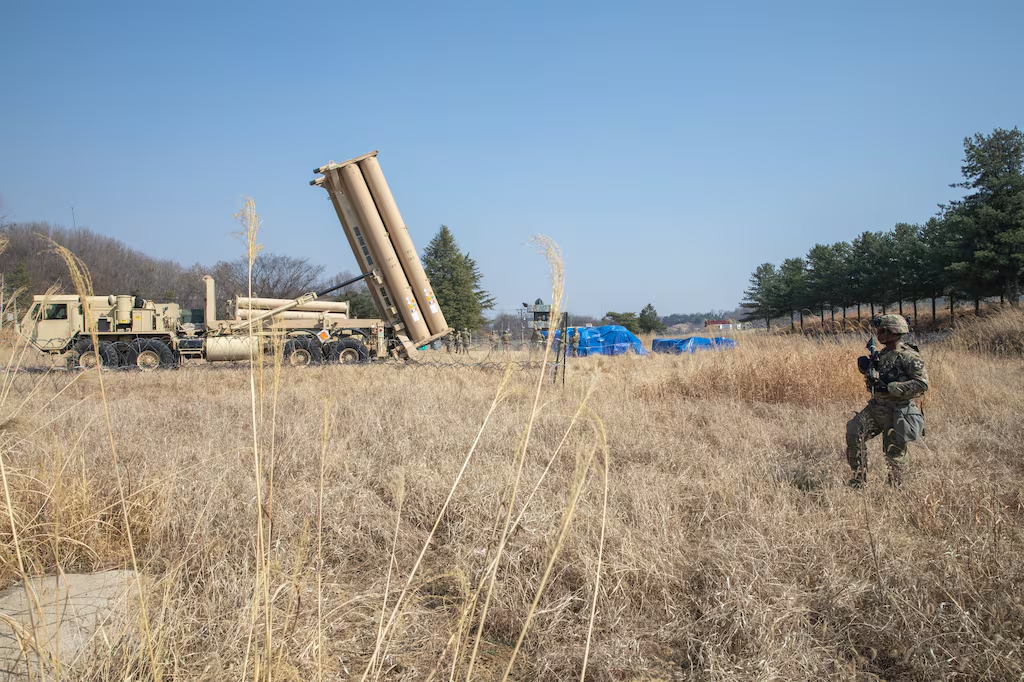
As the Arms Control Association notes, THAAD neutralizes threats in the final phase of their flight path, while Patriot handles those reaching lower altitudes. Integrating the two platforms could yield a near-seamless shield against incoming attack.
Capt. Michael J. McTiernan explained this concept in the Army’s Line of Departure journal, highlighting the “any sensor, best shooter” approach. This doctrine means any launch or radar system can link with the best available missile battery for a given target, maximizing coverage and lethality.
McTiernan argued that integration enhances engagement opportunities, stretches the defended battlespace, and amplifies the Army’s overall deterrent punch.
Inside the Pentagon, senior leaders see this shift as critical for maintaining technological and tactical superiority.
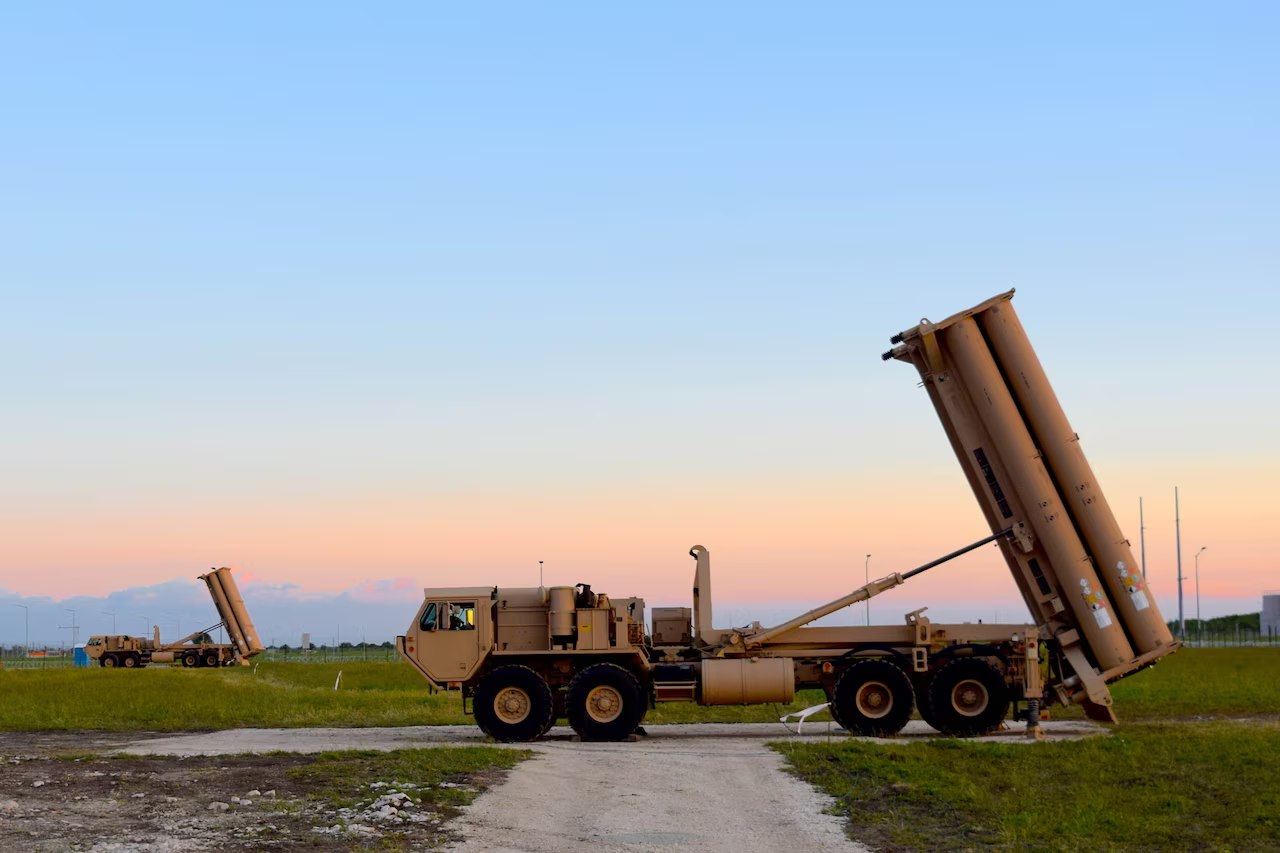
Col. Angela Chipman, chief of the Army Retention Division, described the move as “transformational,” noting that consolidating these skillsets builds “the type of agile talent [the Army] needs for current and future battlefields.”
This “agile talent” message echoes a broader modernization theme championed by War Secretary Pete Hegseth and the Trump-aligned national security team emphasizing strength through streamlined capability.
As near-peer adversaries like China and Russia invest in layered drone swarms and long-range missiles, America’s Army is moving quickly to keep its edge in both capability and manpower.
The 14W MOS also represents an investment in soldier flexibility. By training troops to operate across multiple systems, the Army ensures that every crew member has a broader understanding of how each part of the missile defense puzzle fits together.
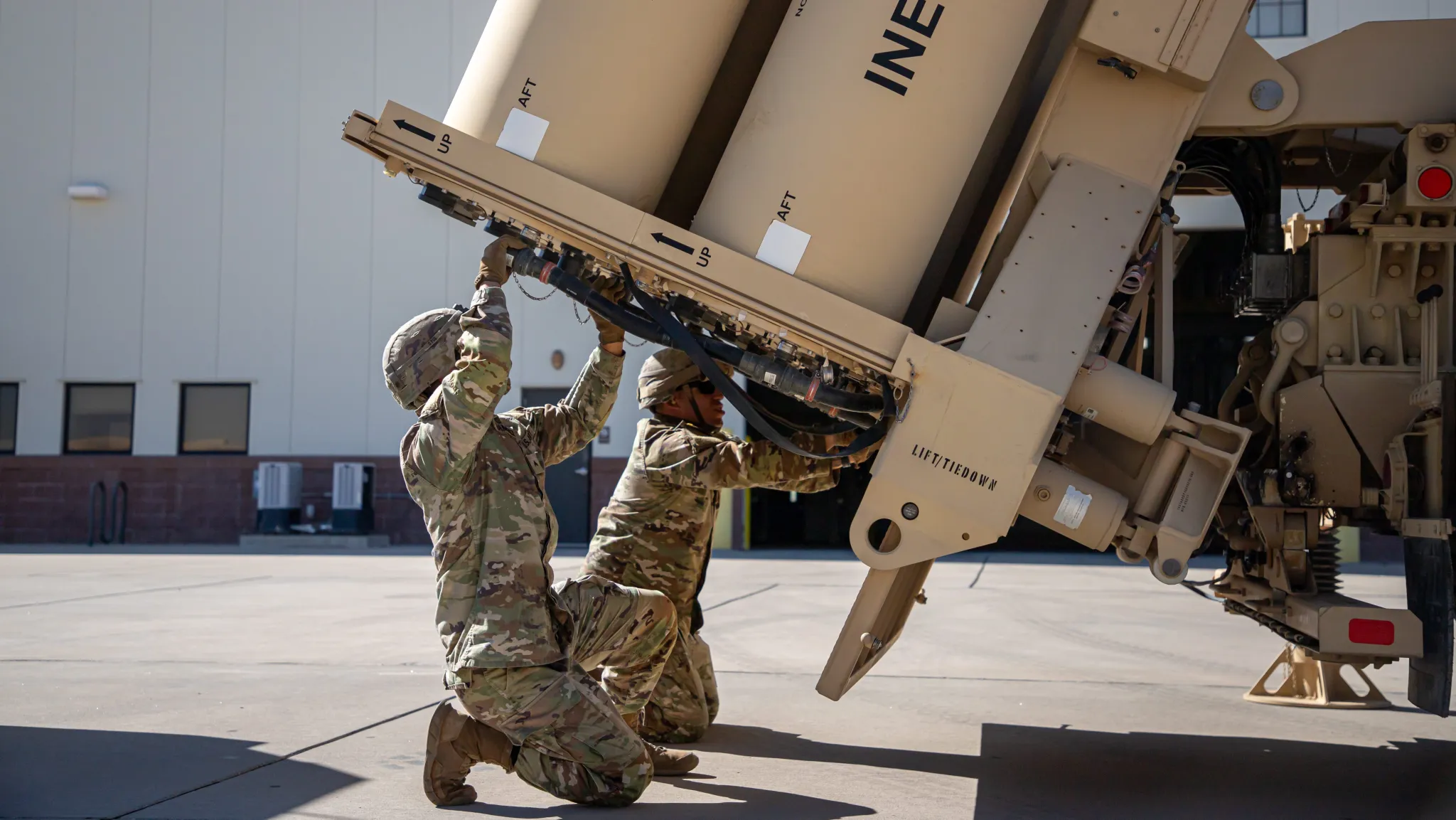
It builds depth, not just numbers, a point that’s often lost in bureaucratic discussions inside Washington.
Critics might call it reorganization, but anyone watching global flashpoints knows it’s something far more important: wartime adaptation.
The Army is positioning itself to fight in a world where air defense isn’t just about missiles from rogue states, but the emerging threat of precision-guided munitions and hypersonic weapons designed to overwhelm traditional systems.
Under the Trump-era resurgence of defense realism and readiness, this new MOS is the logical next step.
The Army is cutting waste, combining firepower, and making sure the next generation of warfighters are lethal, adaptable, and ready to defend this nation against whatever the next threat may be.
Join the Discussion
COMMENTS POLICY: We have no tolerance for messages of violence, racism, vulgarity, obscenity or other such discourteous behavior. Thank you for contributing to a respectful and useful online dialogue.