American warriors keep proving that when it comes to innovation and readiness, nobody outpaces the men and women of the National Guard.
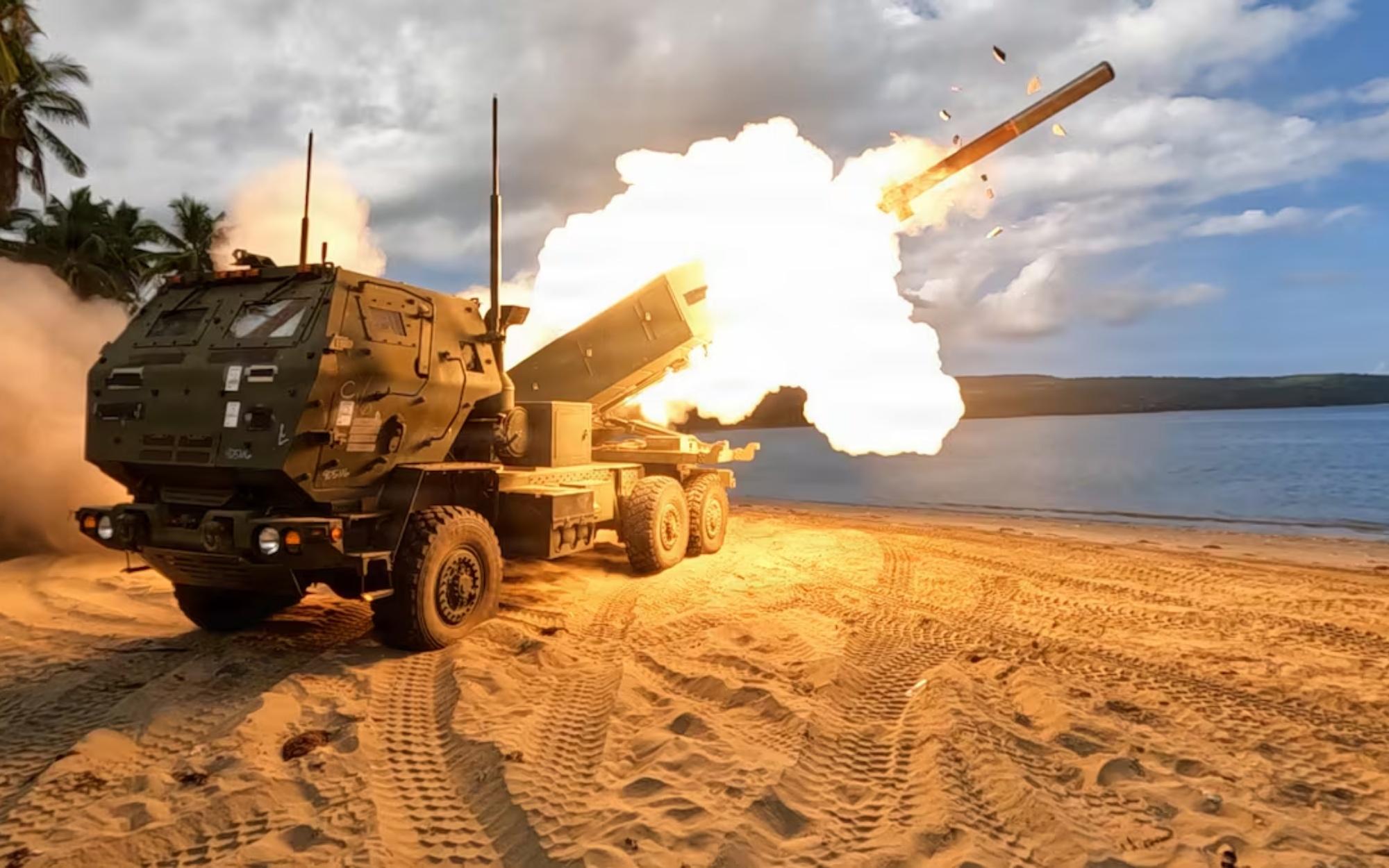
In a stunning display of speed, precision, and coordination, airmen from the Rhode Island National Guard teamed up with soldiers from the Michigan National Guard to fly a M142 High Mobility Artillery Rocket System (HIMARS) more than 2,000 miles for a simulated rapid strike at the National Training Center in Fort Irwin, California.
The exercise, conducted June 6-13, tested rapid-deployment capabilities under the Guard’s new Minuteman Rotation training series.
This program, now integrated alongside active-duty counterparts, aims to simulate real-world battlefield scenarios that mirror potential global flashpoints where rapid, long-range fires could decide the fight.
Here's What They're Not Telling You About Your Retirement
According to Capt. Courtney Bonneau, commander of Alpha Battery, 1st Battalion, 182d Field Artillery Regiment, the Minuteman Rotation is "a specialized, high-intensity training program at combat training centers designed to simulate real-world combat scenarios for rotational units in a controlled, large-scale environment."
That’s bureaucratic military-speak for: these National Guard troops are preparing for the kind of fast, decisive backbreaking action that would terrify America’s enemies.
The heart of the drill revolved around a HIMARS Rapid Infiltration, or HIRAIN. The concept hinges on one brutally efficient idea: get in fast, hit hard, and get out before any enemy can even think about counterattacking.
The HIMARS launcher, famous for its performance in Ukraine and globally recognized for its precision, was loaded onto a C-130J transport aircraft flown by the 143d Airlift Wing of the Rhode Island Air National Guard.
This Could Be the Most Important Video Gun Owners Watch All Year
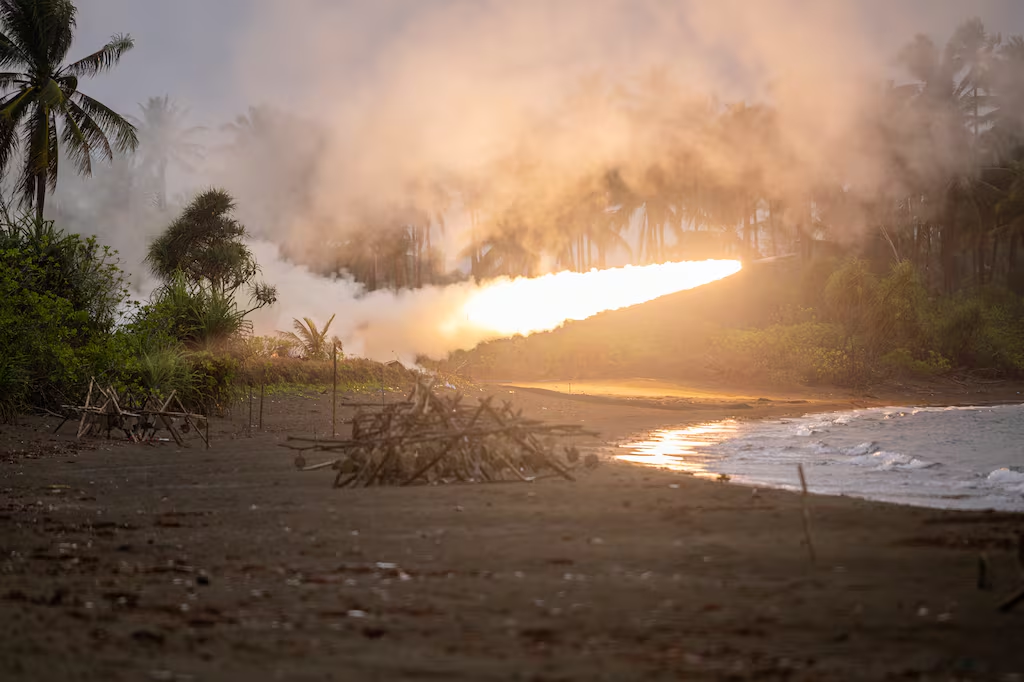
From there, the mission launched out of Alpena Combat Readiness Training Center in Michigan and ended at Fort Irwin, California—just over 2,000 miles of flight time packed with complex coordination between soldiers, airmen, and ground crews.
Once on the ground, the troops offloaded the launcher, simulated an artillery strike, completed reload operations, and reloaded the launcher for exfil—all within hours.
As Sgt. 1st Class Corey Morawa of the 182d Field Artillery Regiment put it, “HIRAIN brings speed, reach and survivability to the deep fight by inserting a precision-fire platform that can be rapidly inserted to support any theater of operations.”
The U.S. military can now drop precision-strike capability anywhere on earth, anytime, without needing a permanent base or weeks of setup.
The Michigan Army National Guard called HIRAIN “the ultimate military execution of the ‘shoot-and-scoot’ tactic at extreme speed and distance, in degraded conditions.” And that’s not hyperbole.
In a future conflict, where advanced enemy reconnaissance and long-range missiles make static artillery near-suicidal, this kind of mobility ensures deadly survivability.
This training wasn’t a one-off stunt. It’s part of a growing trend across the U.S. military where Guard, Reserve, and active-duty units are blending capabilities to sharpen their edge.
The Marines and Japan’s Self-Defense Force recently ran similar drills using their futuristic NMESIS anti-ship missile systems on islands around Okinawa. The purpose is clear: train America’s forces to fight, strike, and vanish faster than any adversary can react.
These kinds of exercises come as America’s adversaries—China, Iran, and increasingly aggressive Russian units—expand their reach and muscle-flexing.
Yet, while Washington liberals wring their hands over “escalations” and “provocations,” America’s warfighters stay laser-focused on maintaining the upper hand.
In September 2024, another rapid HIMARS deployment onto one of Alaska’s Aleutian Islands showcased nearly the same concept, combining paratroopers from the 11th Airborne Division and troops from the 1st and 3rd Multi-Domain Task Forces.
Loaded up on Air Force and Alaska Air National Guard aircraft, they executed instant radar setups and simulated long-range precision strikes.
The message was unmistakable: America’s reach extends everywhere.
Exercises like HIRAIN give the National Guard a critical role in the layered deterrence envisioned by War Secretary Pete Hegseth and President Trump’s national security vision.
Rather than wasting time on globalist nonsense, the focus now is on operational speed, battlefield flexibility, and overwhelming power projection.
It also reinforces how far the Guard has come. These are not weekend soldiers; they’re frontline warriors practicing operations indistinguishable from the most elite active-duty forces.
The synchronization between Rhode Island and Michigan units here represented the kind of inter-state, joint-force muscle that Washington bureaucrats love to talk about but only true warriors can deliver.
The takeaway is clear: America’s National Guard is not just ready to respond—they’re ready to strike first, fast, and effectively.
The Minuteman Rotation name isn’t a coincidence; it’s a nod to the Revolutionary War patriots who could be ready to fight at a minute’s notice. Today’s Minutemen are armed with precision-guided rockets, flying artillery systems, and an unshakable American spirit.
When this kind of capability becomes routine, no enemy, no matter how advanced, will ever again think the United States fights slow or predictable wars.
Under the right leadership, the U.S. military isn’t just keeping pace with modern warfare—it’s setting the pace for everyone else to try and follow.
Join the Discussion
COMMENTS POLICY: We have no tolerance for messages of violence, racism, vulgarity, obscenity or other such discourteous behavior. Thank you for contributing to a respectful and useful online dialogue.