Military leaders from 25 nations met this week in Waikiki at the Asia Pacific Center for Security Studies, uniting under the U.S. Marine Corps’ guidance to sharpen strategies for coastal warfare in a world where land, sea, and technology now blend into one battlespace.
Around 300 service members assembled for the 12th Pacific Amphibious Leaders Symposium, hosted by U.S. Marine Corps Forces Pacific, in what has become an essential forum for rehearsing the future of global littoral conflict.
The annual summit rotates across key Pacific locations, and this year, Hawaii served as the hub—a fitting location given its status as the nerve center for U.S. military operations in the Indo-Pacific region.
Lt. Gen. James Glynn, the top Marine in the Pacific, opened the gathering with words that captured both the gravity and history of the moment. “Trying to get to Hawaii’s a long way from everywhere, which puts it right in the middle of everything at a time when it’s needed most,” he told attendees.
MORE NEWS: Pentagon Confirms First Military Execution in Over 60 Years Will Be Publicly Livestreamed
Glynn’s point was clear: from this island stronghold, America projects power across the entire Pacific, deterring adversaries and reassuring allies.
Glynn drew parallels between ancient Hawaiian warriors guarding their coastline and the modern realities of amphibious and coastal warfare today.
He reminded the visiting officers that the line where ocean meets land has always been a contested frontier—then as now, both a zone of trade and of confrontation.
For the United States, that frontier has once again become critical as tensions continue to rise with Beijing over the South China Sea and Taiwan.
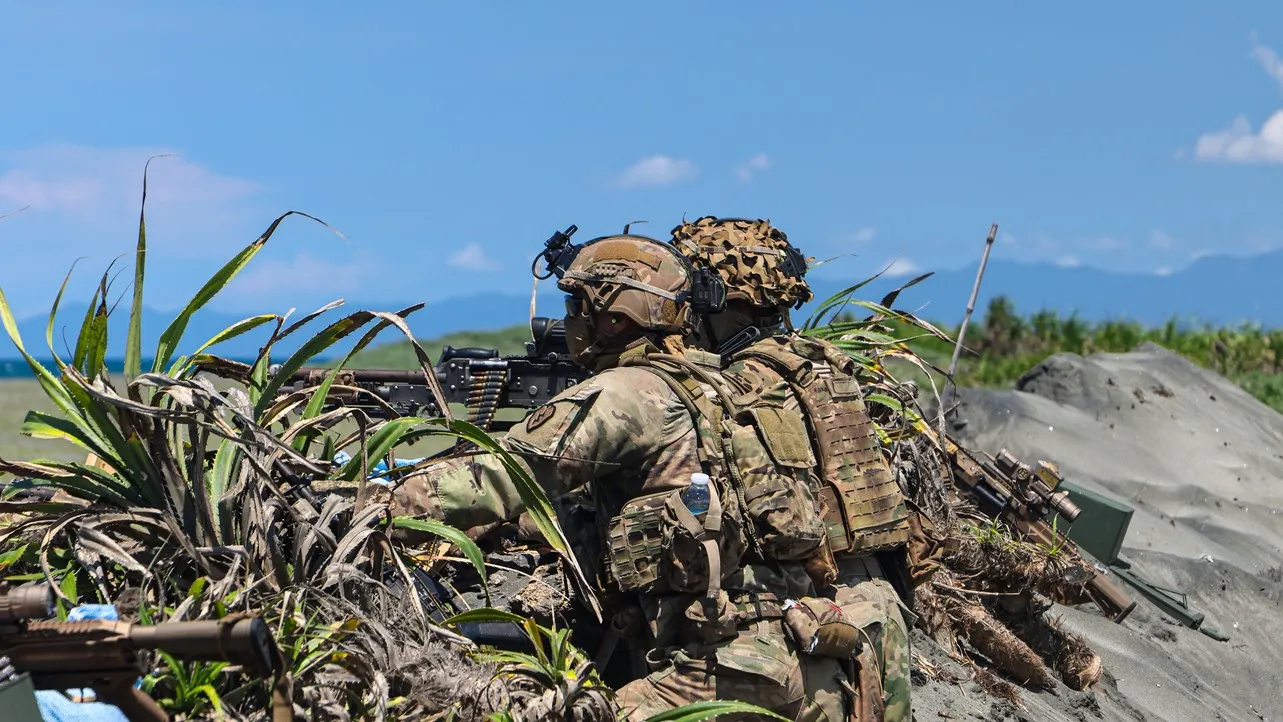
Washington’s renewed interest in such partnerships reflects the urgency of maintaining open sea lanes and freedom of navigation against China’s endless territorial aggression.
While Glynn, like any seasoned Marine, chose his words carefully, his message was unmistakable: regional alliances are becoming indispensable as adversaries like China push boundaries and provoke instability.
Behind closed doors, discussion centered on coordination, readiness, and logistics for rapid-response amphibious operations anywhere from the Philippines to the Bering Strait.
The symposium highlighted recent joint training efforts under the massive Exercise Balikatan in the Philippines.
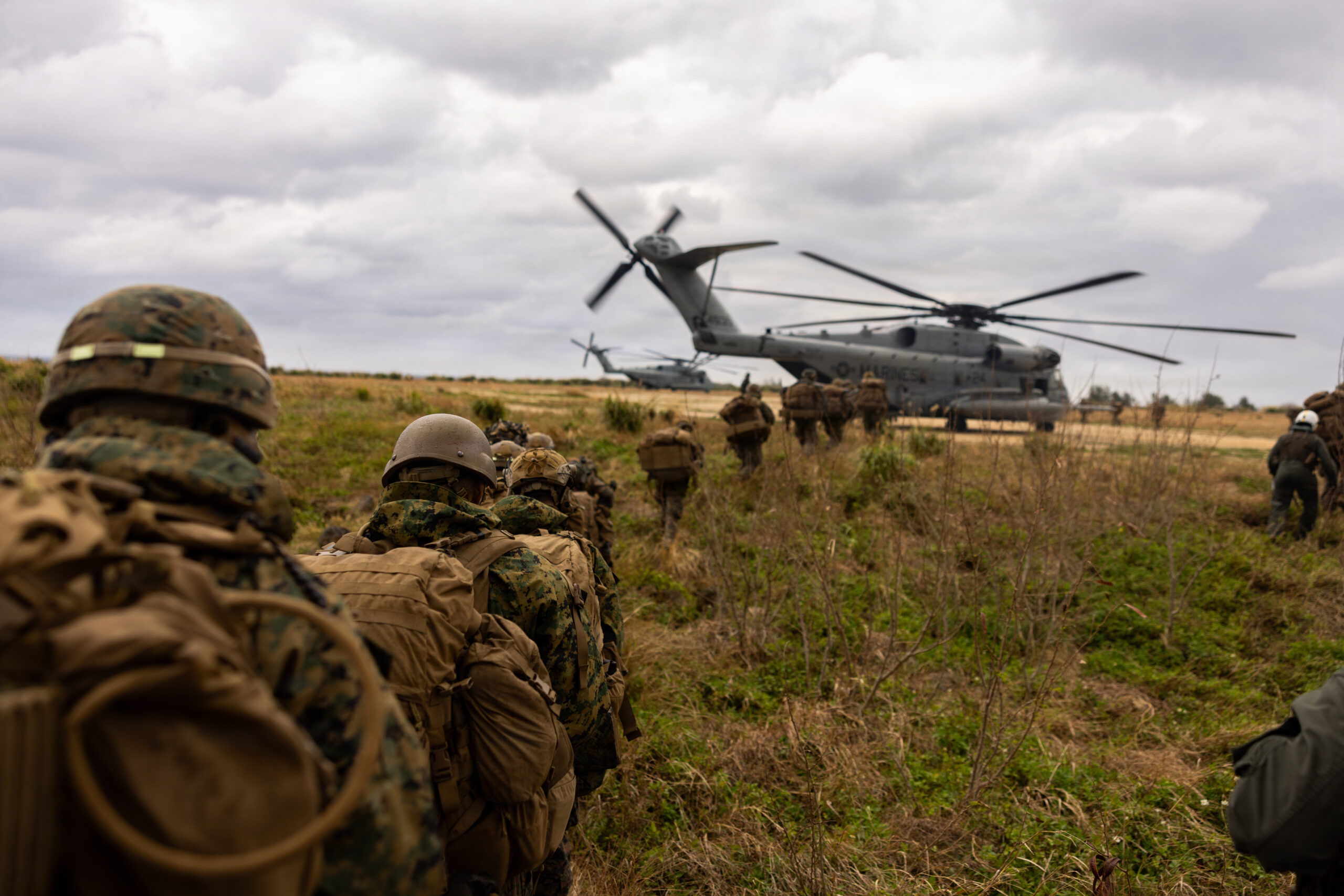
Glynn described the exercise as “consequential,” with Marines from nations including Australia, Japan, France, and Canada conducting live operations on sites edging contested waters. Not surprisingly, these are the very same regions China attempts to claim as “sovereign.”
China’s disregard for international rulings and its blatant militarization of the South China Sea continue to raise alarms.
Despite a 2016 international court ruling affirming the Philippines’ rights, Beijing has forged ahead with base construction, intimidation of fishermen, and military posturing designed to bully its neighbors.
During Balikatan, Marines from Hawaii’s own 3rd Marine Littoral Regiment exercised new anti-ship missile systems alongside Philippine forces just 100 miles from Taiwan—a not-so-subtle reminder that American reach remains strong and that aggression in the region will be met with credible deterrence.
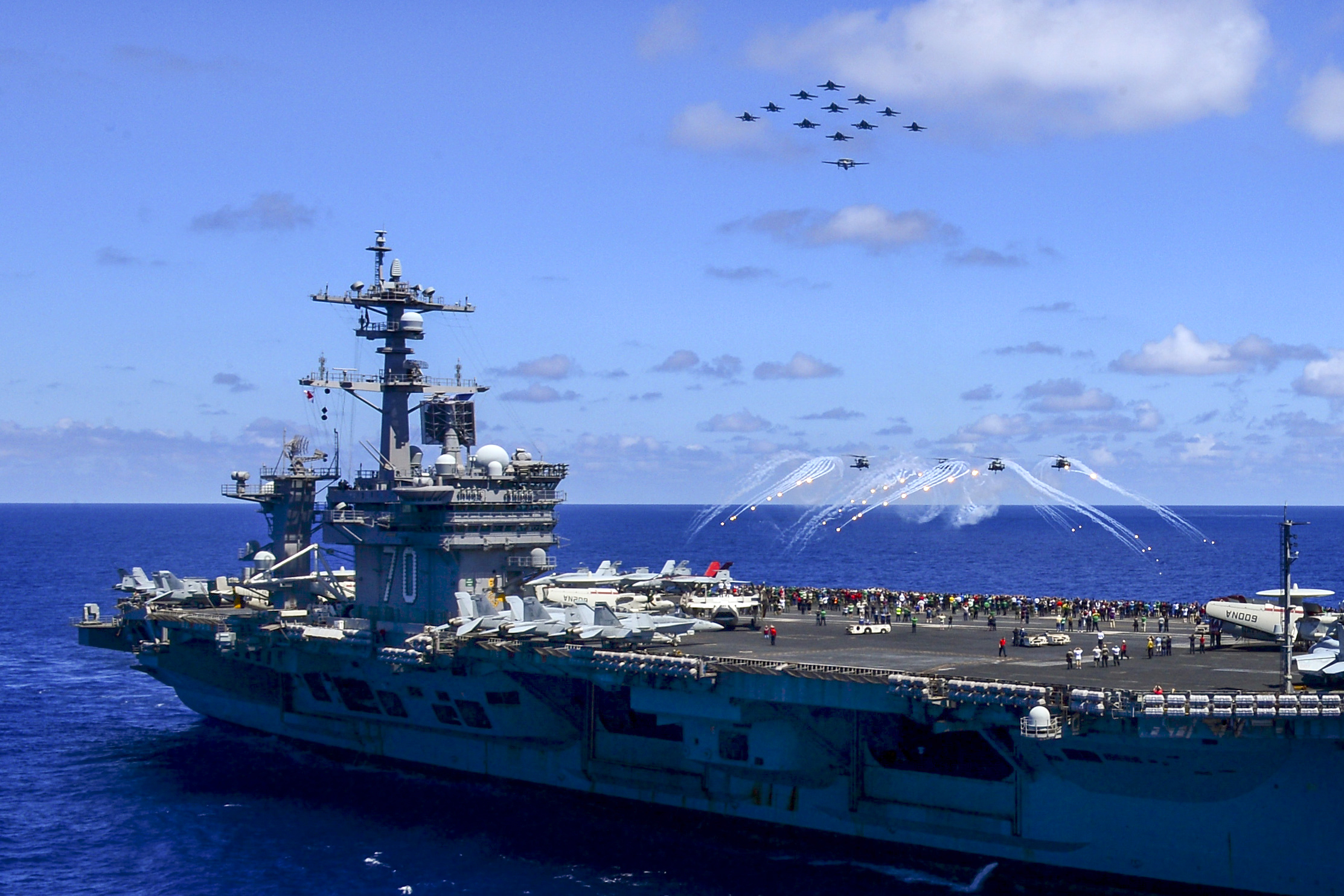
Although Glynn avoided naming China directly, the context of every discussion made it clear that the Chinese Communist Party and its expansionist ambitions loomed large in the background.
Interestingly, this massive Pacific war-planning conference came only weeks after President Trump’s trip to China to meet Xi Jinping, where he reaffirmed his commitment to peace through strength and fair trade without compromising America’s security interests.
Conflict across the globe—from Iran’s missile attacks on regional oil infrastructure to Russia’s aggression in Ukraine—provided additional case studies for the participants.
Each scenario underscored the same truth: the modern battlefield is multi-domain, layered across air, sea, space, and cyber. Glynn noted, “Longer-range weapons require deeper sensing, and deeper sensing extends into space and cyber.” The implication was plain: victory now depends on mastering information dominance as much as battlefield positioning.
At the heart of the U.S. Marines’ evolving strategy is Force Design 2030, a bold reorganization emphasizing flexibility, mobility, and coastal warfare supremacy.
The plan dissolves old formations, including tank battalions, to build agile units centered on anti-ship missile batteries and high-tech reconnaissance. While some critics claim it’s an untested gamble, battlefield realities from the Persian Gulf to the South China Sea seem to affirm its necessity.
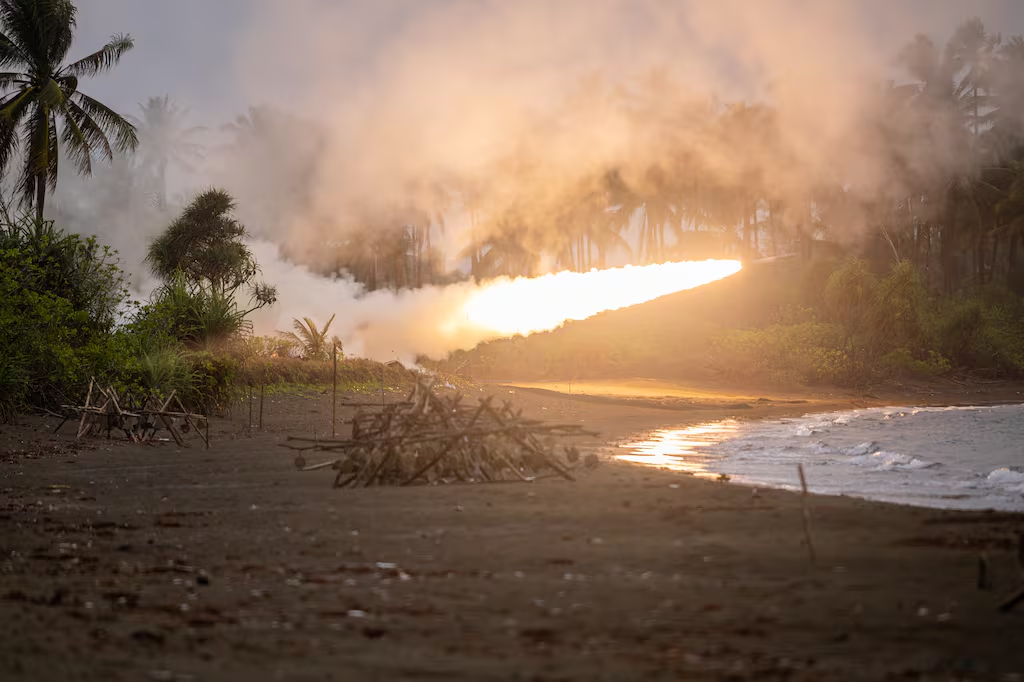
Glynn used the recent Iran conflict as an example of modern firepower’s reach and asymmetrical danger, pointing out that cheap precision drones and missiles prove why the Marines’ transformation is essential.
“The proliferation of long-range, cheap, destructive means has demonstrated the utility of the Force Design concept,” Glynn said, emphasizing that resilience, repairability, and sensor networks are now vital to survival and victory alike.
This Waikiki gathering served as more than just another meeting—it signaled the strengthening of a Pacific partnership web, one designed to ensure that no shoreline or sea lane falls quietly under the shadow of authoritarian expansion.
For America and its allies, projecting strength from the islands of Hawaii to the edges of Asia is not merely a strategic choice. It’s a necessary reminder that freedom still has guardians watching the tides.
Join the Discussion
COMMENTS POLICY: We have no tolerance for messages of violence, racism, vulgarity, obscenity or other such discourteous behavior. Thank you for contributing to a respectful and useful online dialogue.