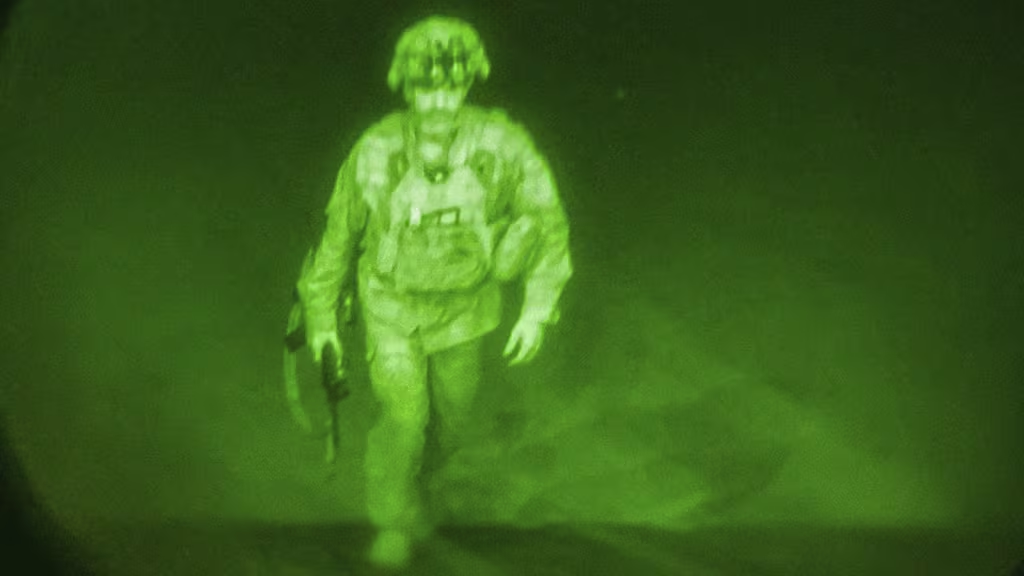
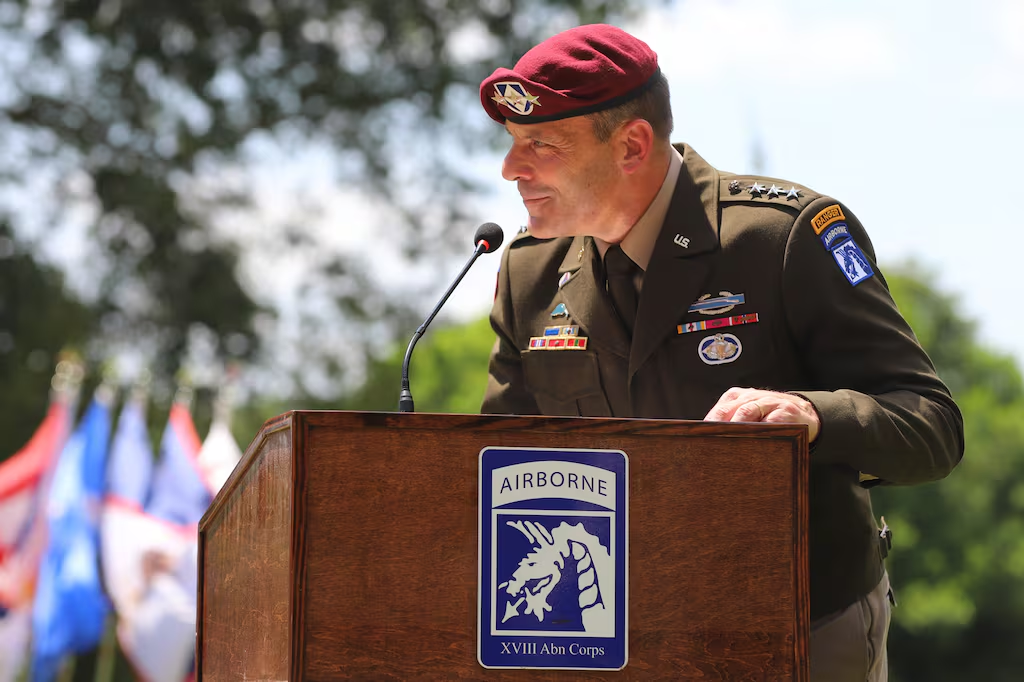
Gen. Christopher Donahue, the Army officer immortalized in the photo as the last U.S. soldier to leave Afghanistan, is stepping away from his post leading U.S. Army Europe and Africa, continuing a streak of high-profile changes spearheaded by War Secretary Pete Hegseth’s aggressive reshaping of military leadership.
Sources confirmed that Donahue will soon relinquish his command, with the official announcement expected from U.S. Army Europe and Africa. He assumed the position in December 2024 after decades of service in combat and leadership roles.
Donahue’s career spans multiple wars, and his photo boarding the final C-17 out of Kabul became one of the enduring images of America’s chaotic departure from Afghanistan in 2021.
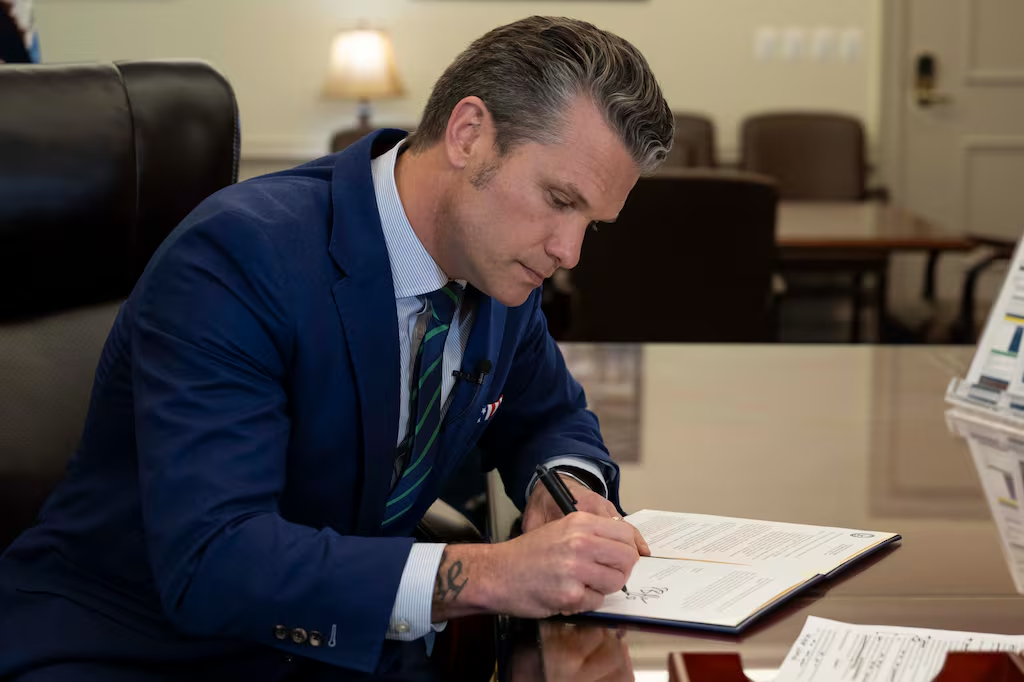
While the timing may have surprised some observers, this move fits into a broader pattern since Secretary Hegseth took over the War Department in early 2025.
Here's What They're Not Telling You About Your Retirement
A number of senior generals and admirals have either been fired, retired, or pushed out in a sweeping effort to redirect the Pentagon’s focus and leadership culture away from politically correct stagnation and toward combat readiness and accountability.
Among those shown the door or ushered into retirement are several Pentagon heavyweights: former Army Chief of Staff Gen. Randy George, former Joint Chiefs Chairman Gen. Charles “CQ” Brown Jr., Adm. Lisa Franchetti, Air Force Gen. James Slife, Lt. Gen. Jeffrey Kruse of the Defense Intelligence Agency, and Vice Adm. Shoshana Chatfield, who had been serving as the U.S. liaison to NATO’s military leadership.
Even Navy Secretary John Phelan recently departed under abrupt circumstances in April, further highlighting the extent of Hegseth’s ongoing restructure of the War Department.
This Could Be the Most Important Video Gun Owners Watch All Year
Hegseth, a decorated combat veteran and longtime advocate for reforming Pentagon bureaucracy, has made no secret of his desire to rebuild America’s warfighting ethos and strip the institution of deadweight leadership.
The War Secretary has reportedly taken direct action against leaders he views as part of the “status quo club”—those who, in his view, presided over decades of decline, woke policies, and dangerous indecision in America’s global posture.
Donahue’s departure, however, drew some concern from those who see him as one of the few modern generals deeply experienced in actual combat and special operations.
Sen. Thom Tillis voiced hesitation over the potential change, warning that if rumors were true about a downgrade of U.S. Army Europe-Africa to a three-star command, it would represent “a dangerous path.”
His comments, delivered over social media, reflected a broader unease over what some on Capitol Hill perceive as overreach by Hegseth.
Still, the War Department’s new leadership has insisted that these changes are part of a deliberate realignment focused on mission readiness rather than politics.
Hegseth’s team maintains that many high-ranking officers are being evaluated through a performance-based lens after decades of bureaucratic complacency during the wars in Iraq and Afghanistan. The current administration, aligned with President Trump’s “America First” defense doctrine, is intent on placing warriors—rather than administrators—back in charge.
Donahue’s storied career stands as a testament to the kind of gritty, hands-on leadership that emerged from the post-9/11 wars. Commissioned in 1992, he rose through the ranks leading Airborne and special operations troops across multiple theaters.
His reputation as a warfighter came not from press conferences or panels, but from the frontlines of America’s longest conflicts.
For many within the ranks, his stepping down carries an emotional weight. Donahue represented a bridge between the combat-tested generation and today’s emerging officer corps.
Yet even among his supporters, there’s recognition that Hegseth’s push to streamline and modernize command structures may inevitably mean further changes, even for those with distinguished service records.
While establishment critics describe Hegseth’s tenure as a purge, supporters see it as long-overdue housecleaning. The War Department is refocusing its mission around winning wars, not maintaining media-friendly optics or endless diversity initiatives.
In that sense, the departure of figures like Donahue is less an indictment and more an indicator of a culture recalibration inside the upper echelons of America’s military machine.
As U.S. interests remain stretched across Europe, Africa, and the Middle East, fresh leadership under Hegseth’s watch seeks to reassert the strategic boldness that once defined American power projection.
The goal isn’t merely to replace generals but to reset priorities—away from managerial mediocrity and back toward operational dominance.
Donahue’s legacy, encapsulated in that haunting image of the final soldier out of Afghanistan, will remain a symbol of both service and sacrifice.
His departure, on the other hand, fits neatly into a broader transformation—a rebirth of the warrior culture that Hegseth and President Trump have long argued is vital to America’s national security.
With the War Department’s leadership slate undergoing continuous reconfiguration, one thing is certain: the old guard’s era of comfortable command is over.
In its place stands a new generation of war-minded leadership, unafraid to challenge norms and willing to do what’s necessary to ensure the U.S. military remains unbeatable.
Under Hegseth’s direction, loyalty to mission and country—not careerism—has become the new measure of command. For those who can’t adapt, retirement might come sooner than expected.
Join the Discussion
COMMENTS POLICY: We have no tolerance for messages of violence, racism, vulgarity, obscenity or other such discourteous behavior. Thank you for contributing to a respectful and useful online dialogue.