The U.S. military has wrapped up a highly successful joint operation with Nigerian forces that struck a deadly blow to ISIS terror networks in West Africa — a mission that showcased what American precision, intelligence, and grit can accomplish when paired with a strong local ally.
According to Gen. Dagvin Anderson, commander of U.S. Africa Command, most American troops deployed for the operation have now been withdrawn from Nigeria following the completion of their mission. However, Washington continues to provide crucial intelligence support at the request of Abuja, marking a transition from on-the-ground engagement to an advisory and surveillance role.
The operation, carried out in May, was a major victory. It resulted in the death of Abu-Bilal al-Minuki, the global second-in-command of ISIS — a man with deep operational ties into the group’s terror networks spanning the Middle East and Africa. His death marks one of the most significant dismantlings of ISIS leadership since the group’s so-called caliphate collapsed years ago.
This wasn’t a coincidence. It followed a U.S. strike last Christmas ordered by President Donald Trump, after intelligence showed ISIS militants in Nigeria were targeting Christian communities. That strike — conducted under Trump’s direct leadership — reestablished America as a defender of the persecuted and a global hammer against jihadist murderers.
At a gathering of African war chiefs in Luanda, Angola, Gen. Anderson called the joint U.S.-Nigerian mission a “model for future cooperation” across the continent. According to Anderson, the United States’ role was to bring high-end capabilities — intelligence, surveillance, precision strikes — while allowing Nigerian forces to lead the ground fight.
This approach, Anderson explained, fits Washington’s broader strategy in Africa: empower capable regional partners to lead the charge while U.S. assets provide the specialized edge that makes the difference. And in this case, it made a decisive difference.
“The May mission degraded ISIS significantly in West Africa,” Anderson told journalists during a State Department-hosted briefing. “We have withdrawn much of our forces that were just there for that operation, but continue supporting Nigeria with intelligence.”
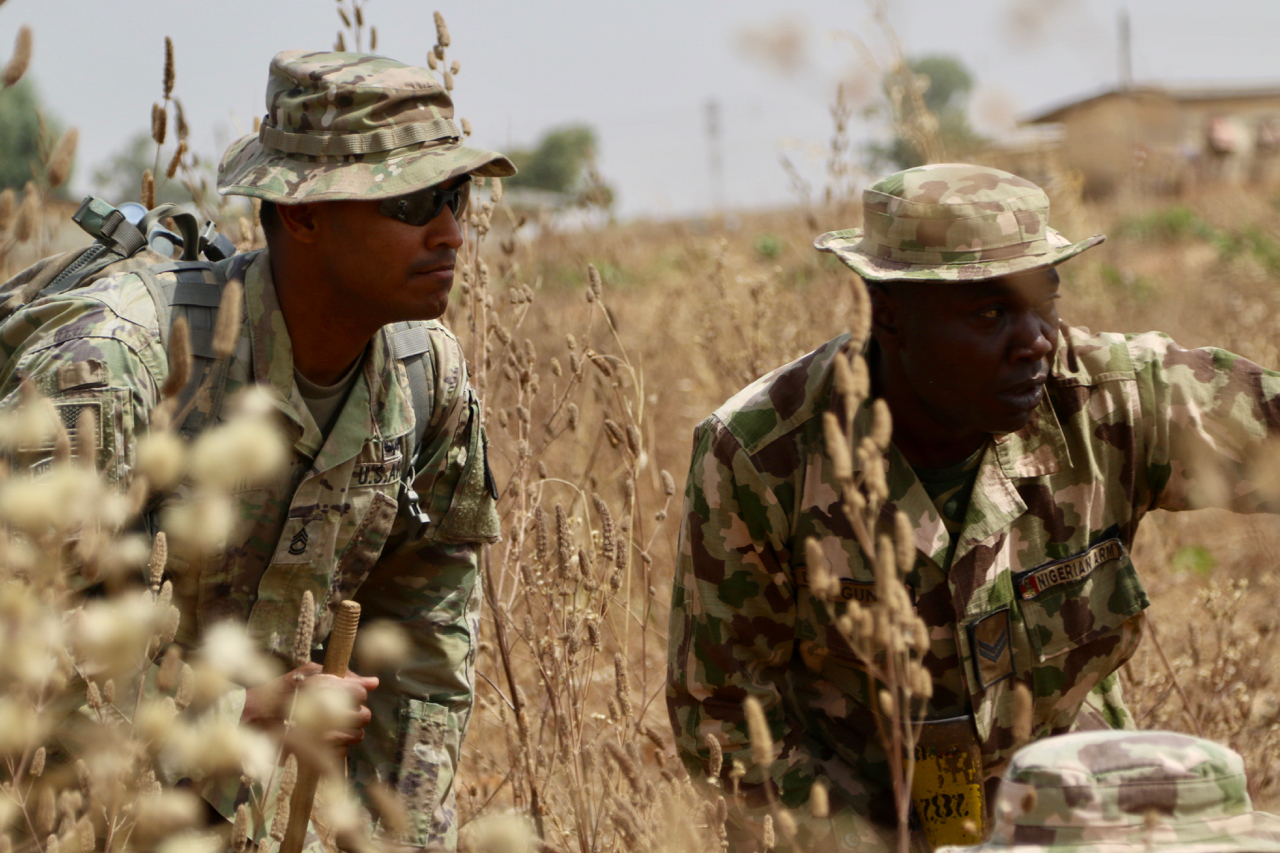
Anderson praised the Nigerian military for its swift exploitation of battlefield momentum. Since the operation, Nigerian forces have continued pursuing targets across the Lake Chad Basin region, keeping ISIS remnants on the run and cutting into their logistics networks.
He also noted that the combined pressure — military strikes followed by aggressive public messaging about the operation — has led to an uptick in defections and surrenders among militants. The psychological impact, Anderson said, was “significant,” because it proved that ISIS leadership was not untouchable, even in remote corners of Africa.
More importantly, the mission’s success has had far-reaching implications beyond Nigeria or the Lake Chad Basin. Disrupting ISIS’s regional network has also hindered its global communications and fundraising channels. That means less coordination with ISIS cells in the Middle East and fewer international resources available to fund attacks elsewhere.
The three-day Angola conference where Anderson spoke featured military chiefs from 35 African nations. The U.S., represented by AFRICOM leadership and State Department officials, emphasized the need for partnerships grounded in mutual respect and shared interests — not the kind of heavy-handed foreign “aid” the Biden crowd loves to lecture about, but genuine cooperation built around battlefield success.
Anderson’s remarks highlighted Washington’s quiet but steady return to strategic counterterror operations under a revitalized War Department posture. With Secretary of War Pete Hegseth championing a warrior-focused, mission-first approach, American forces are once again proving that victory comes from strength, clarity, and purpose — not from endless bureaucracy.
What’s happening in Africa is a sharp contrast to the fog of indecision that plagued U.S. policy in recent years. Under Trump-era doctrine, America made it clear that allies who stand up and fight terror deserve every bit of backing the U.S. arsenal can deliver. That clarity has paid off, with African militaries now more confident and capable than before.
As it stands, the withdrawal of U.S. troops from Nigeria doesn’t signal retreat — it signals success. The mission is complete, the target eliminated, and local forces empowered to sustain momentum. That’s what effective warfighting partnership looks like.
And if Washington continues to follow that model — smart, selective, and lethal — the message will remain the same from the deserts of Niger to the forests of Nigeria: America still leads from the front, not from the sidelines.
Join the Discussion
COMMENTS POLICY: We have no tolerance for messages of violence, racism, vulgarity, obscenity or other such discourteous behavior. Thank you for contributing to a respectful and useful online dialogue.