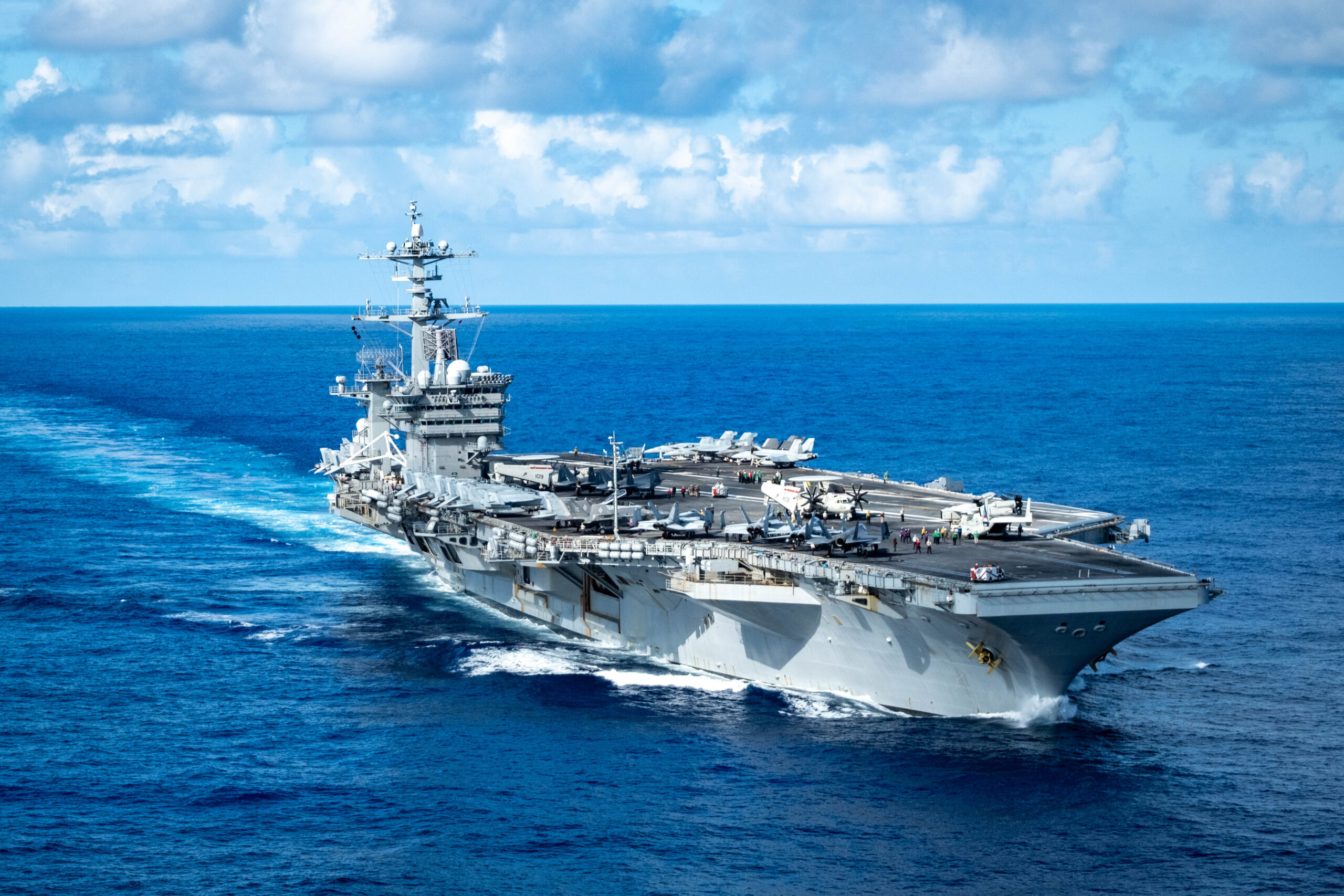
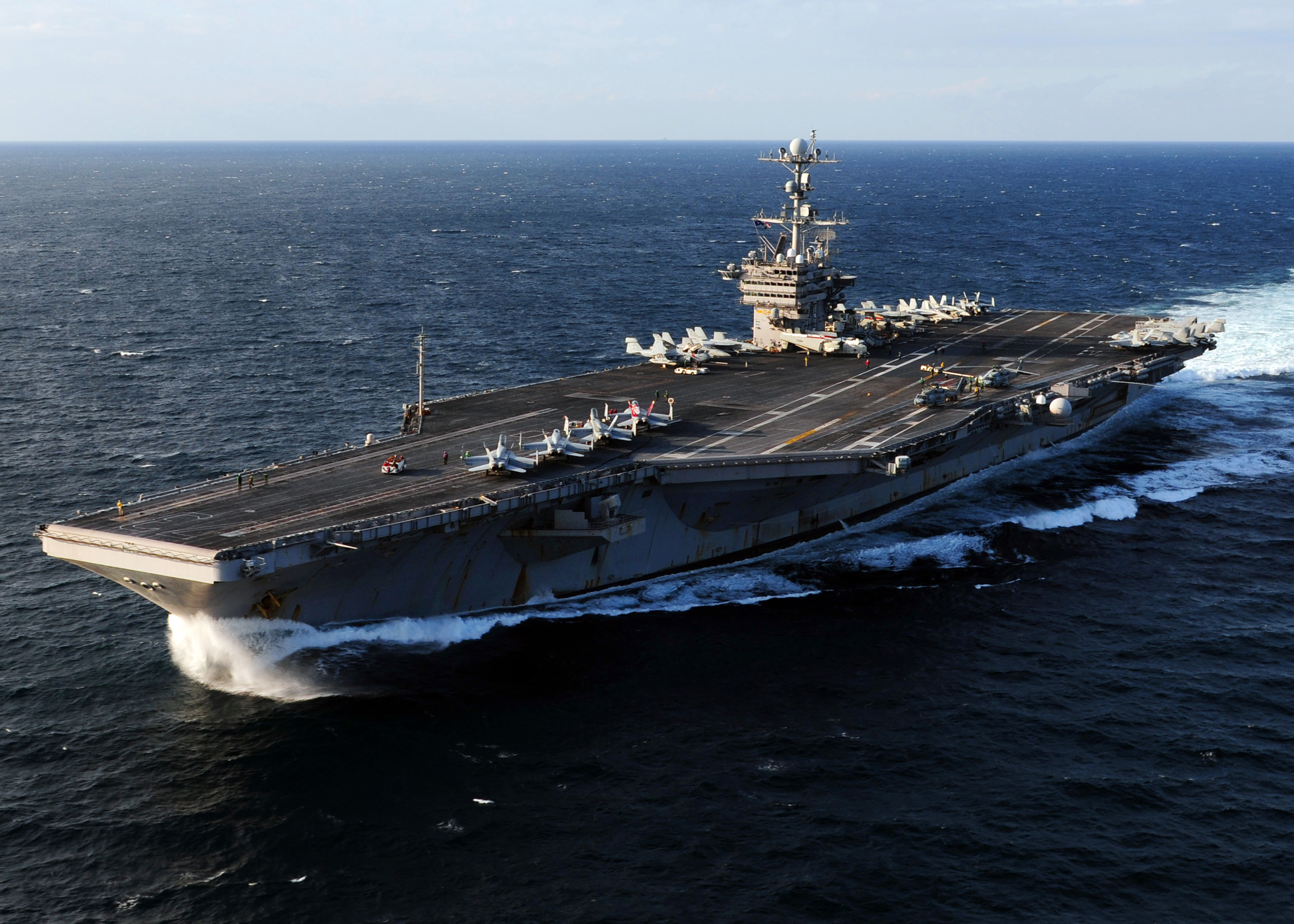
The USS George Washington and its carrier strike group are operating in the South China Sea as Chinese pressure against the Philippines turns increasingly hostile, placing another major American naval asset in a region where Beijing keeps testing how far it can push.
The Nimitz class aircraft carrier moved through the Luzon Strait on July 22 after operating in the Philippine Sea and taking part in June’s Valiant Shield exercise alongside Japanese warships.
That transit puts the carrier strike group in one of the most strategically important maritime corridors on the planet, where freedom of navigation is not some academic talking point but a daily contest with China’s expanding gray zone aggression.
“The USS George Washington Carrier Strike Group’s advanced capabilities, including the F-35, are upholding freedom of navigation and overflight in the South China Sea,” said Lee Lipton, U.S. ambassador to the Philippines. “We challenge excessive maritime claims around the world.”
The timing is not subtle, and it should not be. China has spent years turning disputed reefs, shoals, and waters into pressure points, then acting shocked when the United States and its allies refuse to treat Beijing’s claims as international law.
The latest flareup came on July 20 near Second Thomas Shoal, a disputed area where Chinese forces again chose intimidation over professionalism. According to the Armed Forces of the Philippines, the China Coast Guard deployed an inflatable boat that approached and surveilled a Philippine Navy vessel.
The Philippine vessel responded by deploying its own boats to deter the Chinese presence. That kind of measured response is what a treaty ally does when it is trying to avoid escalation while still refusing to surrender its sovereign rights.
Then the situation turned ugly. China Coast Guard personnel aboard the inflatable boat struck a Philippine Navy service member with a wooden baton, injuring the individual.
For all the polished language Beijing likes to use about stability and peace, baton attacks at sea tell a much clearer story. This was not diplomacy, and it was not harmless posturing.
The United States publicly condemned China’s actions, saying they threatened regional stability. That condemnation was necessary, but the presence of an American carrier strike group sends the sort of message authoritarian regimes tend to understand better than press releases.
Just days later, on July 24, the China Coast Guard again escalated, this time near Scarborough Shoal. According to the Philippine Coast Guard, Chinese vessels attacked Philippine Coast Guard and Bureau of Fisheries and Aquatic Resources vessels with water cannons.
Water cannon attacks have become one of Beijing’s favorite tools in the South China Sea, because they let China bully smaller neighbors while pretending it is somehow not using force. It is the maritime version of shoving someone and then lecturing them about calm.
Secretary of State Marco Rubio addressed America’s commitment to the Philippines while speaking to reporters on July 23 during the ASEAN Foreign Ministerial Meetings in the Philippines.
“We’re committed to supporting our treaty partners, and obviously we’ve already done quite a bit,” Rubio said. “In fact, there was a U.S. Coast Guard vessel in the region at the time that this happened and actually helped stand between the two sides and allowed the individual who was injured to be rescued and brought back for medical treatment.
“We’re already here, we’re already present, we have a role, and we’re not going to abandon our allies,” he noted. “We’ve made that abundantly clear.”
That is the right message at the right moment. Under President Trump’s America first approach, alliances are not supposed to be charity projects, but when partners stand up to Communist China in a vital theater, the United States has every reason to back them with strength.
The Philippines sits at the center of a contest that reaches far beyond one shoal or one encounter. The South China Sea carries enormous commercial traffic, supports regional fisheries, and serves as a crucial operating space for American and allied forces.
The USS George Washington’s presence reinforces that the United States still has the reach, capability, and will to operate where international law allows. Beijing may prefer a region where smaller nations quietly accept its demands, but carrier aviation has a way of interrupting that fantasy.
The carrier strike group’s participation in Valiant Shield with Japanese warships also matters. China is not facing isolated complaints from one neighbor, but a tightening network of American allies and partners who are increasingly tired of maritime harassment dressed up as coast guard activity.
The western Pacific is not a courtroom where Beijing gets to submit a fake map and walk away with the verdict. It is a hard power environment, and the USS George Washington is now part of the visible reminder that the United States and its allies are not leaving the field.
China can keep pretending its aggression is routine enforcement, but the pattern is obvious. The more Beijing pushes, the more allied forces will show up, and this time a full American carrier strike group is helping make that point in unmistakable fashion.
Join the Discussion
COMMENTS POLICY: We have no tolerance for messages of violence, racism, vulgarity, obscenity or other such discourteous behavior. Thank you for contributing to a respectful and useful online dialogue.