The U.S. Coast Guard and Bahamian forces pulled off another serious maritime interdiction Saturday, seizing roughly 2,380 pounds of suspected marijuana near Great Inagua, Bahamas.
The haul, valued at about $2.8 million, was found aboard a suspected trafficking vessel operating about 80 miles southwest of Great Inagua.
For smugglers hoping the open water would give them cover, that plan aged about as well as most criminal genius schemes do.
The crew of the U.S. Coast Guard Cutter Charles Sexton worked alongside the Royal Bahamas Defence Force to board the vessel and inspect what was moving through the area. Once aboard, authorities discovered 97 bales of suspected marijuana.
Here's What They're Not Telling You About Your Retirement
Three people who were on the vessel were taken into custody and transferred to the Royal Bahamas Defence Force for prosecution.
The suspected narcotics were also turned over to Bahamian authorities as part of the case.
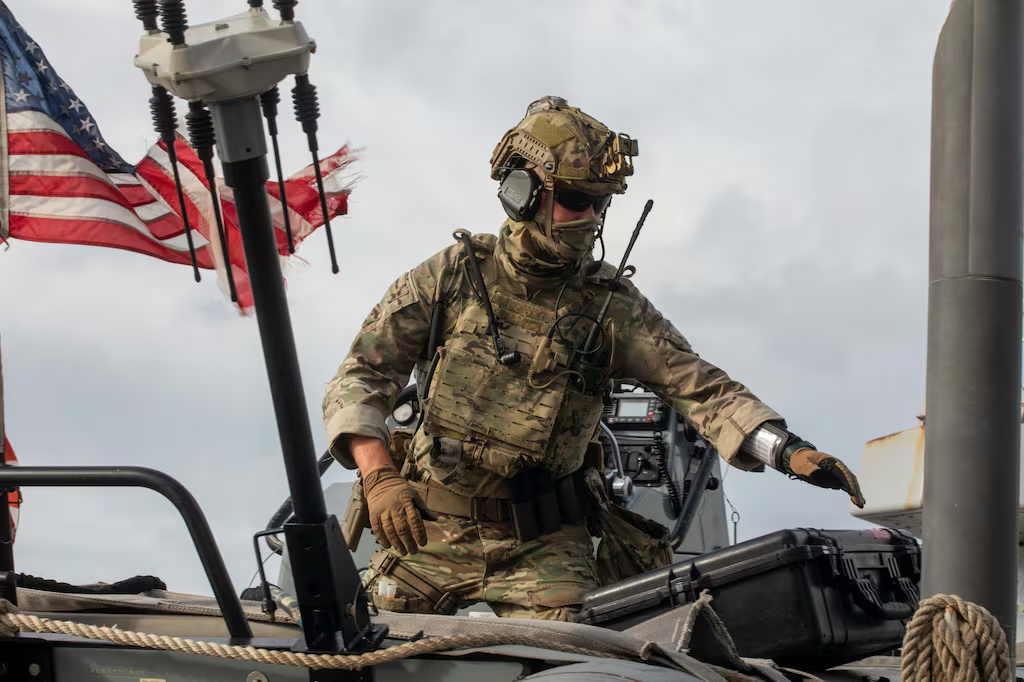
“This interdiction highlights the strength of our partnership and our shared commitment to combating transnational organized crime in the region,” Lt. Peter Fager, commanding officer of the Charles Sexton, said in a statement.
This Could Be the Most Important Video Gun Owners Watch All Year
“Working together, we continue to disrupt illicit trafficking and protect the security and stability of our maritime borders.”
That partnership matters because the waters around the Bahamas remain a prime route for smugglers trying to move drugs through the region and closer to American communities.
The Caribbean may look calm on a postcard, but for Coast Guard crews, it is a constant operational environment where bad actors test the seams every day.
The operation was carried out in coordination with the Bahamian government and the U.S. Coast Guard Homeland Security Cutter Ocean effort.
That initiative is built around using commercially operated vessels to support Coast Guard cutters while they remain deployed at sea.
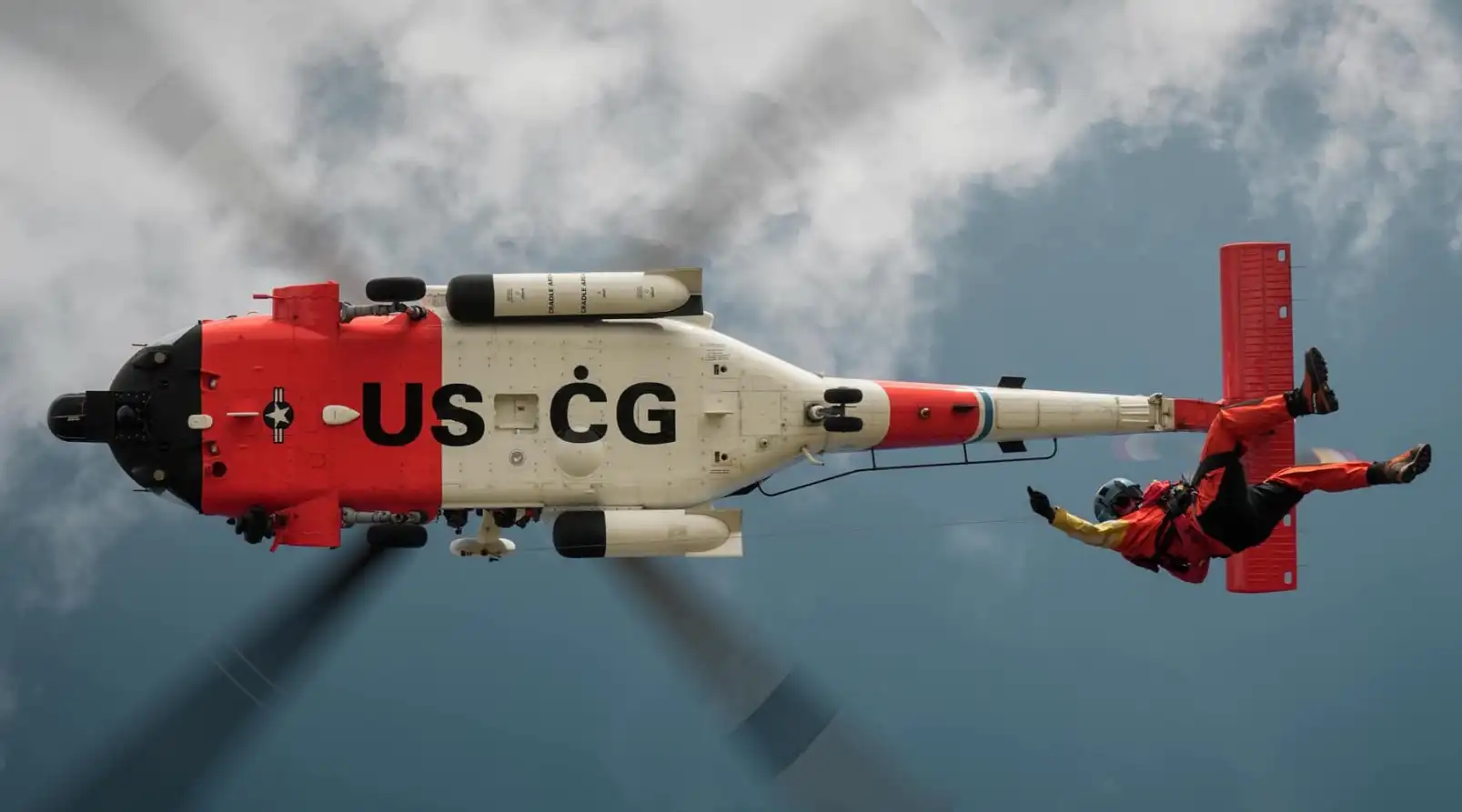
The idea is straightforward and practical, which is probably why it makes so much sense.
Instead of pulling cutters off station and sending them back to port for supplies, the program helps deliver personnel, fuel and other support directly to crews while they continue the mission.
That kind of sustainment can make a major difference for maritime security, especially as Coast Guard crews are asked to cover enormous operating areas with limited time and resources. When a cutter can stay out longer, smugglers have fewer openings to exploit.
“As demands on the Coast Guard continue to grow, we must find innovative ways to sustain our fleet and keep our crews focused on the mission,” Vice Adm. Nate Moore, deputy commandant for operations, said in a statement.
“Homeland Security Cutter-Ocean will help us deliver critical supplies and personnel more efficiently while increasing the endurance and effectiveness of our operational forces.”
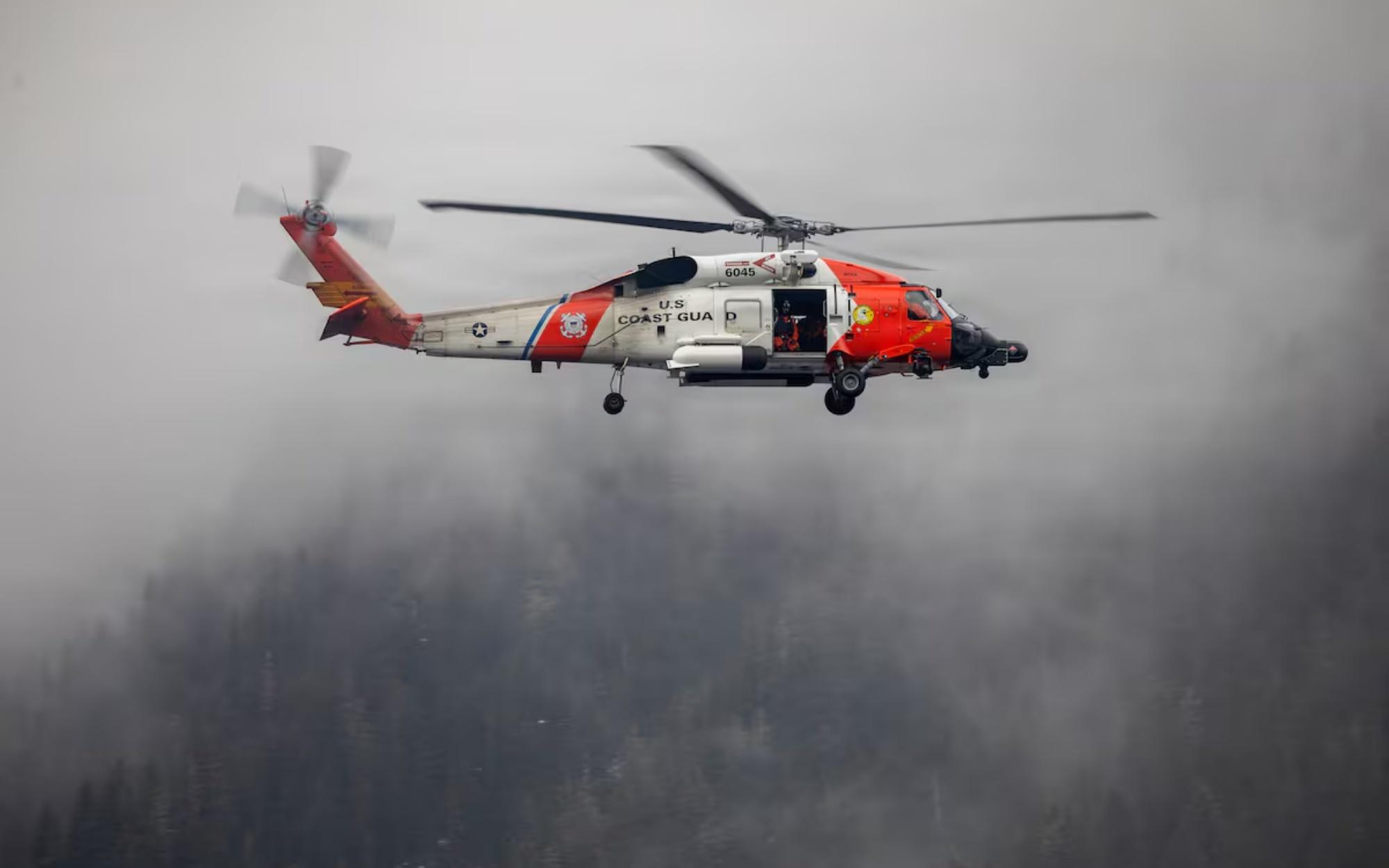
Moore’s point is hard to miss. Readiness is not some Pentagon talking point cooked up for a slideshow, it is what decides whether a crew is in the right place at the right time when a drug boat tries to slip through.
The Charles Sexton seizure is also a reminder that counter narcotics work is not abstract policy theater.
Every bale taken off the water is money denied to criminal networks, and every interdiction forces traffickers to absorb another costly failure.
Transnational organized crime groups rely on maritime routes because they believe distance, weather, and jurisdictional boundaries can work in their favor.
But coordinated operations between the Coast Guard and partner nations continue to make that math more painful for them.
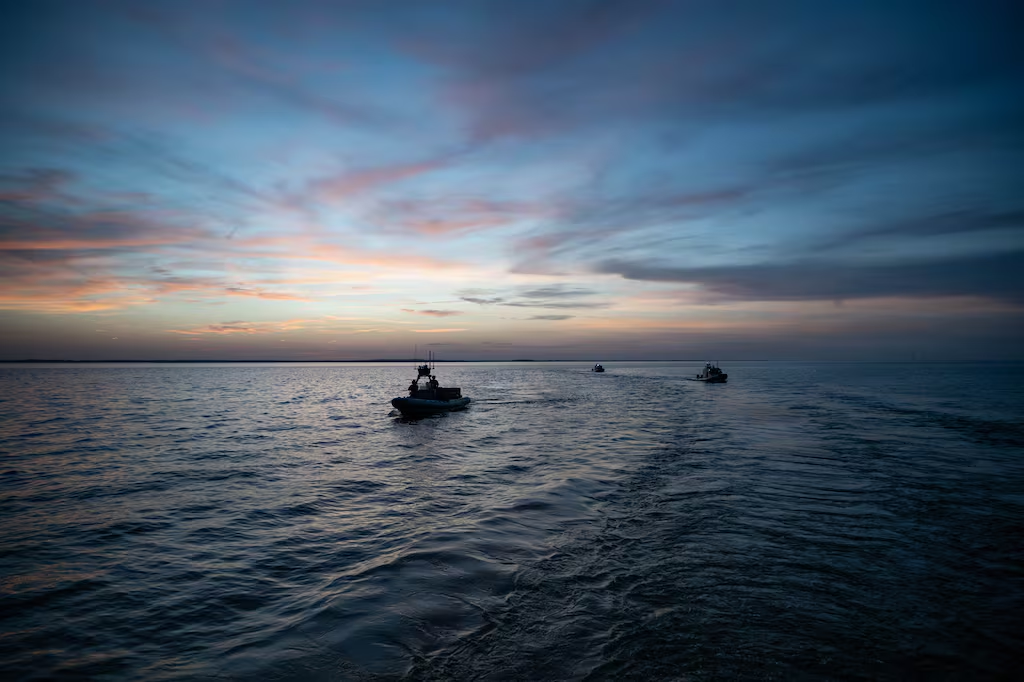
The Royal Bahamas Defence Force plays a critical role in these missions because regional cooperation closes the gaps that smugglers love to exploit.
When American and Bahamian forces operate together, the message is simple enough for even traffickers to understand: the water is being watched.
For the Coast Guard, missions like this sit at the intersection of homeland security, border protection, and national security.
The same crews that handle rescues, patrols, and maritime law enforcement are also standing between criminal networks and the routes they use to push drugs north.
The seizure near Great Inagua will not end the drug trade by itself, of course.
But it does show that aggressive maritime enforcement, backed by smart logistics and strong partnerships, can keep pressure on the networks that profit from chaos.
And for the crew of the Charles Sexton, the result was clear: 97 bales of suspected marijuana removed from the pipeline, three suspects handed over for prosecution, and another reminder that America’s maritime front line is very real.
Join the Discussion
COMMENTS POLICY: We have no tolerance for messages of violence, racism, vulgarity, obscenity or other such discourteous behavior. Thank you for contributing to a respectful and useful online dialogue.