The U.S. Army is hunting for a new surface to air missile built to kill small drones at longer ranges, a mission that has become impossible to ignore after years of cheap unmanned systems reshaping battlefields from Ukraine to the Middle East.
The project is called the Next Generation C sUAS Missile, and it arrives as the U.S. military and allied nations scramble for better answers to swarms of low cost aerial threats that can spot, strike, harass and overwhelm traditional defenses.
For years, the Pentagon class has talked up lasers, microwaves and other directed energy systems as the elegant solution to the drone problem. Those tools may have a future, but the Army is also making clear that sometimes a missile still has to do missile work.
The Army wants an “extended-range, quick-response missile to defeat Group 2 and Group 3 small Unmanned Aircraft System (sUAS) threats,” according to a Sources Sought notice. Industry has until August 20 to respond.
Here's What They're Not Telling You About Your Retirement
The early requirement calls for a missile capable of intercepting a drone flying at 6 kilometers in altitude and more than 16 kilometers away. The long term objective is tougher, with the Army aiming to destroy drones flying 8 kilometers high at ranges beyond 25 kilometers.
Guidance would come through a radar seeker, giving the weapon the ability to track and engage small unmanned aircraft that are often hard to detect and even harder to kill. That matters because modern drones are no longer just flying cameras with hobby store parts.
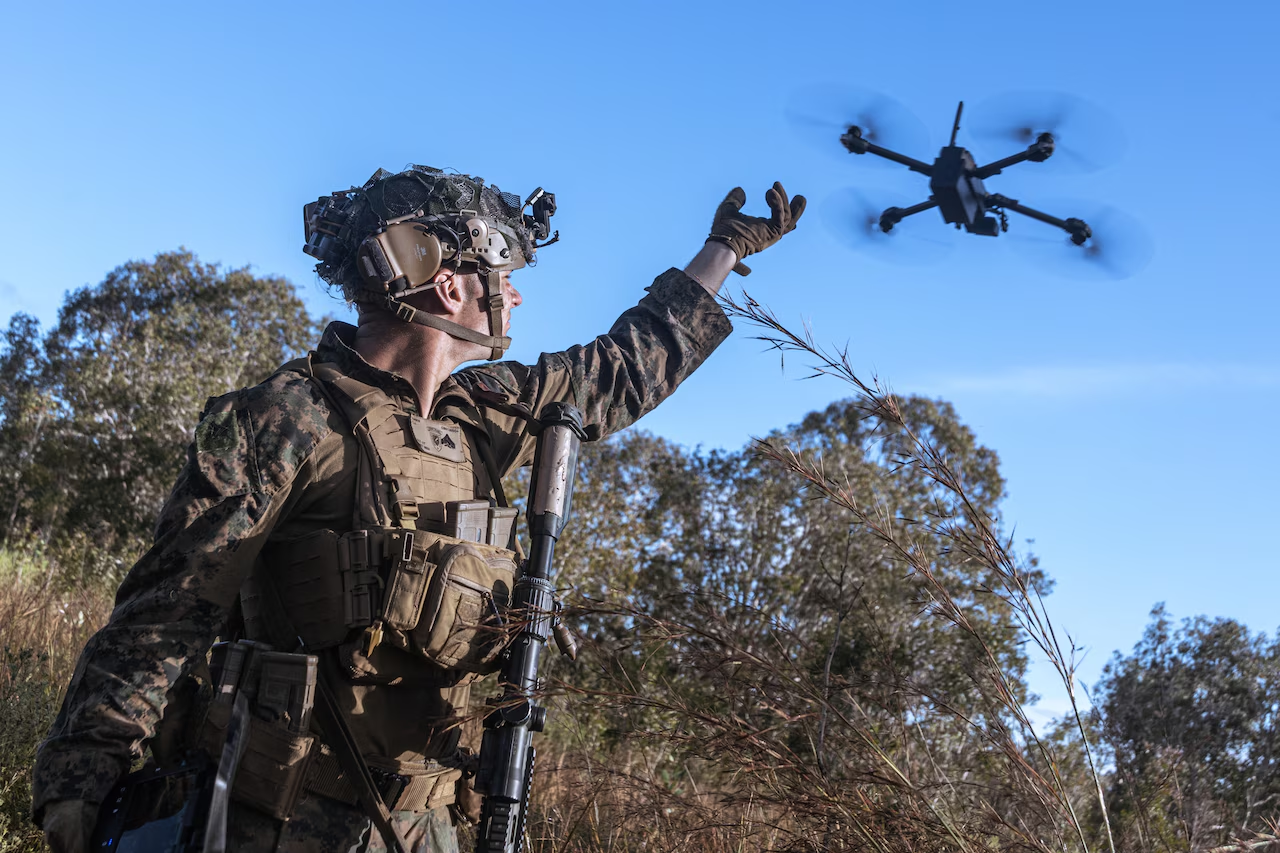
The new missile appears designed as a more capable companion to the Army’s existing Coyote counter drone missile system. It is meant to give commanders more reach, faster response and better odds against drones that are becoming more common every year.
This Could Be the Most Important Video Gun Owners Watch All Year
“The Army is looking for NGCM to be produced and integrated into the existing Coyote Launch System to provide extended range, rapid launch time, and reduced time-to-target over current effectors,” the notice said.
That compatibility requirement is a major point. The Army does not want a shiny science fair project that requires rebuilding the force from scratch, because even Washington should occasionally remember that troops need working weapons, not PowerPoint miracles.
“The missile must be compatible with the Coyote Launcher with minimal to no modifications,” the notice said.
The targets are Group 2 and Group 3 drones. Under the Department of War’s unmanned aircraft classification system, Group 2 drones weigh between 21 and 55 pounds at maximum takeoff, fly below 3,500 feet and move under 250 knots.

That category includes aircraft such as Boeing’s ScanEagle, which can provide surveillance and targeting support. Group 3 drones, such as Insitu’s RQ 21 Blackjack, are larger, with takeoff weights under 1,320 pounds and operating altitudes below 18,000 feet.
The Army wants the new missile to leave the launcher in less than five seconds after the operator gives the order to fire. Against drones that can close distance quickly or appear with little warning, hesitation is not a luxury soldiers can afford.
The service also wants the missile to work with existing air defense networks, including Sentinel A3 and A4 radars, LTAMDS and TPQ 53 radars. That means the Army is thinking less about boutique gear and more about plugging the missile into the battlefield architecture already being used.
There would be two versions of the system. One would defend fixed sites with a mix of sensors, while the other would ride on tactical vehicles for use at the halt and while moving, giving troops at the tactical edge a more flexible shield.
The notice says the mobile version would be “mounted on tactical vehicles for employment at the halt and on-the-move, providing a scalable capability at the tactical edge.” In plain English, the Army wants drone defense that can move with the fight instead of guarding only the rear area.
The timeline is ambitious. The Army wants the program to reach Technology Readiness Level 7, meaning field prototype testing, by the end of fiscal 2027, with contractors prepared to provide 50 missiles for operational assessment by early 2028.
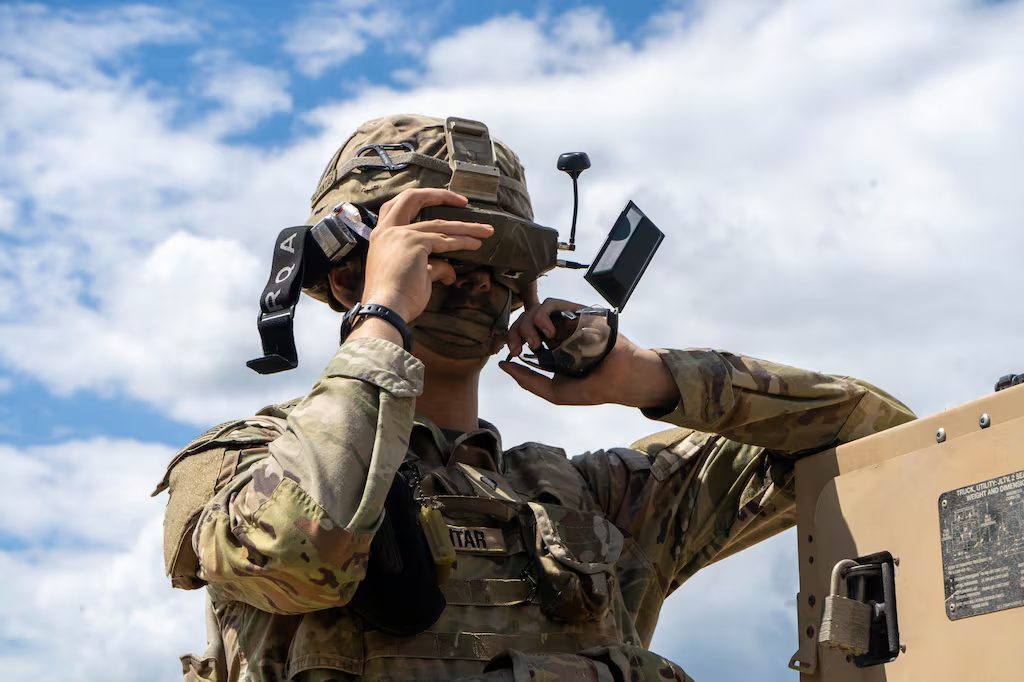
Cost will be one of the toughest parts. The Army wants missiles priced below $150,000 each when bought in bulk lots of 5,000, which is cheap compared with a roughly $4 million Patriot interceptor.
Still, critics will point out the math problem. If an Iranian Shahed 136 drone costs about $35,000, using a $150,000 interceptor is not exactly a bargain basement exchange, even if it is far better than burning premium strategic air defense missiles on disposable enemy junk.
That is why directed energy remains attractive, at least in theory, since lasers could cost only pennies per shot. But lasers can struggle in bad weather, smoke, dust and battlefield conditions, while missiles can keep working when the atmosphere refuses to cooperate.
The Army’s search reflects a hard lesson from modern war: small drones are now a serious battlefield threat, not a nuisance. If President Trump’s military rebuild and War Secretary Pete Hegseth’s warfighting focus mean anything, it is that soldiers need practical tools to kill real threats before those threats kill Americans.
The drone age is here, whether the bureaucracy likes it or not. The Army is now trying to make sure U.S. troops are not left shooting at tomorrow’s threats with yesterday’s weapons.
Join the Discussion
COMMENTS POLICY: We have no tolerance for messages of violence, racism, vulgarity, obscenity or other such discourteous behavior. Thank you for contributing to a respectful and useful online dialogue.