In a move that underscores continued American support for Ukraine’s defense efforts, the U.S. Air Force is pulling retired and non-operational F-16 fighter jets from its famed “boneyard” in Arizona and shipping them overseas—not to fly, but to be dismantled for critical spare parts.
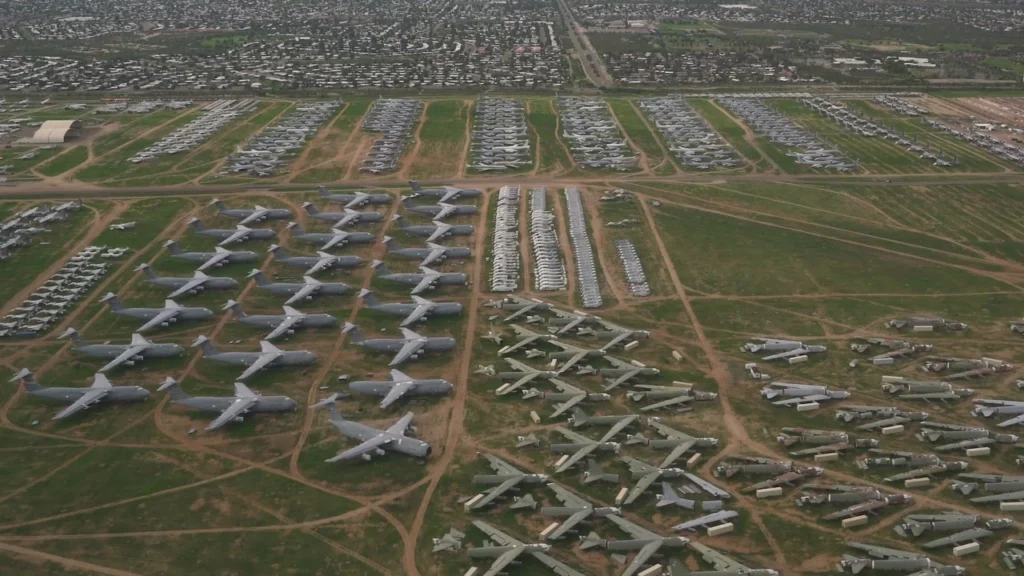
An Air Force spokesperson confirmed that the aircraft are being drawn from the 309th Aerospace Maintenance and Regeneration Group (AMARG), located at Davis-Monthan Air Force Base.
The sprawling AMARG facility is known for housing thousands of decommissioned military aircraft, often referred to as the “boneyard.” These particular F-16s, long since retired from active U.S. use, are being sent to help sustain European-donated F-16s now in Ukrainian service.
“The [Department of the Air Force] has supported the sustainment of European-donated F-16s to Ukraine by providing disused and completely nonoperational F-16s to Ukraine for parts,” the spokesperson explained.
Here's What They're Not Telling You About Your Retirement
“These F-16s were retired from active U.S. use and are not flyable. Importantly, they lack critical components such as an engine or radar, and could not be reconstituted for operational use.”
While the aircraft themselves won’t take to the skies, their cannibalized parts are expected to play a critical role in keeping Ukraine’s fleet of newly donated F-16s operational—ensuring that the jets remain in combat-ready condition amid ongoing Russian attacks.

Alongside the spare parts shipment, the U.S. State Department on Friday approved a separate military sale to Ukraine valued at approximately $310.5 million. The package is aimed at supporting the long-term viability of Ukraine’s F-16 fleet.
This Could Be the Most Important Video Gun Owners Watch All Year
It includes modifications and upgrades to the jets, ground handling equipment, software, publications, engineering and technical support, as well as pilot and maintenance training.
According to the State Department, the deal “will support the U.S.’s foreign policy goals and national security objectives by improving the security of a partner country that is a force for political stability and economic progress in Europe.”
Training is a key component of the assistance package. With pilot readiness and maintenance expertise critical to sustained F-16 operations, the sale will help improve Ukraine’s ability to not only defend itself, but also integrate more closely with the U.S. military and NATO allies through joint training and interoperability.
The development marks another chapter in Ukraine’s long-standing request to obtain modern, fourth-generation fighter aircraft.
When Russia launched its full-scale invasion in February 2022, Ukraine’s air force primarily relied on aging Soviet-era aircraft, including MiG-29 Fulcrums and Sukhoi Su-27 Flankers.
At most, Ukraine had 69 of these jets operational at the war’s outset.
Initially, the United States hesitated to meet Ukraine’s demands for Western fighters like the F-16. Defense leaders and lawmakers questioned whether the fighters would provide enough of a tactical advantage to justify the cost and logistical complexity.
Instead, the Pentagon prioritized immediate needs like air defense systems, artillery, and munitions.
That calculus began to change in 2023. In August of that year, President Joe Biden approved the transfer of F-16s to Ukraine. Since then, multiple NATO countries—including the Netherlands, Denmark, Norway, and Belgium—have either donated F-16s or pledged to do so.
Army Gen. Christopher Cavoli, commander of U.S. European Command, recently testified before Congress about the tangible impact of these aircraft. “There are more F-16s prepared to be deployed in [Ukraine],” Cavoli told the Senate Armed Services Committee on April 3.
“There are more pilots in the training pipeline. … The planes are active and they fly every day. They’ve defeated a large number of cruise missile threats and they’ve delivered an awful lot of offensive attacks as well” along Ukraine’s eastern front.
This layered approach—combining NATO-donated jets, spare parts from the U.S., and ongoing pilot training—signals a broader strategy to gradually modernize Ukraine’s air force and extend its capacity to operate independently for the long haul.
As the war in Ukraine grinds on with no immediate end in sight, the continued support in the form of logistical aid, operational training, and strategic equipment highlights the West’s enduring commitment.
And even from the desert sands of Arizona, decades-old American fighters are finding new purpose—helping Ukraine stay airborne in the face of relentless aggression.
Join the Discussion
COMMENTS POLICY: We have no tolerance for messages of violence, racism, vulgarity, obscenity or other such discourteous behavior. Thank you for contributing to a respectful and useful online dialogue.