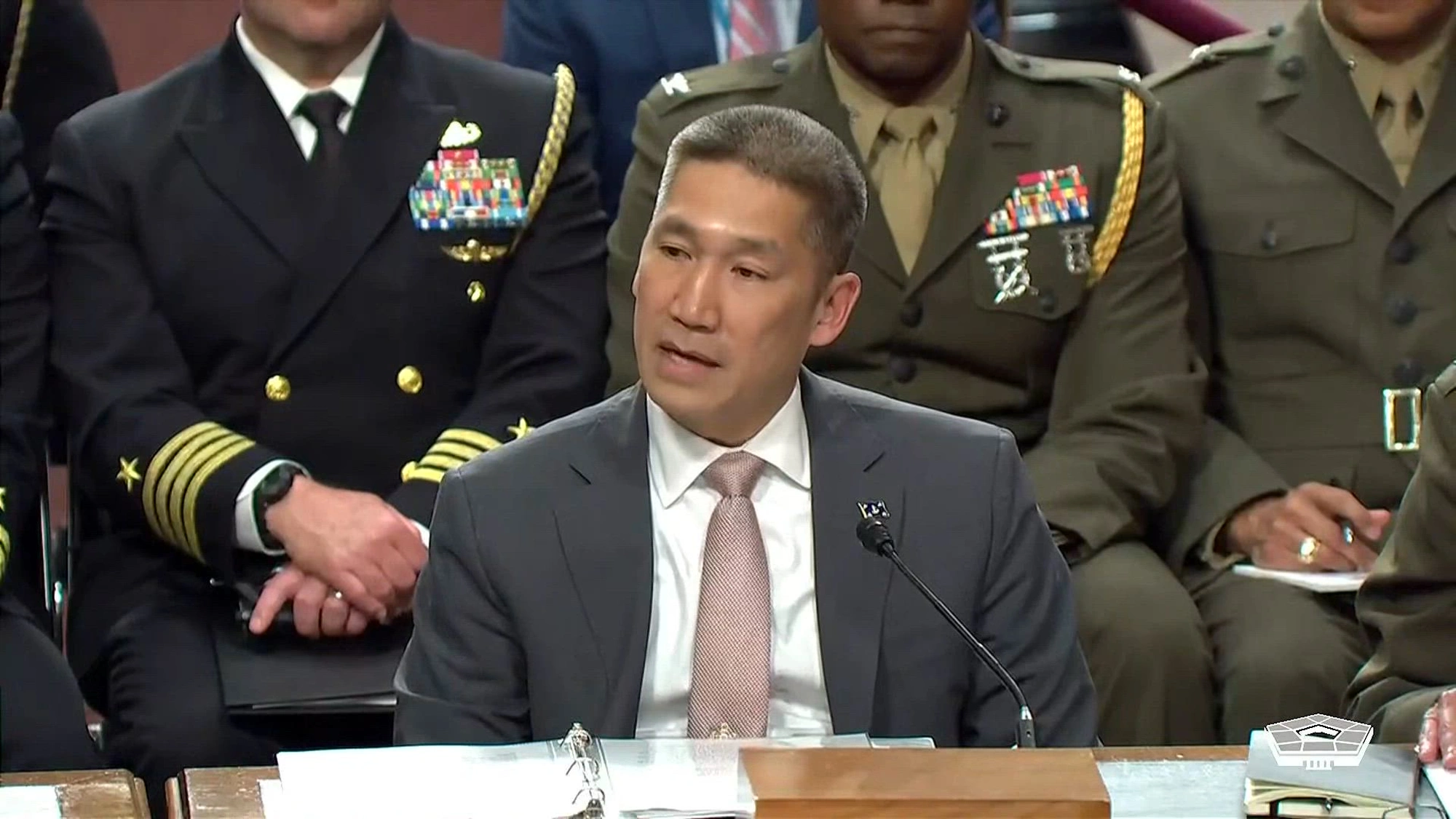
President Donald Trump announced Tuesday that he will nominate Acting Navy Secretary Hung Cao to lead the Navy on a permanent basis.
The decision would place a decorated special operations veteran and former Virginia Senate candidate at the helm of the Navy and Marine Corps during a critical period for American sea power.
Cao has served as acting Navy secretary since April 2026, when he stepped into the temporary post following the firing of former acting Navy Secretary John Phelan.
Trump made clear that Cao is not simply a placeholder, but his choice to drive the naval services forward.
Here's What They're Not Telling You About Your Retirement
“I am pleased to nominate a true warrior, Hung Cao, to become the next secretary of the Navy,” Trump said in a Truth Social post.
“We need patriots like Hung leading our Navy and Marine Corps, and I can think of no one better than him to make sure our great Navy and Marine Corps remain the fiercest and best force the world has ever seen.”
That endorsement reflects Trump’s broader effort to install leaders who understand combat readiness rather than bureaucratic fashion.
Cao brings operational experience, technical education and a blunt leadership style to a Navy confronting shipbuilding delays, maintenance problems and growing threats overseas.
This Could Be the Most Important Video Gun Owners Watch All Year
Before becoming acting Navy secretary, Cao served as under secretary of the Navy.
Since taking the top job temporarily, he has promoted a vision centered on what he calls alpha males and alpha females, with the focus placed firmly on warriors capable of delivering results.
Cao has also emphasized the need for a balanced mix of ships to help fulfill Trump’s promise of a Golden Fleet.
That concept calls for rebuilding American naval power with enough advanced vessels, support ships and amphibious capabilities to deter adversaries and dominate when deterrence fails.
During remarks at the Modern Day Marine exposition in Washington, D.C., Cao said the Navy must work within its existing budget while improving ships, aircraft and other essential equipment.
He also placed maintenance near the center of his agenda, an overdue priority after years of readiness concerns and costly delays.
His procurement priorities include delivering the sixth generation F/A XX aircraft, the new Navy Medium Landing Ship and additional amphibious transport docks.
Those platforms are considered important for ensuring sailors and Marines can operate across vast distances, particularly as China expands its military reach throughout the Indo Pacific.
Cao’s support for amphibious vessels also signals attention to the Marine Corps and its ability to move forces rapidly.
Marines cannot fight from PowerPoint slides, after all, and the fleet needs real ships that can carry real combat power into contested waters.
The acting secretary has also argued that the Navy must communicate more effectively with the American people.
Cao wants the service to control its narrative, provide accurate information and restore public trust instead of allowing confusion or political spin to define naval operations.
In June, he established the Department of the Navy Communication Strategy through an administrative message.
The initiative was intended to provide a more disciplined approach to explaining the service’s missions, accomplishments and requirements to the public.
Cao’s personal history is deeply tied to the American story. He arrived in the United States as a Vietnamese refugee in 1975, later graduated from the U.S. Naval Academy and completed 25 years of military service.
During that career, Cao deployed alongside special operations forces to Iraq, Afghanistan and Somalia.
He also earned a master’s degree in physics from the Naval Postgraduate School, giving him a technical background that could prove valuable as the Navy pursues increasingly complex ships, weapons and aircraft.
Cao entered electoral politics in 2024, challenging Democratic Sen. Tim Kaine in Virginia.
Although he lost that race, his campaign drew attention for sharply criticizing diversity and inclusion programs that had distracted the military from warfighting standards and combat effectiveness.
The Senate campaign did not end Cao’s public service, and Trump ultimately brought him into senior Navy leadership.
His rise from refugee to naval officer and now presidential nominee offers a striking contrast to the usual parade of polished Washington insiders who know more about committee rooms than combat zones.
Cao responded shortly after Trump announced the nomination. “Thank you, Mr. President,” Cao said in a social media post.
“It’s an honor of a lifetime to lead the great warriors of the Navy and Marine Corps team. I’m grateful for your leadership and support as we continue to get after shipbuilding and ensure the defense of the homeland.”
The nomination now heads to the Senate, which must vote before Cao can assume the position permanently.
If confirmed, he will inherit the difficult mission of accelerating shipbuilding, strengthening maintenance, modernizing naval aviation and ensuring the Navy and Marine Corps remain ready to fight and win.
Trump has chosen a combat veteran with a clear understanding of sacrifice, national survival and military strength.
The Senate will now decide whether to confirm the warrior already working to put America’s fleet back on a fighting course.
Join the Discussion
COMMENTS POLICY: We have no tolerance for messages of violence, racism, vulgarity, obscenity or other such discourteous behavior. Thank you for contributing to a respectful and useful online dialogue.