After six years of remarkable service marked by danger, devotion, and innovation, the U.S. military’s only certified search and rescue dog has officially retired.
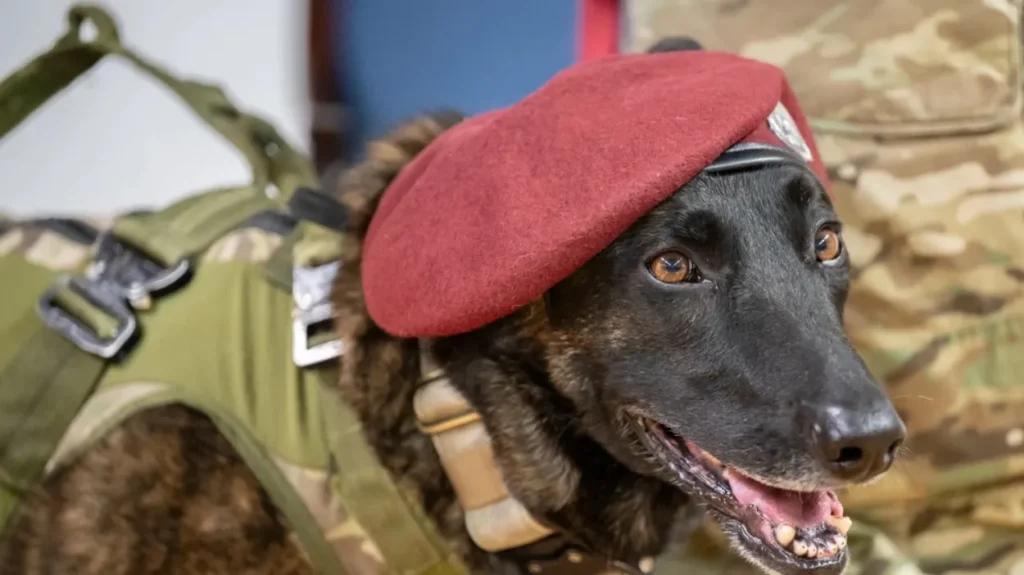
Callie, a Dutch Shepherd and a decorated member of the Kentucky Air National Guard’s 123rd Special Tactics Squadron, quietly stepped away from active duty earlier this year.
Over the weekend, the Air National Guard offered a fuller tribute to the canine's contributions and her farewell ceremony.
Callie wasn’t just any military working dog. In fact, during her tenure, she stood alone in her field—literally the only search and rescue canine serving in the U.S. military.
Here's What They're Not Telling You About Your Retirement
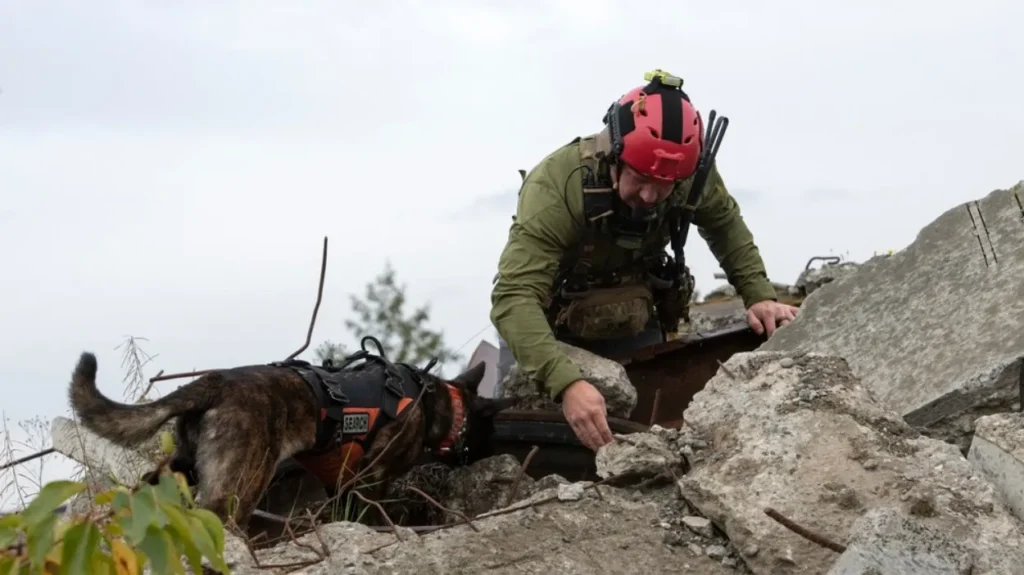
Her job was physically demanding, mentally intense, and often carried out in the wake of catastrophic natural disasters.
With her handler, Master Sgt. Rudy Parsons, at her side, Callie responded to state and national emergencies, deployed six times, and operated in a wide variety of extreme conditions.
“She also deployed six times in support of state and national-level calls for assistance,” said Maj. Bryan Hunt, commander of the 123rd Special Tactics Squadron.
This Could Be the Most Important Video Gun Owners Watch All Year
“Rudy was at her side for all of that. It didn’t matter if the call for help came at 2 o’clock in the morning, they were going out the door.”
Callie’s story began in the aftermath of the 2010 Haiti earthquake. U.S. airmen witnessed firsthand the life-saving work of canine teams locating survivors in the rubble of Port-au-Prince.
Inspired by that experience, Parsons led an effort to bring similar capabilities to U.S. military pararescue.
Nearly a decade later, in 2019, Callie became the program’s first and only success—fully trained and operational as a pararescue dog.
During her time in uniform, Callie accumulated a resume that would make any special operator proud: 15 military free-fall jumps, 750 flight hours, and extensive deployments across the country, including missions in Alaska, West Virginia, and tornado-ravaged Kentucky.
She rappelled from helicopters, rode snowmobiles, and endured grueling search missions through collapsed buildings and disaster zones. And yes—Callie even had her own beret.
Despite her training and accomplishments, Callie’s work took a physical toll.
Over the years, she sustained a number of injuries: damaged knees, an eye injury, a snake bite, and cuts to her belly and paws during a grueling search through the rubble of a candle factory destroyed by a tornado in Mayfield, Kentucky, in 2021.
But each time, she continued to serve.
“An amazing canine,” Hunt said of her service—an understatement given Callie’s groundbreaking contributions to pararescue efforts.
While more than 1,500 military working dogs serve in roles across the armed forces—from patrol to explosives detection—Callie’s specialization in search and rescue operations made her a singular figure in military history.
The bond between Callie and her handler also became something extraordinary.
Working together under high-stress, often life-threatening conditions forged a connection that transcended the usual dog-handler relationship.
“I had always been the sarcastic guy in the room,” Parsons said at the retirement ceremony.
“I always had a really negative quip. But when Callie came into my life, there was a massive shift. I wanted to be more uplifting as opposed to tearing things down.”
Both Callie and Parsons were awarded Meritorious Service Medals at the ceremony, marking not just the end of their active-duty chapter, but the acknowledgment of a truly pioneering contribution to military operations.
The attempt to train a second dog to carry on Callie’s mission was ultimately unsuccessful, underscoring how unique her abilities were.
Today, Parsons and Callie are still together—but far from the frontlines. Upon her retirement, Parsons adopted Callie, and she now lives the life of a well-earned civilian.
For those who followed Callie’s journey, her retirement is bittersweet. She was more than a mascot, more than a novelty—she was a trailblazer, a combat veteran, and a partner who shaped a new frontier in military service.
Though her paw prints may no longer mark the floors of helicopters or disaster zones, her legacy has made a lasting impact on how the military considers the role of canines in complex operations.
Callie may have traded in her beret for a chew toy, but in the eyes of her unit—and the many lives touched by her work—she will always be a hero.
Join the Discussion
COMMENTS POLICY: We have no tolerance for messages of violence, racism, vulgarity, obscenity or other such discourteous behavior. Thank you for contributing to a respectful and useful online dialogue.