In a significant structural shift, the U.S. Army has announced plans to deactivate two of its Security Force Assistance Brigades (SFABs) — the 4th and 54th — in an effort to reallocate experienced soldiers back to traditional combat units.
The move reflects a growing emphasis on strengthening the operational force by reinvesting in squad-level leadership and conventional readiness.
SFABs were established starting in 2017 as elite advisory formations to train and assist partner militaries across the globe.
Comprised mostly of seasoned noncommissioned officers (NCOs) and officers, these units were designed to export U.S. military expertise without deploying full combat brigades.
Here's What They're Not Telling You About Your Retirement
But after nearly eight years of global advisory missions, Army leadership has concluded that the service's current needs lie closer to home.
“The reason that we’re cutting those is to make room for or get more noncommissioned officers into the force. That’s where we’re hurting the most,” said Col. Dave Butler, spokesperson for the Army Chief of Staff.
“We’re trying to fill the ranks up of the operational force and we have a lot of NCOs and junior officers in the SFAB formations.”
The deactivation will impact the 4th SFAB, based at Fort Carson, Colorado — a brigade that has supported European allies and played a key role in training Ukrainian forces outside their country since Russia's 2022 invasion.
This Could Be the Most Important Video Gun Owners Watch All Year
The 54th SFAB, a National Guard formation headquartered in Indiana with battalions spread across several states, will also be shuttered. This unit played a unique role in supporting global operations while also serving domestically in response to natural disasters.
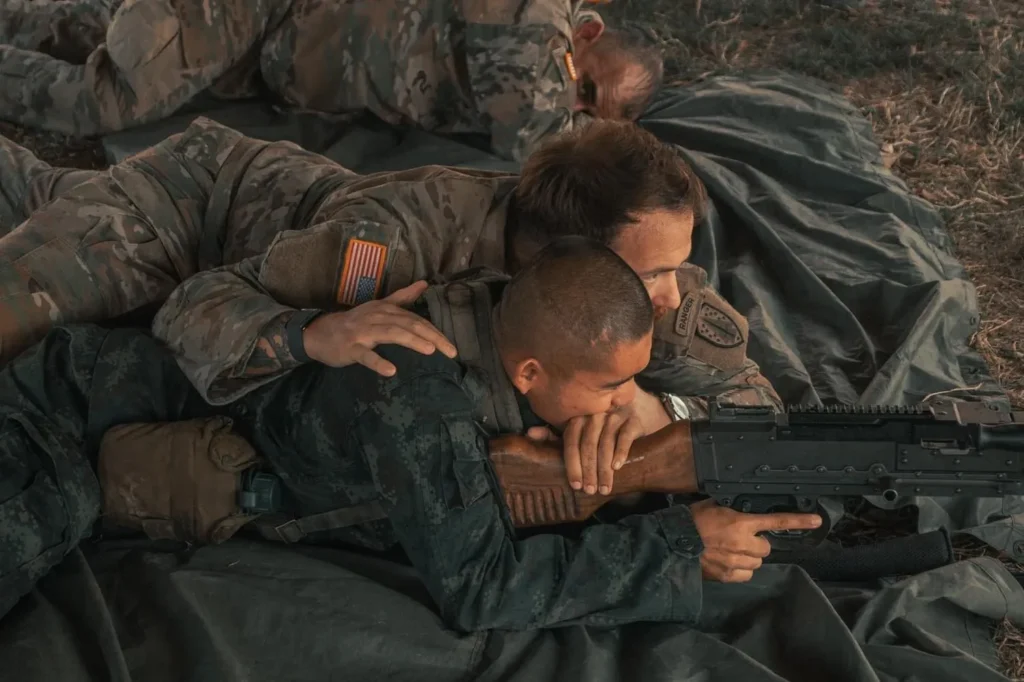
Butler emphasized that the 4th SFAB’s European focus is now deemed redundant. “These are long-term existing relationships.
We’ve been training together, building together for decades without the SFAB,” he said. “Where we envision SFABs to be is in a place where those relationships and that training didn’t exist or needed to be bolstered — but Europe is not a place like that.”
The decision was outlined in an Army executive order issued last week, though the timeline for implementation remains unclear.
Operational planning teams will be formed to coordinate the transitions, which could impact unit cohesion and the missions of other formations, including the 10th Special Forces Group, also based at Fort Carson.
“I’m pretty sure [10 SFG] in some respect, maybe appreciated the SFAB being there because some of that stuff, that’s the low-hanging fruit of partner-partner and ally work that SFAB is doing,” a senior Army official said.
The 54th SFAB is authorized at a strength of about 800 soldiers and was structured to pull talent from across the U.S., representing all 50 states and four territories — hence its designation as the 54th.
The unit included a diverse array of National Guardsmen: from doctors and federal agents to municipal judges and logistics professionals with corporate experience from Amazon and Walmart.
“There’s nobody on any component of the Army that can tell you more about getting material in someone’s hand than Amazon or Walmart,” said Command Sgt. Maj. John Hoffman of the 54th. “How do you replicate that anywhere else?”
According to Hoffman, what makes SFABs unique is how they teach conventional skills in innovative, unconventional ways, often with just a dozen advisors in the field.
“We put 12 bubbas and bubba-ettes on the ground to do it, and they come up with some innovative ways in order to teach these skills to our partners all around the world, bridging language and cultural gaps.”
The 54th also filled a hybrid role, deploying for domestic missions during hurricanes, floods, and other emergencies — a testament to the flexibility and value of National Guard SFABs.
However, the Army has yet to announce how these soldiers will be reassigned or whether similar capabilities will be retained in other formations.
Despite these cuts, four SFABs will remain active. The 1st SFAB at Fort Benning, Georgia continues to support partners in South America; the 2nd at Fort Bragg, North Carolina focuses on Africa; the 3rd at Fort Cavazos, Texas works with Middle Eastern allies; and the 5th at Joint Base Lewis-McChord, Washington concentrates on the Indo-Pacific region.
The SFAB concept was originally championed by former Army Chief of Staff Gen. Mark Milley and intended to replace large-scale deployments with nimble, highly skilled teams.
While the remaining SFABs will continue their advisory work, the Army’s latest move suggests a strategic recalibration toward preparing for peer conflict and ensuring that front-line units are fully manned and ready.
For now, the deactivation of the 4th and 54th SFABs signals more than a drawdown — it’s a refocusing of force structure to meet emerging threats and operational gaps within the Army’s core fighting force.
As Col. Butler put it, “We need more soldiers, noncommissioned officers, and officers in squads, platoons and companies.”
That need, it seems, now outweighs the advisory missions once seen as essential in regions like Europe.
Join the Discussion
COMMENTS POLICY: We have no tolerance for messages of violence, racism, vulgarity, obscenity or other such discourteous behavior. Thank you for contributing to a respectful and useful online dialogue.