In a rare twist of historical irony, Fort Benning has reclaimed its original name — not to honor the Confederate general it once did, but to pay tribute to a young World War I hero who embodied the Army’s core values of courage, sacrifice, and service.
The Georgia-based installation, home to tens of thousands of service members and one of the most important training posts in the U.S. Army, has officially returned to being called Fort Benning — this time in honor of Corporal Fred Benning, a decorated 18-year-old soldier who fought valiantly in 1918.
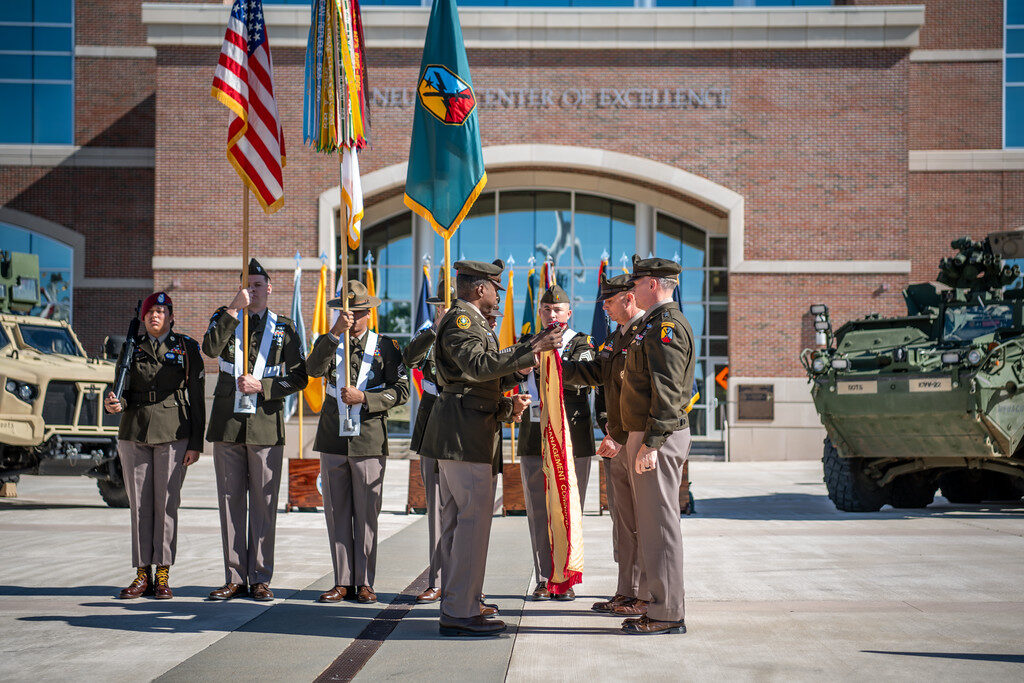
A formal ceremony on Wednesday marked the transition, the second such event in less than two years.
It was a symbolic moment, not only for the military community stationed at the base just outside Columbus, but also for the broader conversation about how the U.S. chooses to remember its history.
Here's What They're Not Telling You About Your Retirement
MORE NEWS: U.S. Army Apaches and Navy Seahawks Obliterate Iranian Boats Blocking the Strait of Hormuz
The change reflects a significant shift in military naming practices.
Fort Benning originally bore the name of Henry L. Benning, a Confederate brigadier general and Georgia Supreme Court justice who was a vocal proponent of secession.
That designation stood from the base's founding as Camp Benning in 1918 until 2023, when it was renamed Fort Moore as part of a sweeping Congressional initiative to remove Confederate names from U.S. military facilities.
This Could Be the Most Important Video Gun Owners Watch All Year
That effort, launched in 2020 and carried out under the Biden administration, affected nine Army posts and sought to reflect the nation’s evolving values.
Now, under the direction of Defense Secretary Pete Hegseth — appointed during the Trump administration — the Pentagon has found a workaround to restore original post names without violating federal law, which prohibits honoring Confederates.
The solution? Reassign those historic names to different individuals bearing the same surname.
In this case, that person is Fred Benning — an 18-year-old corporal who fought with distinction during World War I.
Benning was awarded the Distinguished Service Cross for extraordinary heroism after taking command of his machine-gun platoon in October 1918 in France, leading 20 survivors through intense enemy fire after their officer was killed.
“What sets him apart was his unwavering dedication to his soldiers, his understanding of the soldiers’ needs,” said Maj. Gen. Colin Tuley, the base’s commanding general, during the renaming ceremony.
The cost of reverting the base’s signage, websites, and documentation back to Fort Benning is expected to be around $653,000, according to Army officials. That’s a fraction of the nearly $5 million spent in 2023 to transition the base to Fort Moore.
Fred Benning’s family was in attendance for the ceremony. His granddaughter, Sue Conger-Williams, shared touching memories of fishing trips in Nebraska, where her grandfather later became a baker and served as the mayor of Neligh.
“I am grateful for this glimpse into history, and I see some similarities, though, between Fred Benning the soldier and Fred Benning my grandpa,” she said. “These are integrity, hard work and a commitment to service.”

Conger-Williams was joined by Benning’s great-granddaughter and 10-month-old great-great-granddaughter, representing a legacy that spans five generations. Though Fred Benning passed away in 1974, his name — and his valor — will now live on in one of the Army’s most storied institutions.
While Fort Benning’s brief identity as Fort Moore has ended, its legacy remains. The post had been named after Lt. Gen. Hal Moore, a Vietnam War hero, and his wife Julia Moore, a tireless advocate for military families.
The Moores made history as the first couple to be jointly honored by an Army base. Hal Moore led a cavalry battalion based at Fort Benning and earned the Distinguished Service Cross for his service in Vietnam.
Julia Moore was instrumental in changing how the military notifies families of war casualties, insisting that such news be delivered in person rather than by telegram.
"Whatever a name may be on an installation board, the Moores are an interwoven part of this installation and that will never go away," Tuley emphasized.
Defense Secretary Hegseth, in his March 3 memo ordering the name change, also directed the Army to find another way to recognize the Moores.
As of now, no formal plans have been announced, but the Army has committed to honoring their contributions “in a manner that celebrates their significant contributions to the local community and the Army.”
The reversal of Fort Moore’s name marks the second such rollback in recent months. In North Carolina, Fort Liberty — formerly Fort Bragg — was recently renamed back to Fort Bragg, continuing the trend of restoring historical names while redirecting their legacy to more inclusive and honorable figures.
As the military continues to navigate the complex terrain of memory, identity, and tradition, the new Fort Benning stands as a symbol of reconciliation — not with the Confederacy, but with the fuller spectrum of American heroism.
In honoring Fred Benning, the Army isn’t just reviving a name — it’s telling a new story about what it means to serve.
Join the Discussion
COMMENTS POLICY: We have no tolerance for messages of violence, racism, vulgarity, obscenity or other such discourteous behavior. Thank you for contributing to a respectful and useful online dialogue.