The legendary B-52 Stratofortress is about to get the muscle it deserves. The Air Force’s long-running engine replacement effort has officially cleared a key engineering milestone, paving the way for physical modifications to begin later this year.
For a bomber that has been dropping ordnance since President Eisenhower’s day, this modernization is a critical step to ensure the aircraft remains the backbone of American airpower well into the 2050s.
The project, known as the Commercial Engine Replacement Program, will swap out the jet’s aged 1960s-era Pratt & Whitney TF33 engines with brand-new Rolls-Royce F130 engines. Each B-52 carries eight of these engines, and all 76 of the active bombers will get the upgrade.
It’s a massive effort that will transform the B-52 into the B-52J configuration — a modernized version that can remain in the fight for decades.
MORE NEWS: Pentagon Confirms First Military Execution in Over 60 Years Will Be Publicly Livestreamed
Air Force officials have made it clear that the TF33s are simply running out of runway. With spare parts growing more difficult to source, maintenance costs climbing, and reliability slipping, the old engines will become “unsustainable” beyond 2030.
The new F130 engines promise a stronger, longer-range, more energy-efficient aircraft, with the added bonus of extra electrical power to support next-generation sensors and weapon systems.
This modernization effort is not new. The Air Force launched the program in 2018 and in 2021 selected Rolls-Royce’s F130 following a competitive process that included GE Aviation and Pratt & Whitney.
The F130, produced in Indianapolis, is an evolution of the company’s BR725 engine, already proven through over a million flight hours on the Gulfstream G650 business jet. That civilian foundation means reliability has already been demonstrated — always a plus when you’re revamping one of America’s heaviest hitters.
The timing of this engine upgrade fits neatly into a broader restructuring of the bomber fleet. The War Department plans to eventually field only two types — the B-52J and the stealthy B-21 Raider. As B-21 production ramps up, the aging B-1B Lancers and B-2 Spirits will retire, leaving a slimmer but more lethal bomber force.
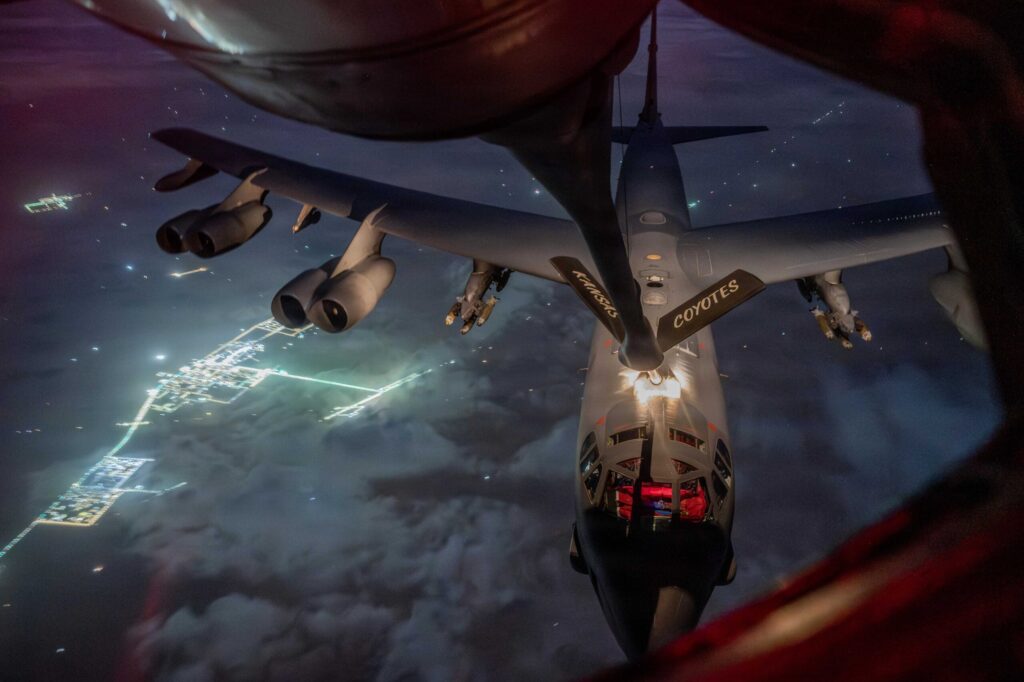
For the B-52, however, this upgrade all but guarantees continued service into the 2050s, extending its operational life beyond what most airframes could dream of. A few of these Cold War giants will likely edge close to the 100-year mark by the time they’re finally parked for good. It’s an astonishing testament to American engineering and the need to keep strong tools ready for any fight.
Lt. Col. Tim Cleaver, program manager within the Air Force Life Cycle Management Center’s Bombers Directorate, said in the Air Force’s official release that this approval marks years of detailed, technical effort.
“It’s that point that you go from having a concept turned into a design, to then turning that design into something physical,” Cleaver said, calling it the culmination of meticulous work by Boeing, Rolls-Royce, and the Air Force’s engineering teams.
Boeing — the integration prime contractor — will handle the conversion work at its San Antonio plant. Jamie Burgess, Boeing’s vice president for Mobility, Surveillance & Bombers, said the company’s teams have been tackling some of the most complex systems integration challenges in existence. He called the design review milestone “one step closer to modifying the first two B-52H aircraft into the B-52J configuration in San Antonio later this year.”
The program, however, hasn’t been without its delays. The Air Force originally planned to reach this design milestone three years earlier. Groundwork on the first aircraft is now expected to begin in fiscal 2027, with the second following in 2028. Testing won’t begin until 2029, and initial operational capability is targeted for 2033 — three years later than originally scheduled.
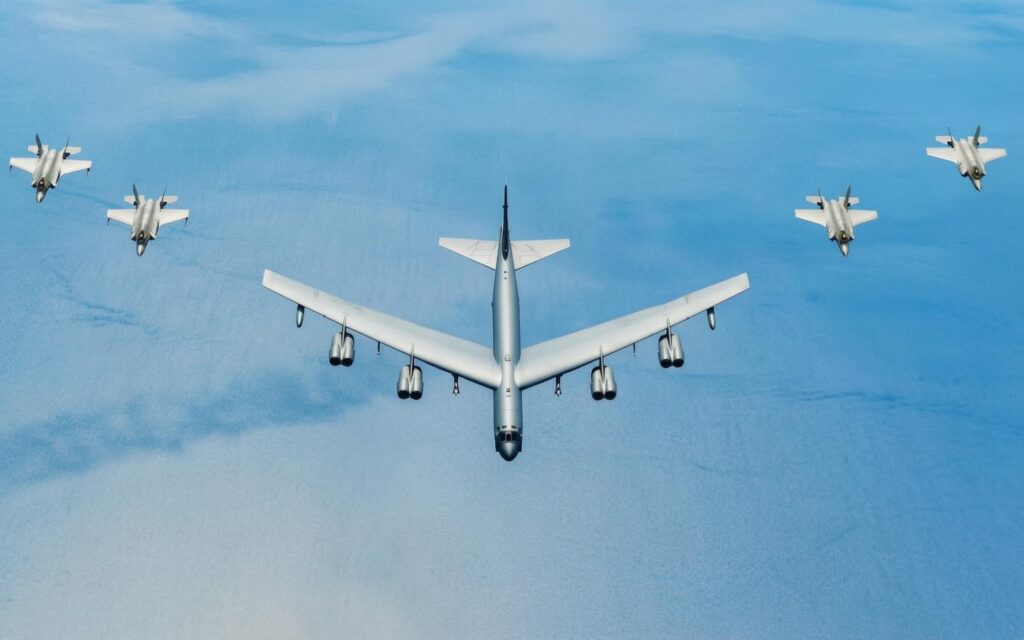
Boeing’s December 2025 contract, valued at more than $2 billion, covers integration and testing of the first two aircraft. The full modernization program is now projected to cost roughly $15 billion. When combined with a dozen other B-52 projects, the total modernization tab could reach nearly $49 billion. Critics have warned of concurrency risks, as the Air Force plans to buy a majority of the engines before testing is fully done.
Two of the bombers will serve as developmental test assets, while the remaining aircraft will enter phased conversion under low-rate production contracts.
As always in large-scale military modernization, concurrency introduces the potential for costly fixes if late-stage testing reveals technical issues. War Department auditors have flagged this as a risk, but commanders argue the strategic gamble is worth it to keep America’s bomber leg strong and combat-ready.
Beyond engines, the B-52J will also gain new power generation systems, modernized avionics, digital subsystems, and an advanced radar already undergoing testing at Edwards Air Force Base in California.
Each of these upgrades is designed to give this Cold War workhorse the technological advantage needed to survive in a 21st-century fight.
Fleet readiness has dipped recently, with mission-capable rates falling from 59 percent in 2021 to 54 percent in fiscal 2024. The Air Force expects the new engines and supporting upgrades to reverse that downward slide, strengthening deterrence capabilities and pushing maintenance costs back under control.
At its core, this modernization of America’s oldest bomber is more than just an engineering project — it’s a strategic recommitment.
In a world where rising adversaries test the limits of U.S. strength, the B-52 remains the long arm of American resolve. It’s not just staying airborne; it’s evolving to fight another generation’s wars.
Join the Discussion
COMMENTS POLICY: We have no tolerance for messages of violence, racism, vulgarity, obscenity or other such discourteous behavior. Thank you for contributing to a respectful and useful online dialogue.
This upgrade will be especially helpful with those pesky Chinese battle balloons traversing American skies.