In a strategic move underscoring the United States’ commitment to stability and preparedness in the Indo-Pacific, a Marine F-35B Lightning II squadron from Arizona has been deployed to Japan.
The 1st Marine Aircraft Wing announced that Marine Fighter Attack Squadron 211 (VMFA-211), known as the “Wake Island Avengers,” arrived at Marine Corps Air Station (MCAS) Iwakuni on Saturday, joining three other Marine squadrons in the region.
The arrival of VMFA-211 marks a significant reinforcement of U.S. airpower capabilities in the Pacific theater.
The unit, previously based in Yuma, Arizona, is now integrated into Marine Aircraft Group 12 (MAG-12), 1st Marine Aircraft Wing.
Here's What They're Not Telling You About Your Retirement
The deployment is part of the Unit Deployment Program (UDP), a rotational strategy that brings forward-deployed Marine units to key locations around the globe for set periods of time.
“The squadron joins VMFA-121 and VMFA-242, MAG-12’s two permanently stationed F-35B squadrons, alongside VMFA-214, another U.S.-based UDP squadron, to enhance our ability to support III Marine Expeditionary Force and joint force operations across the Indo-Pacific,” a 1st Marine Aircraft Wing spokesperson stated.
The addition of VMFA-211 brings the total number of F-35B squadrons at MCAS Iwakuni to four — a critical step in bolstering allied airpower and rapid response capabilities in a region characterized by increasing geopolitical tension and strategic competition, particularly involving China and North Korea.
Although the exact number of aircraft and personnel accompanying the deployment has not been disclosed, a spokesperson said that a typical F-35B squadron consists of 10 aircraft and a robust team of pilots, maintenance crews, and support personnel.
This Could Be the Most Important Video Gun Owners Watch All Year
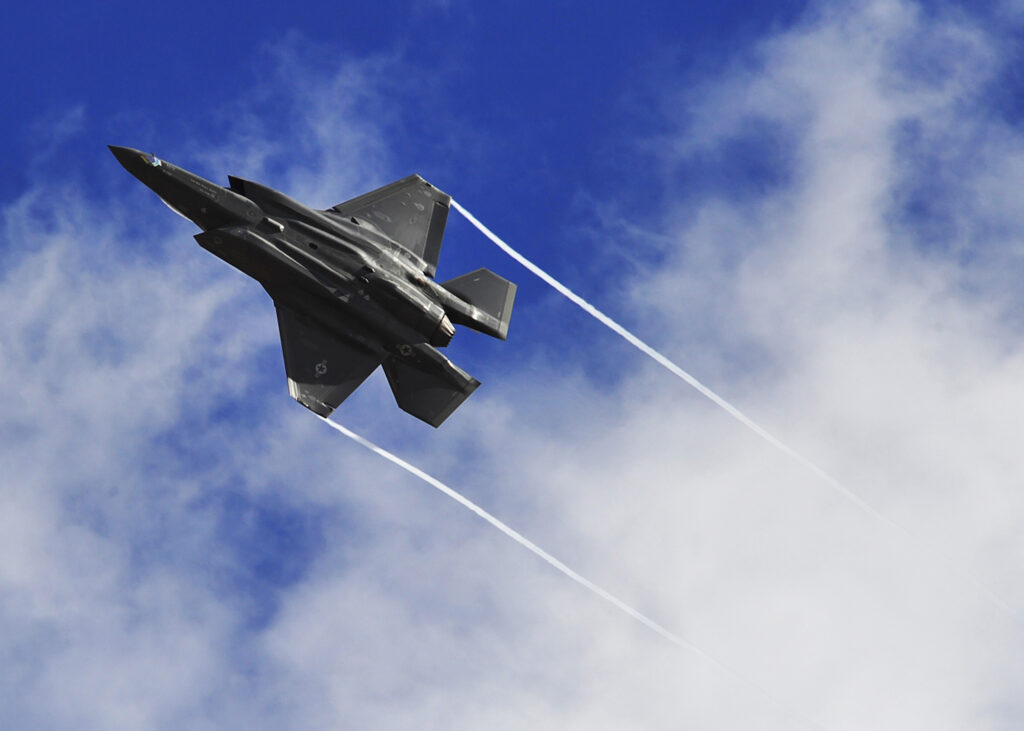
As is customary with most UDP deployments, the squadron’s stay in Japan is expected to last about six months.
During this time, VMFA-211 will actively participate in regional training operations and exercises, designed to maintain combat readiness and ensure interoperability with U.S. allies and partners.
“These exercises, in turn, will ensure the Marine Corps is operationally ready and postured to support U.S.-Japan Treaty of Mutual Cooperation and Security,” the spokesperson added, highlighting the broader strategic importance of these rotations.
This deployment comes on the heels of recent joint exercises in the region. VMFA-214, also based in the U.S., took part in Freedom Flag 25-1 in April — a bilateral air training exercise with South Korea at Gwangju Air Base.
Exercises like Freedom Flag test and refine the ability of U.S. and allied forces to conduct combined air operations, ensuring readiness in the event of a crisis or conflict.
The Marine Corps’ F-35B — the short takeoff and vertical landing (STOVL) variant of the fifth-generation stealth fighter — provides a decisive tactical advantage in contested environments.
Its ability to operate from austere locations and short runways makes it uniquely suited for expeditionary missions, particularly across the many islands and archipelagos of the Indo-Pacific region.
With VMFA-211 now folded into MAG-12, the Marine Corps enhances its already substantial footprint at MCAS Iwakuni.
In addition to the fighter squadrons, MAG-12 includes Marine Aerial Refueler Transport Squadron 152 (VMGR-152), Marine Wing Support Squadron 171 (MWSS-171), and Marine Aviation Logistics Squadron 12 (MALS-12), forming a comprehensive air combat support structure.
The deployment reflects not just a routine rotation but a deliberate step in maintaining a forward-deployed, combat-credible force.
It sends a clear signal of deterrence and commitment to allies, particularly Japan, amid rising concerns about regional security and the free and open navigation of international waters.
As tensions continue to rise in the East and South China Seas and North Korea maintains its missile testing program, the presence of advanced U.S. assets like the F-35B is increasingly critical.
The Wake Island Avengers — with their stealth capabilities, advanced sensors, and multirole mission profiles — will play a pivotal role in securing peace, deterring aggression, and responding rapidly if called upon.
In the months ahead, the actions and readiness of VMFA-211 and its fellow squadrons will be closely watched, not just by allies but also by competitors.
Their presence stands as a reminder of the U.S. Marine Corps’ enduring commitment to the Indo-Pacific and to maintaining peace through strength.
Join the Discussion
COMMENTS POLICY: We have no tolerance for messages of violence, racism, vulgarity, obscenity or other such discourteous behavior. Thank you for contributing to a respectful and useful online dialogue.