As controversy brews over a potential Qatari-donated aircraft for President Donald Trump, Boeing is pressing forward with its official work to deliver the next generation of Air Force One aircraft.
The aerospace giant reaffirmed its commitment to its longstanding VC-25B program during the Paris Air Show, insisting that the political firestorm surrounding the Qatari jet has not disrupted progress.
Stephen Parker, Boeing’s interim president and CEO, addressed the issue directly at a press conference at the air show.
“No impact at all,” Parker said when asked whether the Qatari jet offer had influenced the company’s ongoing work.
Here's What They're Not Telling You About Your Retirement
“We’re laser focused” on achieving the necessary safety and certification benchmarks for the two Boeing 747-8 aircraft being converted into presidential aircraft.
Boeing has been working for over a decade on converting the jumbo jets into highly specialized flying command centers.
The project, however, has faced repeated delays due to supply chain difficulties and a shortage of properly cleared workers.
Originally scheduled for delivery in 2024, the aircraft are now not expected to be completed until at least 2029 — though that date could move forward if the Air Force decides to reduce some program requirements.
This Could Be the Most Important Video Gun Owners Watch All Year
President Trump, known for his strong opinions on federal procurement and cost overruns, has frequently criticized Boeing for the delays and ballooning costs associated with the VC-25B program.

In a move that has taken many by surprise, Trump has shifted his focus toward a separate aircraft — a jet offered by the government of Qatar — as an alternative option for presidential use.
The proposed Qatari jet, a 747-8 built to be a luxurious “flying palace,” is now at the center of a political and procedural controversy.
While the Pentagon announced on May 21 that it had accepted the aircraft, further reporting, including by The Washington Post, revealed that the transfer deal had not yet been finalized.
Defense Secretary Pete Hegseth, testifying during a Senate Appropriations subcommittee hearing on June 11, initially refused to disclose specifics about the aircraft.
However, under questioning, Hegseth admitted that only a memorandum of understanding with Qatar existed, and that no official agreement had been signed.
The uncertainty around the Qatari aircraft has raised serious concerns on Capitol Hill. Lawmakers, particularly Democrats, have expressed frustration over the lack of transparency.
Senator Chris Murphy (D-Conn.) criticized the idea of modifying a jet that might only serve as Air Force One for a short period, especially if Trump intends to donate it to his presidential library near the end of his administration. “It would be a waste of money,” Murphy said.
Experts also point to the steep costs and logistical challenges involved in converting the luxury Qatari jet into a fully secure presidential aircraft.
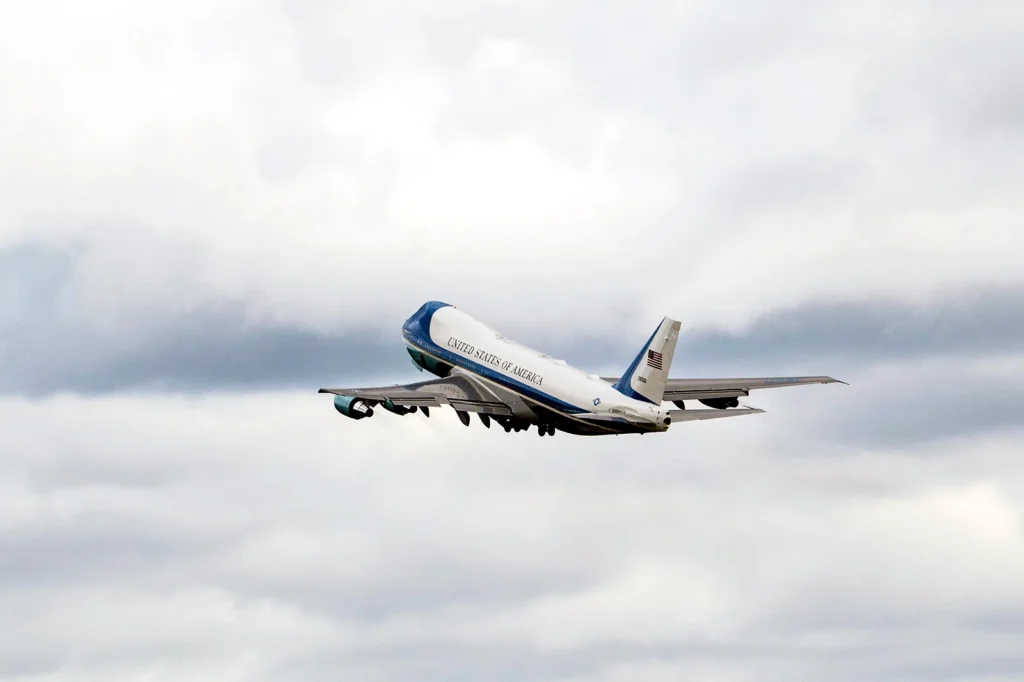
The upgrades required to meet Air Force One’s strict standards — including encrypted communications, advanced self-defense systems, and the ability to serve as a command-and-control hub during national emergencies — are estimated by some to cost upwards of $1 billion.
Air Force Secretary Troy Meink offered a more conservative estimate during a June 5 hearing, suggesting the modifications could come in at under $400 million.
Still, given the highly classified and specialized nature of the requirements, lawmakers remain skeptical.
At the Paris Air Show, Boeing’s Parker did not say whether the company would participate in refitting the Qatari aircraft but stated, “We’ll support the president in any way.”
A Wall Street Journal report in May suggested that L3Harris, a defense technology firm, could play a role in the adaptation process. However, L3Harris has declined to comment publicly on the matter.
Meanwhile, the U.S. Air Force has indicated it is preparing to award a separate contract to modify the Qatari jet, should the deal go through.
The possibility of dual aircraft programs — Boeing’s existing VC-25B effort and the potential Qatar-based jet — has further muddied the waters around the future of presidential airlift capabilities.
Despite the political distractions, Boeing remains committed to completing the two official VC-25B aircraft.
The company’s goal is to deliver aircraft that meet the Air Force’s demanding requirements, ensuring that the Commander-in-Chief has a secure, reliable airborne command post in times of crisis.
For now, Boeing’s message is clear: regardless of political developments, their eyes remain on the mission.
Join the Discussion
COMMENTS POLICY: We have no tolerance for messages of violence, racism, vulgarity, obscenity or other such discourteous behavior. Thank you for contributing to a respectful and useful online dialogue.