Members of Congress are sounding the alarm as the U.S. Navy considers turning to foreign shipyards to fill production gaps—an idea that’s not sitting well with lawmakers who believe American warships should remain American-built.
At a recent House Armed Services Committee hearing, both Republicans and some Democrats urged naval leaders to fix domestic shipbuilding problems before allowing foreign industry to fill in the gaps.
The hearing included Chief of Naval Operations Adm. Daryl Caudle, acting Navy Secretary Hung Cao, and Marine Corps Commandant Gen. Eric Smith, all fielding questions about the future of America’s shipbuilding capacity under the fiscal 2027 War Department budget.
That tense debate follows a newly released Navy shipbuilding plan that quietly acknowledges the service is evaluating “overseas options” for constructing certain vessels, a move that could open the door to foreign yards assembling U.S. Navy tankers or even combat ships.
MORE NEWS: Pentagon Confirms First Military Execution in Over 60 Years Will Be Publicly Livestreamed
Rep. Derrick Van Orden, R-Wisconsin—a retired Navy SEAL who knows a thing or two about fighting power at sea—made his stance crystal clear: “As many ships as we can build in the United States, we want to build them.”
Van Orden admitted that relying briefly on overseas partners might be a stopgap but warned the ultimate fix must be strengthening the U.S. maritime industrial base, not outsourcing it.
According to Cao, the Navy currently needs around 540,000 skilled workers to execute its shipbuilding pipeline—a tall order amid declining trade skills and an aging manufacturing workforce.
Cao argued that America needs a “youth movement” to replenish shipyard labor and that foreign models could offer valuable lessons to speed up domestic production.
Cao attempted to reassure skeptical lawmakers that the Navy isn’t “investing in foreign shipbuilding” per se but exploring whether successful foreign practices could help America catch up.
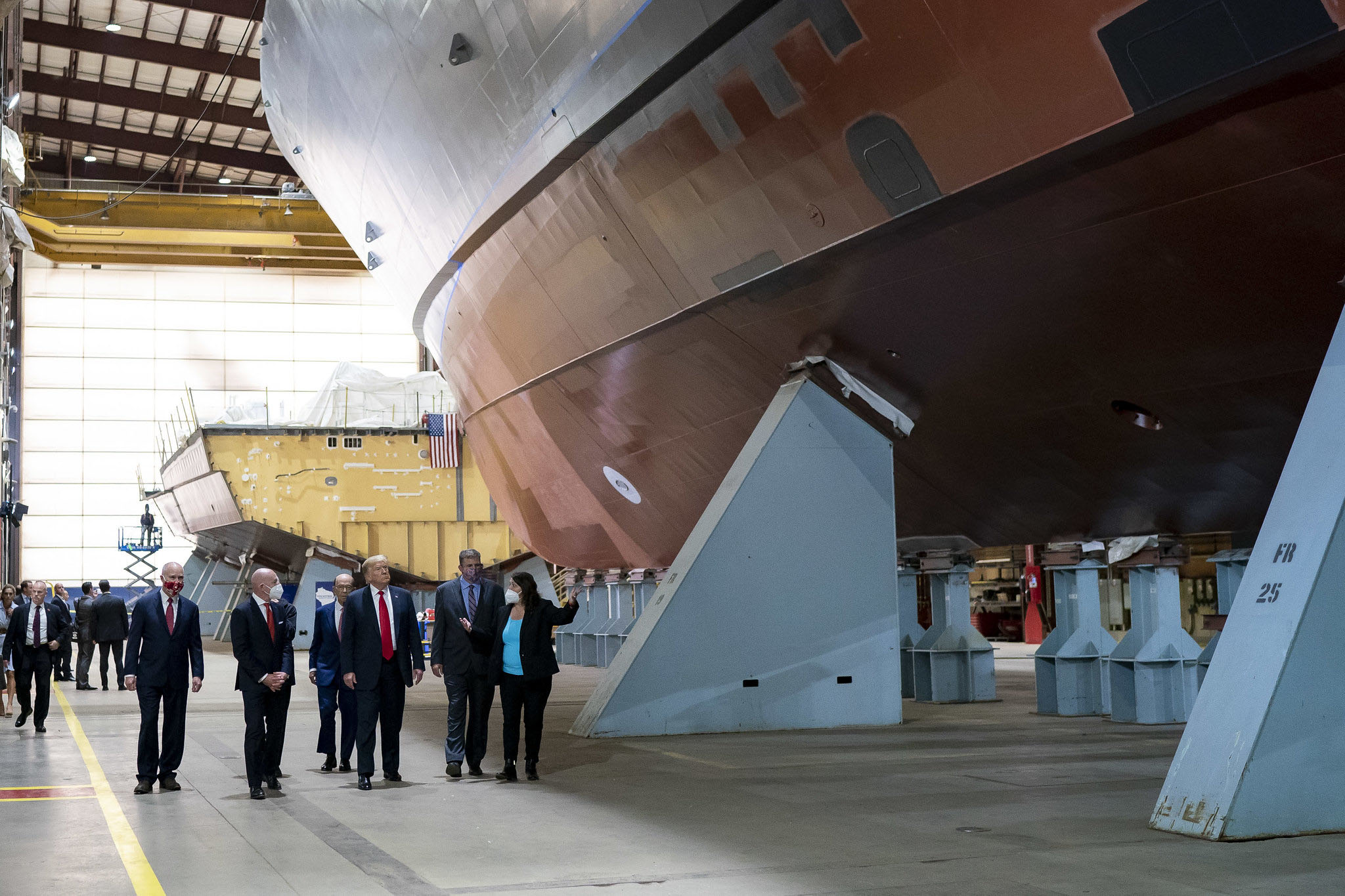
Some allied nations, he pointed out, can churn out destroyers at a pace of one or two a year—something U.S. yards haven’t matched in decades.
Still, that explanation hasn’t eased fears that America could lose control over its own shipbuilding sovereignty. The Navy plan earmarks $2.3 billion over five years to buy five fuel tankers, “potentially” built overseas.
While described as temporary, the language leaves plenty of wiggle room to expand foreign involvement.
Rep. Jared Golden, D-Maine, a Marine Corps veteran whose state depends heavily on Bath Iron Works, blasted the notion of sending U.S. workers abroad to learn shipbuilding from foreign counterparts.
“I don’t think you would want to go to a yard of American workers and tell them that you think they need to go overseas to learn their craft,” he said sharply. Golden warned that if Congress sends “a weak demand signal,” jobs at Bath Iron Works could vanish by next year.
On the Republican side, there’s some willingness to explore overseas assembly—but only if the lessons come home to rebuild American strength.
Rep. Rich McCormick, R-Georgia, a retired Marine Corps pilot, said building temporarily abroad could be acceptable if it helps the U.S. reclaim its world-leading position in shipbuilding. “China’s outproducing us about 200 to one and has about 50 times more ports,” he said. “That’s a problem.”
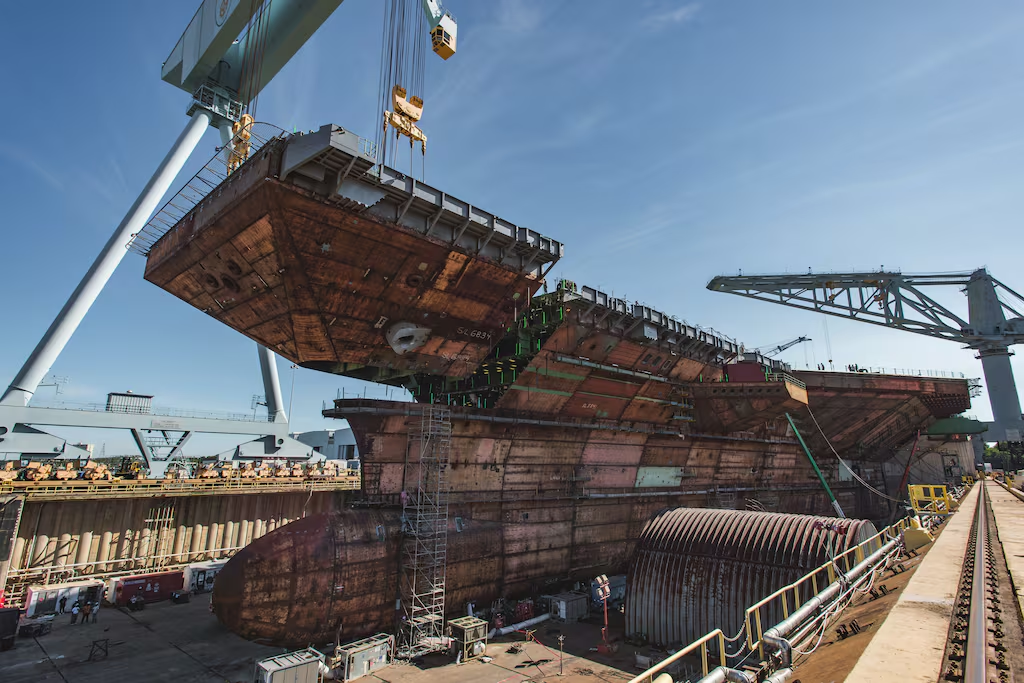
His colleague, Rep. Morgan Luttrell, R-Texas, another retired Navy SEAL, saw a different danger.
“I would hate to see the steel that we use on our ships and subs come from another country, if we have the capability inside the United States,” he said. For Luttrell and many conservatives, shipbuilding isn’t just about economics—it’s about national security and pride.
The conversation reached beyond logistics to larger themes about self-reliance. Lawmakers voiced frustration that after decades of globalization, even the U.S. Navy is now finding itself short on the supply chain sovereignty needed to keep pace with adversaries like China.
This problem didn’t appear overnight—years of bureaucratic stagnation and misplaced spending priorities under past administrations allowed the rot to deepen.
Adm. Caudle, for his part, defended the Navy’s stance, arguing that expanding the aperture of shipbuilding may be essential to meet global threats in a timely manner.
“That will require some foreign shipyards to actually help me do that, to deliver the actual ships I need in a time frame when that’s important,” he said.
While Caudle’s logic focuses on readiness, lawmakers across the spectrum are clearly uneasy about outsourcing warship production.
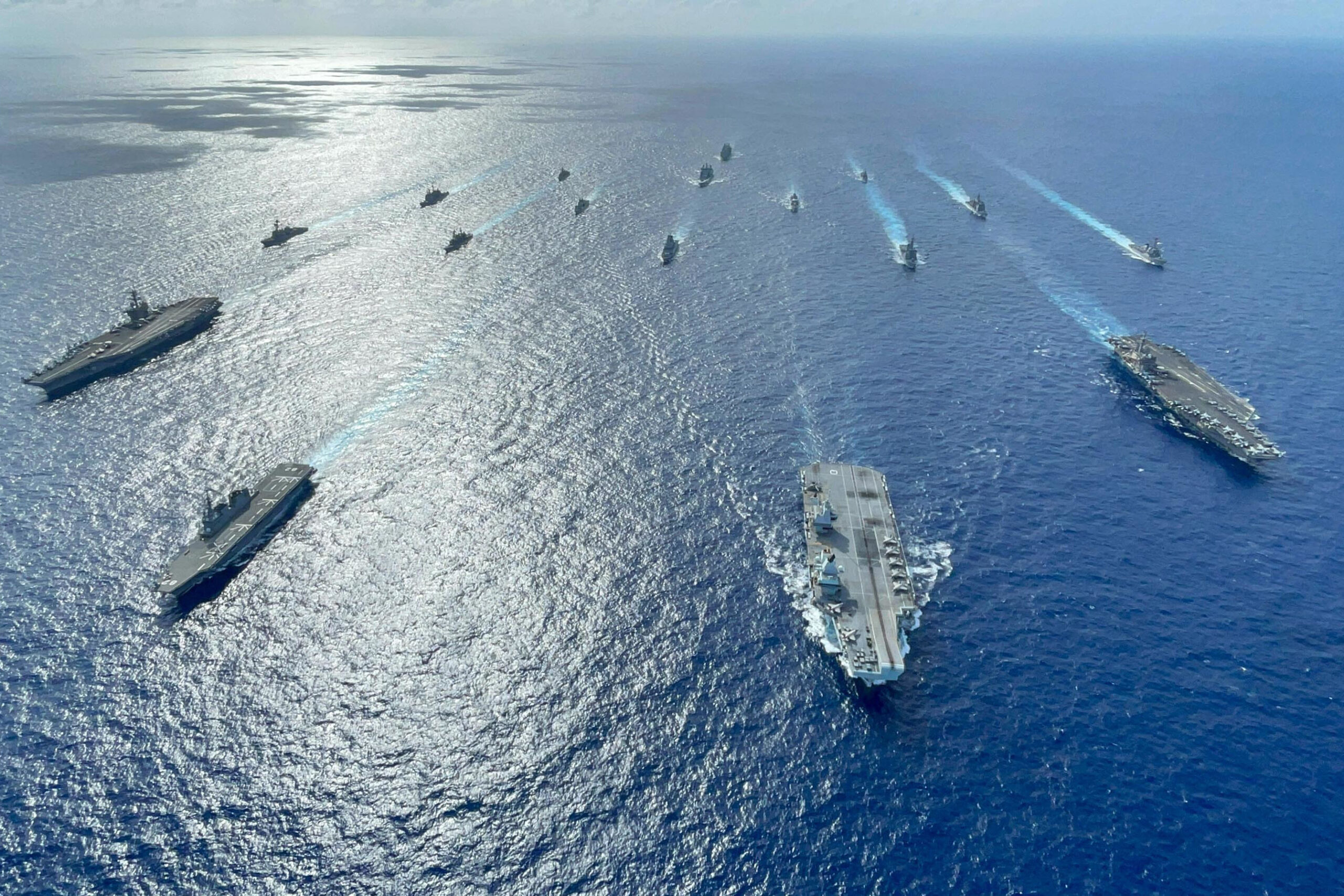
group led by HMS Queen Elizabeth (R 08), and Japan Maritime Self-Defense Forces led by
(JMSDF) Hyuga-class helicopter destroyer JS Ise (DDH 182) joined with U.S. Navy carrier
strike groups led by flagships USS Ronald Reagan (CVN 76) and USS Carl Vinson (CVN 70) to
conduct multiple carrier strike group operations in the Philippine Sea. The integrated at-sea
operations brought together more than 15,000 Sailors across six nations, and demonstrates the
U.S. Navy’s ability to work closely with its unmatched network of alliances and partnerships in
support of a free and open Indo-Pacific. (U.S. Navy photo by Mass Communication Specialist
3rd Class Gray Gibson)
Conservatives especially see it as a dangerous precedent—a further surrender of economic and military independence to global dependencies.
The bottom line: America’s shipyards once built the most powerful fleet the world had ever seen, and they can again. But that requires leadership willing to prioritize American workers, American steel, and an industrial base built for victory.
If the Biden-era War Department’s answer is to outsource our manufacturing backbone, it’s not modernization—it’s surrender dressed up as innovation.
Join the Discussion
COMMENTS POLICY: We have no tolerance for messages of violence, racism, vulgarity, obscenity or other such discourteous behavior. Thank you for contributing to a respectful and useful online dialogue.