When the skies over Iran lit up on June 21 during Operation Midnight Hammer, the world watched in awe as B-2 Spirit stealth bombers delivered a punishing payload of GBU-57 “bunker busters” into the heart of the regime’s nuclear infrastructure.
But while the air assault drew the spotlight, the true game-changer came quietly—from beneath the waves.
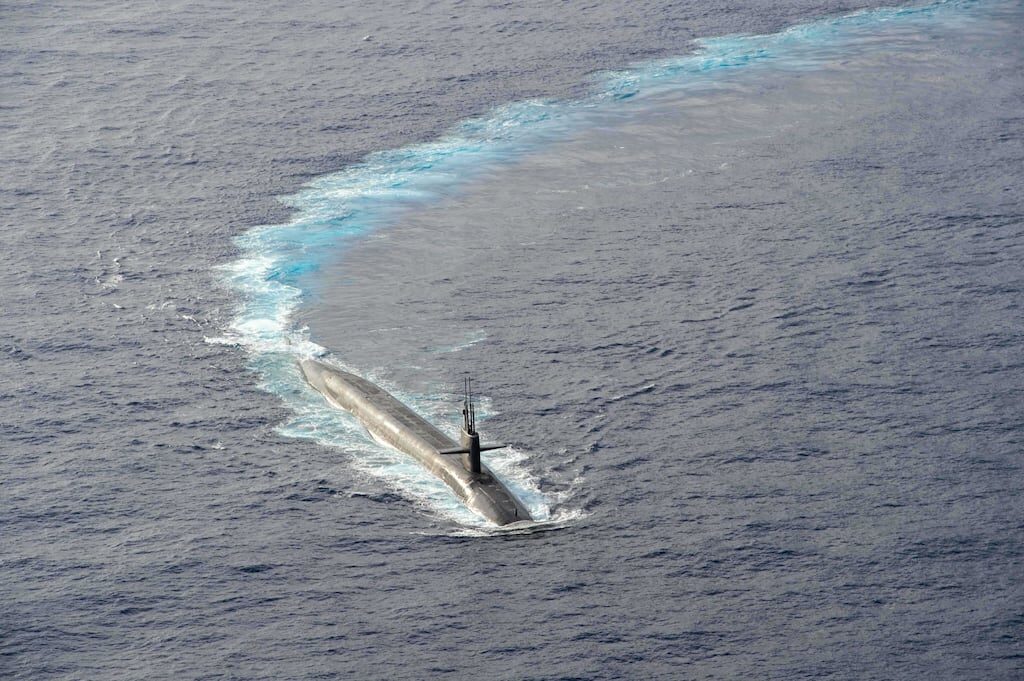
At approximately 5 p.m. Eastern Standard Time, an Ohio-class guided-missile submarine prowling silently in international waters fired over two dozen Tomahawk land attack cruise missiles.
These precision strikes on Isfahan—one of Iran’s critical nuclear and military hubs—set the stage for the devastating air campaign that followed.
Here's What They're Not Telling You About Your Retirement
The submarine’s presence wasn’t just tactical; it was transformational.
Secretary of the Navy John Phelan later confirmed to lawmakers that it was indeed an Ohio-class submarine that “performed exceptionally, causing significant damage to Iran’s nuclear capacity.”
In a Senate Appropriations subcommittee hearing, his words underscored the pivotal role this aging yet still-dominant weapon system continues to play under the decisive leadership of President Trump and his new Secretary of War, Pete Hegseth.
This Could Be the Most Important Video Gun Owners Watch All Year
The Ohio-class submarine, originally designed for nuclear deterrence during the Cold War, has been masterfully repurposed for modern warfare.
Once a ballistic missile platform carrying nuclear payloads, the Ohio has evolved into a stealthy and lethal precision-strike vessel.
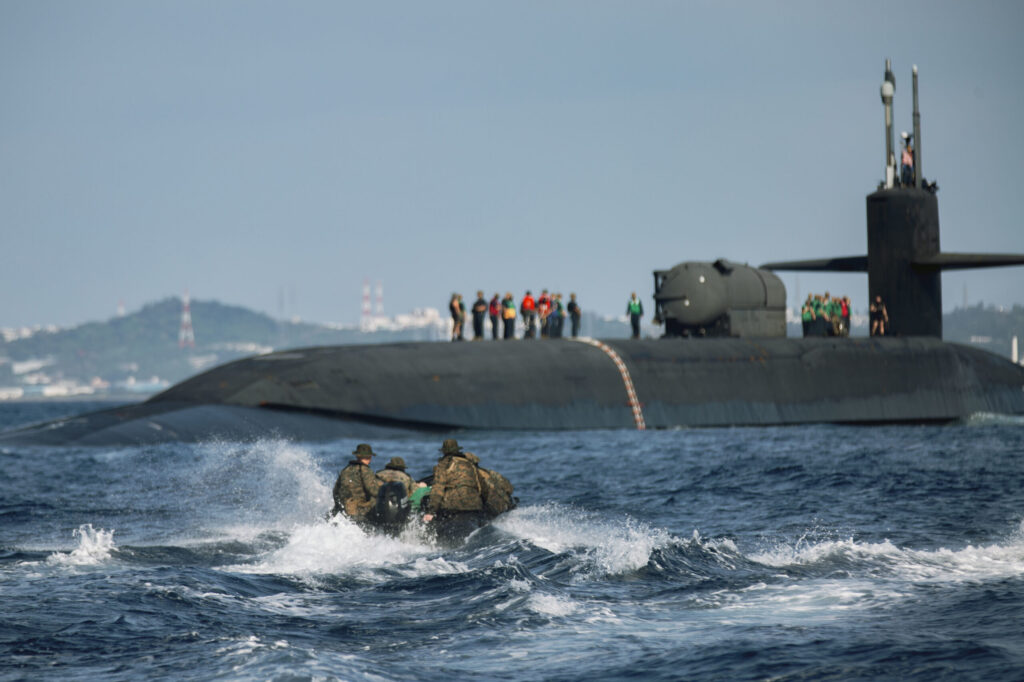
Four of these giants—Ohio, Florida, Georgia, and Michigan—were converted to launch conventional Tomahawk missiles and to support Special Operations Forces.
Each modified Ohio-class submarine can unleash up to 154 Tomahawk missiles from its 22 vertical launch tubes. Beyond its fearsome arsenal, its real advantage lies in its stealth.
Able to dive over 800 feet and cruise silently at speeds exceeding 25 knots, the submarine is built to operate undetected in contested waters, often for months at a time. It’s not just a vessel; it’s a ghost with a bite.
This is the kind of strength and strategic cunning the U.S. military has embraced under Hegseth’s direction. The former Army officer and combat veteran brings battlefield realism and patriotic resolve to the Pentagon.
His understanding of asymmetric warfare and deterrence ensures tools like the Ohio-class remain mission-relevant in an era of global instability.
The Tomahawk missile itself is a symbol of American technological supremacy. With a range of over 1,000 miles and the ability to adjust course mid-flight, it offers a near-pinpoint strike capability.
The decision to launch the Tomahawks from an Ohio-class submarine wasn’t simply a matter of firepower—it was about achieving total surprise.
Unlike aircraft or surface ships, which can be tracked or anticipated, a submerged submarine offers no warning. By the time Iran realized what had happened, the targets were already rubble.
The message was unmistakable: The United States can strike any target, at any time, from anywhere.
This wasn’t the first time Tomahawks have played a starring role.
They were heavily employed in Operation Rough Rider against Houthi rebels, launched daily from the aircraft carrier Harry Truman over the course of 50 days.
But in Operation Midnight Hammer, the use of a submarine ensured absolute operational secrecy and devastating effectiveness—a move that speaks to the renewed strategic edge brought about by current Pentagon leadership.
Still, America’s edge must be preserved. The Ohio-class submarines, as powerful as they are, are nearing the end of their service lives. The first of the fleet is scheduled for retirement by 2027, raising concerns over what comes next.
The intended replacement, the Columbia-class submarine, is designed to assume the nuclear deterrent role with enhanced stealth and survivability.
Yet, delays in its production threaten the continuity of America’s undersea dominance. Adm. James Kilby, acting chief of naval operations, told lawmakers that the Columbia is currently forecasted to arrive two years behind schedule, not expected until March 2029.
For a nation now reasserting its strength under bold leadership, these delays are unacceptable.
The success of Operation Midnight Hammer shows not only what U.S. power can achieve when deployed decisively, but also what’s at stake if that power is allowed to wane.
MORE NEWS: New Marine Scout MOS Officially Launches, Bringing Eyes and Ears to the Modern Battlefield
The Ohio-class submarine proved that true might doesn’t need a spotlight. With men like Pete Hegseth at the helm of the Department of War, America is once again wielding its power with clarity, courage, and conviction.
Join the Discussion
COMMENTS POLICY: We have no tolerance for messages of violence, racism, vulgarity, obscenity or other such discourteous behavior. Thank you for contributing to a respectful and useful online dialogue.