James Lovell, the legendary commander of Apollo 13 whose calm leadership turned a near disaster into one of NASA’s most inspiring moments, has died at the age of 97.
NASA announced on Friday that Lovell passed away on Thursday in Lake Forest, Illinois.
“Jim’s character and steadfast courage helped our nation reach the Moon and turned a potential tragedy into a success from which we learned an enormous amount,” NASA said in a statement.
“We mourn his passing even as we celebrate his achievements.”
Here's What They're Not Telling You About Your Retirement
Lovell was one of NASA’s most experienced astronauts during its formative years.
Over the course of a decade, he flew four space missions — Gemini 7, Gemini 12, Apollo 8, and Apollo 13. His Apollo flights in particular gripped the world, none more so than the harrowing Apollo 13 mission in April 1970.
Before that mission, Lovell had already made history. In 1968, he flew alongside Frank Borman and William Anders on Apollo 8, the first mission to leave Earth’s orbit and circle the moon.
Although they did not land, the mission gave the United States a decisive lead in the space race with the Soviet Union.
This Could Be the Most Important Video Gun Owners Watch All Year
The crew’s iconic photograph of Earth as a small, pale blue dot, along with their Christmas Eve reading from Genesis, left a lasting mark on the American public during one of the nation’s most turbulent years.
However, the mission that defined Lovell’s career came two years later.
Apollo 13 was supposed to make him the fifth man to walk on the moon. But an oxygen tank in the service module exploded roughly 200,000 miles from Earth, forcing Lovell, Fred Haise, and Jack Swigert to fight for their lives.
For four days, the astronauts endured freezing temperatures inside the cramped lunar module, using it as a lifeboat while rationing oxygen, power, and water.
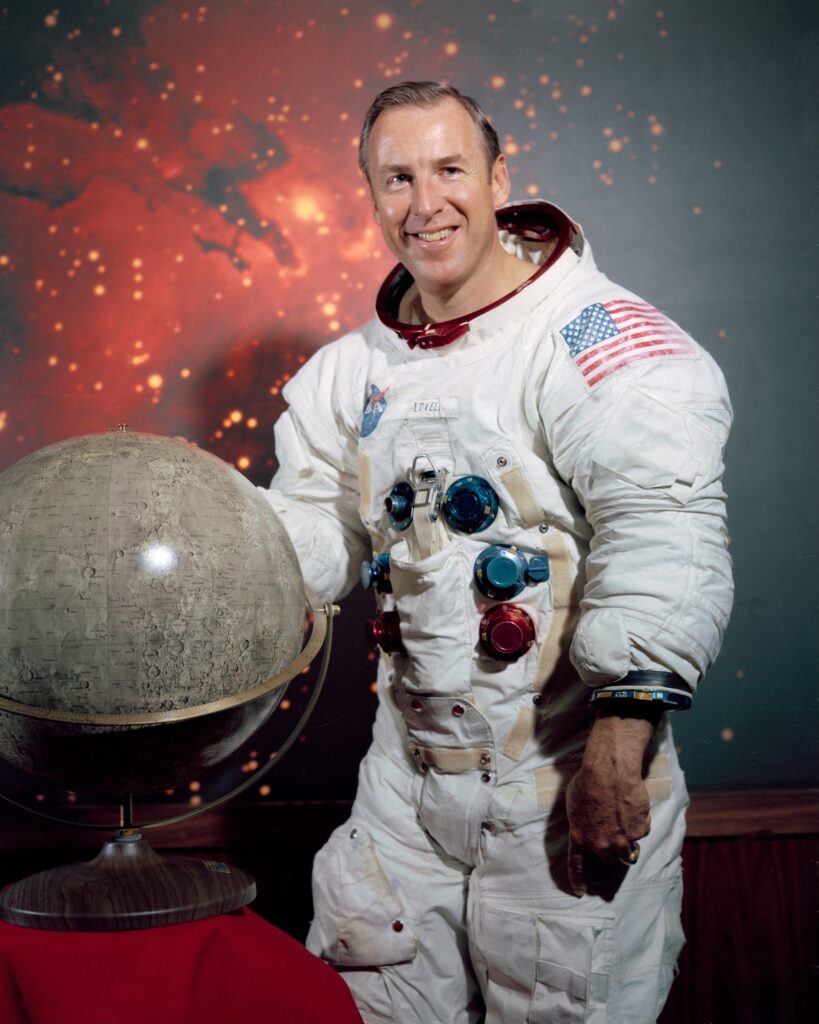
“The thing that I want most people to remember is that in some sense it was very much of a success,” Lovell said in 1994. “Not that we accomplished anything, but a success in that we demonstrated the capability of [NASA] personnel.”
Lovell’s famous phrase, “Houston, we’ve had a problem,” became a defining moment of the mission.
Working closely with mission control under the leadership of flight director Gene Kranz, the crew and engineers devised a plan to swing around the moon and return to Earth safely.
It was a test of ingenuity and perseverance under unimaginable pressure, and it captured the world’s attention.
As historian Roger Launius later noted, the mission demonstrated to the world that NASA could “handle truly horrific problems and bring them back alive.”
Lovell admitted his only regret was never setting foot on the moon.
“While you may have lost the moon,” President Bill Clinton told him when awarding the Congressional Space Medal of Honor in 1995, “you gained something that is far more important perhaps: the abiding respect and gratitude of the American people.”
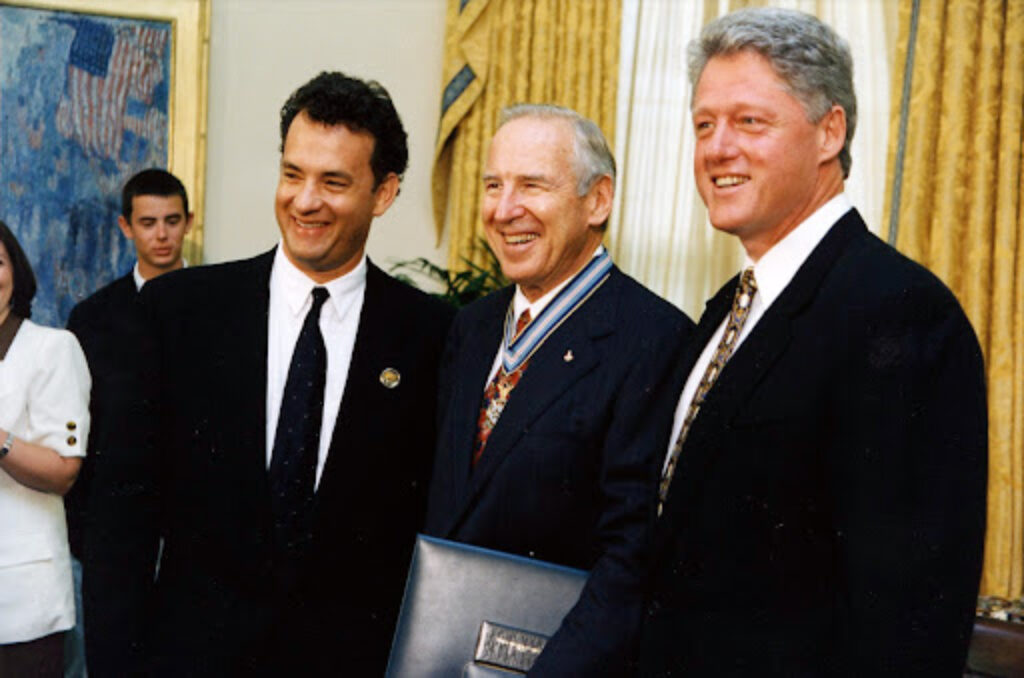
Reflecting on the mission, Lovell acknowledged that the fame it brought him was largely due to its adversity. “Going to the moon, if everything works right, it’s like following a cookbook,” he said in 2004. “If something goes wrong, that’s what separates the men from the boys.”
Born on March 25, 1928, in Cleveland, Lovell attended the University of Wisconsin before transferring to the U.S. Naval Academy. He married his wife Marilynn on the day he graduated in 1952.
A skilled test pilot, he was selected by NASA in 1962 as part of the “Next Nine” group of astronauts.
By the time of his retirement from the Navy and NASA in 1973, he had logged 715 hours in space, a record at the time.
In 1994, he co-authored “Lost Moon” with Jeff Kluger, which became the basis for the Academy Award-winning film Apollo 13, starring Tom Hanks as Lovell.
Lovell even made a cameo appearance in the film as a Navy captain, the rank he had achieved in real life.
After his space career, Lovell went into private business and ran a restaurant with his family in Lake Forest, Illinois. His wife Marilynn passed away in 2023, and he is survived by their four children.
In a heartfelt statement, his family remembered him as their “hero.” “We will miss his unshakeable optimism, his sense of humor, and the way he made each of us feel we could do the impossible,” they said. “He was truly one of a kind.”
James Lovell’s life and legacy will be remembered not only for the missions he flew but for the spirit of determination and quiet confidence he brought to the most critical moments in American space history.
His story is one of courage, leadership, and the unyielding belief that even in the face of great peril, humanity can rise to meet the challenge.
Join the Discussion
COMMENTS POLICY: We have no tolerance for messages of violence, racism, vulgarity, obscenity or other such discourteous behavior. Thank you for contributing to a respectful and useful online dialogue.