The U.S. Coast Guard has marked a historic achievement by offloading 76,140 pounds of illicit narcotics on Monday, the largest single offload of illegal drugs in its history.
The massive haul, surrendered by the Coast Guard cutter Hamilton in Port Everglades, carries an estimated street value of $473 million, according to an official Coast Guard statement.
“This combined illegal narcotics offload prevented the maritime flow of approximately 23 million potential lethal doses from reaching the United States,” the statement explained, underscoring the significant impact the operation will have on curbing the flow of dangerous drugs.
The previous record had been set in 2021, when the crew of the Coast Guard Cutter James offloaded 61,130 pounds of illicit drugs.
Here's What They're Not Telling You About Your Retirement
Monday’s accomplishment not only surpassed that milestone but also reflected the increasingly complex and coordinated efforts of the Coast Guard and its partners.
The record seizure was the result of 19 interdictions in international waters across the Caribbean Sea and the eastern Pacific.
While cocaine made up the vast majority of the confiscated narcotics, the cache also included marijuana.
The operation showcased the strength of collaboration across various U.S. and allied naval forces.
This Could Be the Most Important Video Gun Owners Watch All Year
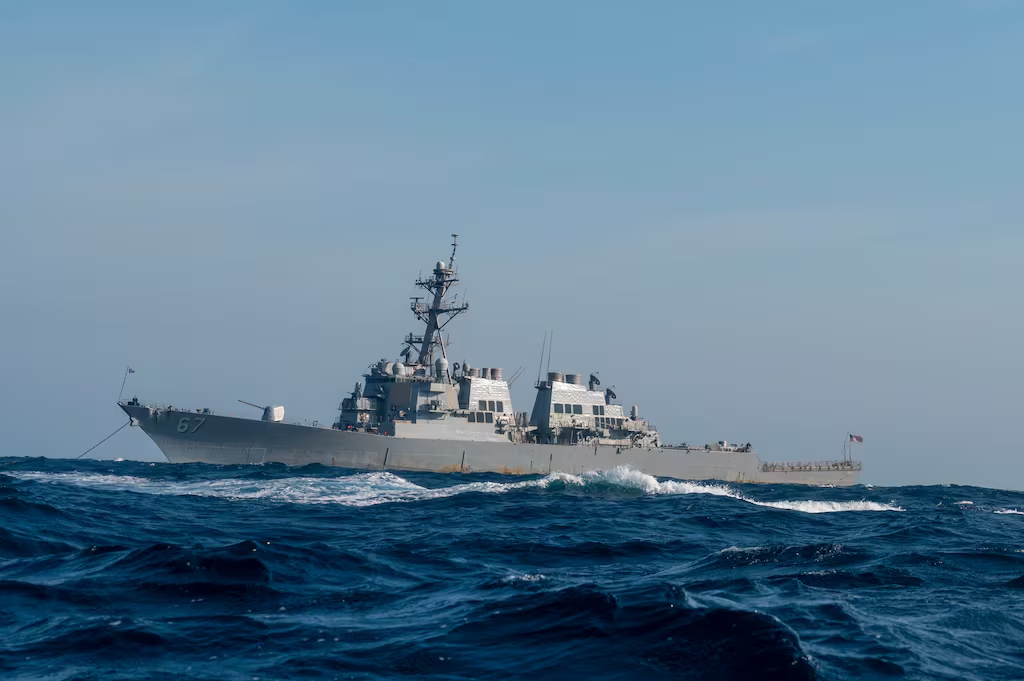
Multiple Coast Guard cutters participated, along with Law Enforcement Detachment (LEDET) crews deployed aboard international and domestic partners.
These included the Royal Netherlands Navy ship HNLMS Friesland, the U.S. Navy destroyer USS Cole, and the littoral combat ship USS Minneapolis Saint Paul.
One of the most critical elements of such cooperation lies in the Coast Guard’s ability to carry out what is known as a “title shift.”
When a Coast Guard law enforcement team is aboard a Navy ship and identifies potential smugglers or traffickers, they can raise their ensign.
This action grants the ship legal authority under Title 14 to conduct law enforcement activities, which may include searches, seizures, arrests, and inquiries.
This unique capability allows the Coast Guard to extend its reach through Navy and allied vessels, creating a far more flexible and expansive enforcement presence at sea.
The Coast Guard’s LEDET teams are specially trained for these missions. They regularly deploy on U.S. and allied vessels to interdict drug trafficking organizations that rely on fast boats, fishing vessels, and even semisubmersible craft to move illicit cargo.

Because cocaine remains the drug most often transported via maritime routes, it has long been a primary focus of the Coast Guard’s interdiction efforts.
Since January 20, the Coast Guard has significantly increased its presence in the Pacific, tripling its operational footprint to strengthen America’s maritime security.
This surge is part of a broader initiative to protect U.S. borders, territorial integrity, and sovereignty at sea.
Last week, the Department of Homeland Security announced the official launch of Operation Pacific Viper, a campaign designed to increase counter-drug operations in the eastern Pacific.
Early seizures during Pacific Viper have already yielded substantial quantities of cocaine, reinforcing the Coast Guard’s assessment that maritime trafficking routes remain central to transnational criminal networks.
“The Coast Guard is deploying additional counter drug force packages which include major cutters, specialized sniper equipped helicopters from the Coast Guard’s Helicopter Interdiction Squadron (HITRON), law enforcement boarding teams, and long-range patrol aircraft,” said Coast Guard spokesman Lt. Cmdr. Steve Roth.
This enhanced deployment highlights the multi-layered approach that the Coast Guard is taking, combining traditional maritime patrol cutters with advanced aerial capabilities and specialized boarding units.

The integration of sniper-equipped helicopters, in particular, provides a unique tactical edge by allowing the Coast Guard to disable fast-moving drug smuggling vessels before they can escape.
The Coast Guard’s surge in operations reflects a broader U.S. strategy to use maritime power as a deterrent against transnational drug trafficking.
In March, U.S. Navy destroyers equipped with Coast Guard LEDET teams were deployed to the southern border.
MORE NEWS: New Marine Scout MOS Officially Launches, Bringing Eyes and Ears to the Modern Battlefield
This deployment served as a visible signal to smugglers who might otherwise have attempted to bypass the increasingly fortified land routes along the U.S.-Mexico border.
With the southern border becoming more difficult to penetrate due to heightened U.S. military presence, traffickers have increasingly sought maritime alternatives. The Coast Guard, therefore, has stepped in to close those gaps.
At the same time, the record-setting offload demonstrates both the scale of the challenge and the effectiveness of coordinated enforcement.
By intercepting shipments before they reach American shores, the Coast Guard and its partners not only disrupt trafficking networks but also prevent dangerous substances from entering communities where they can have devastating consequences.
While the Coast Guard’s historic haul is a major success, officials are clear that the fight against maritime drug trafficking is ongoing.
The complexity of these criminal networks, combined with their ability to adapt quickly to enforcement measures, requires constant vigilance.
Nevertheless, the 76,140-pound offload stands as a powerful example of what can be accomplished through international cooperation, innovative tactics, and a relentless commitment to maritime security.
Because of this operation, 23 million potential lethal doses will never make their way to the United States, saving lives and weakening the networks that profit from addiction.
Join the Discussion
COMMENTS POLICY: We have no tolerance for messages of violence, racism, vulgarity, obscenity or other such discourteous behavior. Thank you for contributing to a respectful and useful online dialogue.