The United States Army is forging a new path in the Indo-Pacific as it merges the 7th Infantry Division with the 1st Multi-Domain Task Force to create a powerful new formation called the Multi-Domain Command-Pacific.
The move represents a significant structural shift designed to prepare the force for the kind of real, near-peer combat that could erupt in the region — especially given the rising threats posed by China and North Korea.
Announced during the 2026 Land Forces of the Pacific Symposium in Hawaii, this new two-star command underlines the Army’s intention to streamline its fighting capabilities across land, air, cyber, space, and electronic domains.
The Multi-Domain Command-Pacific will be headquartered at Joint Base Lewis-McChord in Washington, under I Corps and led by Lt. Gen. Matthew McFarlane.
McFarlane described the merger as a deliberate move away from traditional bureaucratic timelines where units waited for new equipment before reorganizing.
Instead, he said this shift proves the Army is proactively building agile formations to test and integrate new capabilities faster than ever. “We made the formations to test and integrate the equipment, and we’re adjusting,” McFarlane told reporters.
“We’re keeping an agile posture with making organizational changes.”
The new command will formally stand up in mid-June, when troops from the 1st Multi-Domain Task Force will officially “re-patch” into the historic 7th Infantry Division.
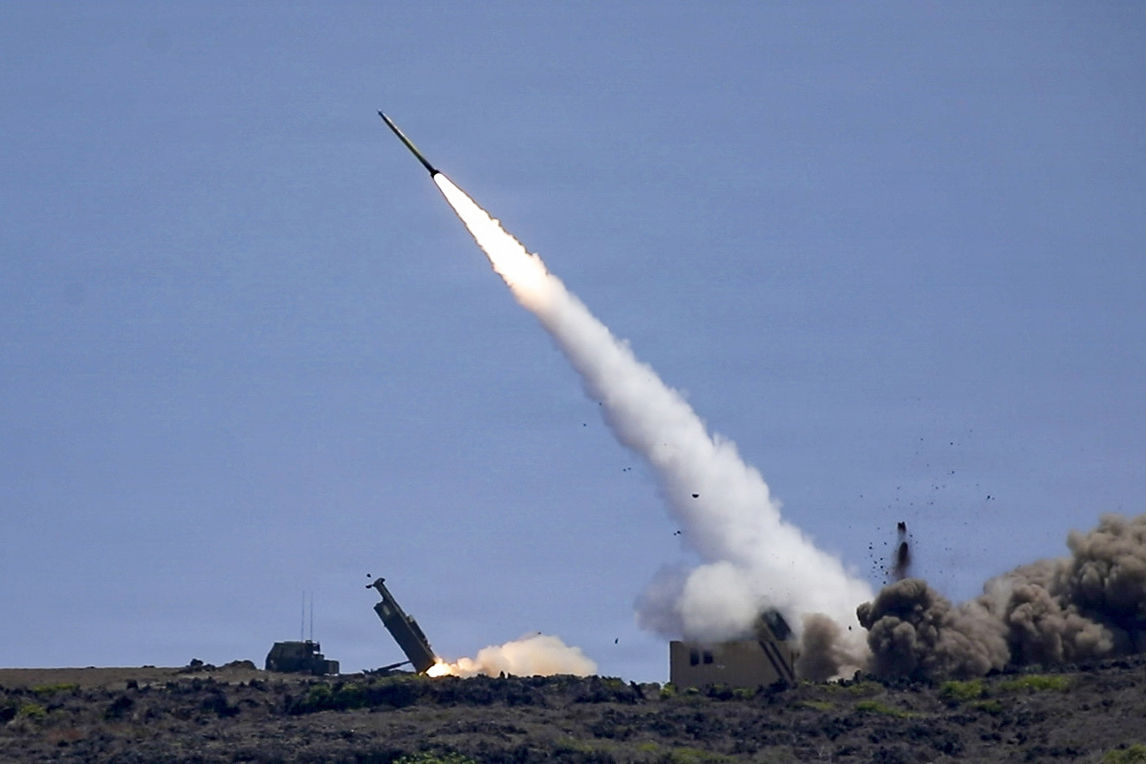
McFarlane said this joint force would combine the division’s two Stryker brigades and combat aviation brigade with the sophisticated electronic warfare, cyber, and long-range strike assets of the Multi-Domain Task Force.
By blending these capabilities under a unified command, the Army is creating what McFarlane called a “long-range sense and strike division.”
That structure, he noted, would allow U.S. forces to operate across the entire joint operational area of the Pacific rather than being limited to smaller corps-level engagements.
“We have opportunities to make sure we’ve got the right mix of capabilities with a two-star command,” he said. “The Stryker brigades obviously provide security on the ground, so it really becomes long-range sense and strike division. That’s exciting for the Army.”
The shift comes as military leaders have increasingly emphasized the necessity of integrated, joint operations across the Pacific.
With China’s Navy expanding into areas it has no business claiming and North Korea continuing its missile tests, the United States is taking seriously its mission to deter aggression in the region.
The Army’s enhanced Pacific command will add strategic depth and operational flexibility to the broader U.S. Indo-Pacific Command structure led by Adm. Samuel J. Paparo.
The synergy between the War Department’s Pacific posture and its allies has never been more critical.
Brig. Gen. William Parker, commander of the 94th Army Air and Missile Defense Command, put it bluntly in Hawaii: “We don’t fight alone, and we haven’t fought alone for a long time. Our partners help us protect our critical assets and critical formations that we have within this theater.”
Exercises like Balikatan 2026 — the largest annual bilateral training event between the United States and the Philippines — have underscored this point.
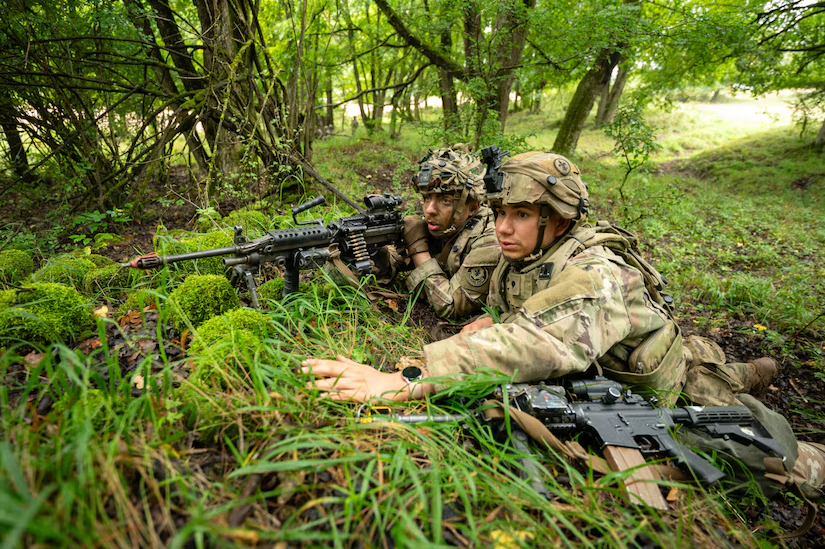
The 41st iteration of the exercise wrapped just before the symposium began, marking a major evolution as partner nations Australia, Japan, New Zealand, France, and Canada all put boots on the ground for the first time. For Adm. Paparo, this growing multinational cooperation reflects how resolute America’s allies are in maintaining a free and open Indo-Pacific.
“Balikatan 2026 marked a strategic evolution from a bilateral exercise to a full-scale, multinational mission rehearsal for the defense of the Philippines,” Paparo said.
“That growth reflects the security environment. It reflects the sovereign choices of free nations.”
The creation of the Multi-Domain Command-Pacific will essentially operationalize everything the Army has learned during these multinational exercises and wargames.
Its structure will enable cross-domain fires, intelligence sharing, and cyber coordination across multiple allied commands, granting U.S. forces the agility to strike fast and defend smarter.
This new approach mirrors how War Secretary Pete Hegseth has pushed for stronger, faster, more lethal formations ready for real-world fights. The Army under his leadership, and with President Trump’s renewed focus on rebuilding American strength, is flattening organizational roadblocks that previously slowed war readiness. The Pacific theater is clearly a proving ground for that renewed spirit.
McFarlane’s team isn’t building a paper command or a theoretical framework. They’re taking lessons from hard-won experience and applying them to create a formation designed to win in every domain, every time.
It’s the opposite of the “check-the-box” mindset that plagued the Pentagon’s past years of indecision — this is about warfighting, plain and simple.
As the Pacific grows more contested by the day, this merger isn’t just a bureaucratic adjustment; it’s a bold message sent across the ocean.
The United States Army is reorganizing for victory — and it’s doing it with speed, strength, and the cooperation of allies who know that free nations can only stay free if they prepare to fight together.
Join the Discussion
COMMENTS POLICY: We have no tolerance for messages of violence, racism, vulgarity, obscenity or other such discourteous behavior. Thank you for contributing to a respectful and useful online dialogue.