On Saturday a bold operation unfolded in Caracas as U.S. Army special operations forces moved by helicopter to seize President Nicolás Maduro and his wife after a firefight with Venezuelan forces.
The mission, dubbed Absolute Resolve, aimed to demonstrate that America will not tolerate Maduro’s regime’s chaos, and it reached beyond the capital with a sweeping air campaign.
According to General Dan Caine, the force involved a formidable mix of air power and precision strike capability. He described the air complement this way: "F-22s, F, 35s, F-18s, EA18s, E-2s B-1, bombers and other support aircraft, as well as numerous remotely piloted drones."
The statement underscored the scale of the operation and the intent to overwhelm the Venezuelan defenses with overwhelming air superiority.
The assault included a small but lethal ground component carried by the Army’s 160th Special Operations Aviation Regiment, which ferried members of Delta Force into the fight. They operated under the cover of a largely blackout Caracas, an intent that Trump signaled was deliberate to preserve mission surprise and protect American personnel.
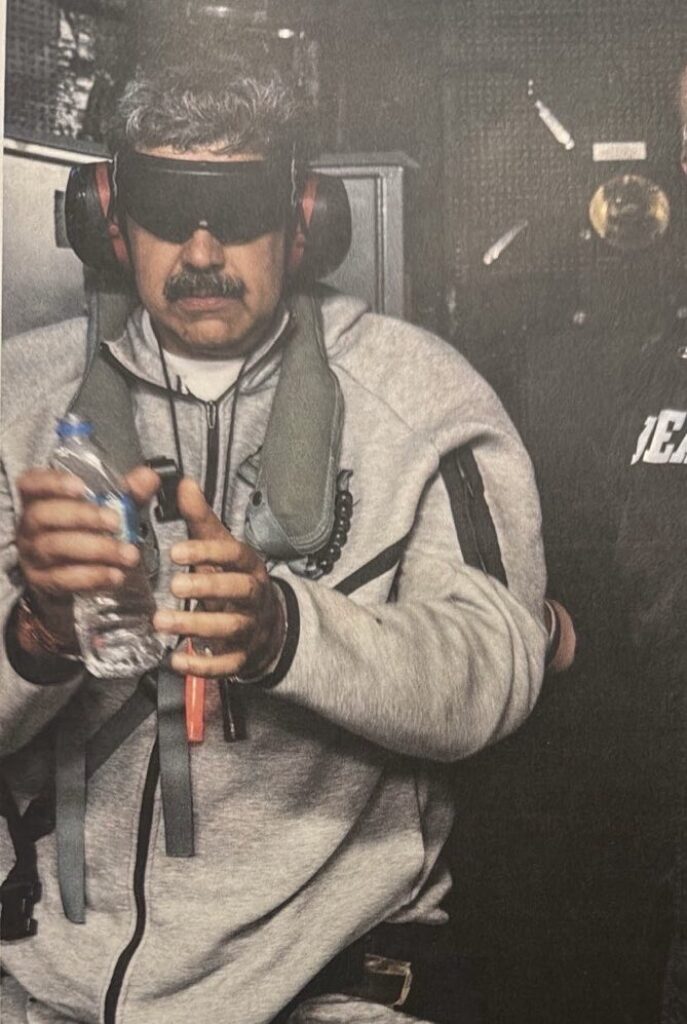
Behind the scenes, American cyber and space capabilities supported the air assault as well. Caine noted that U.S. Cyber Command and Space Command carried out actions in support of the operation, highlighting the breadth of tools available to protect the force and disrupt adversaries in the information and space domains.
The targets were carefully chosen to disrupt Maduro’s command and control, as well as key infrastructure. The strikes hit the La Guaira port and the military complex at Fort Tiuna in Caracas, among others, signaling a decisive blow to Maduro’s ability to govern and project power throughout the country.
While jets and bombers roared over the capital, the operation’s aerial ordinance was complemented by a significant aerial shield. No American personnel were killed in the mission, dubbed Operation Absolute Resolve, a point highlighted by Caine as evidence of disciplined execution and professional risk management.
Initial casualty figures from Venezuela indicated at least 40 people were killed, including civilians. Those numbers reflect the chaos and the high toll that large-scale air operations can extract when they collide with a functioning state security apparatus.
The administration has made clear the goal is not merely punishment but a strategic reset intended to halt Maduro’s illicit influence in the region.
The operation involved a broad footprint, with aircraft based across several bases. Although it is not clear which drones were used, MQ-9 Reaper drones have been spotted at American bases nearby, suggesting a layered approach that combined manned and unmanned systems for persistent coverage and rapid targeting.
The fleet also included naval power, with the USS Gerald R. Ford carrier strike group in the vicinity, home to Carrier Air Wing Eight and its numerous squadrons, including VFA 31, VFA 37, VFA 87, and VFA 213, along with EA-18G and E-2D assets.
Although the United States has used bases around Central America and the Caribbean, much of the air power for this operation operated out of Puerto Rico. In addition to air power, the Iwo Jima Amphibious Ready Group played a role, with Maduro and his wife ultimately being transported to a secure location aboard the ship before their transfer to New York on Saturday.
The strategic calculus behind the raid is clear. The administration argues that demonstrating a capable, rapid, and coordinated response to Maduro’s regime is essential for deterring further aggression, protecting regional partners, and signaling to adversaries that the United States will act decisively when national interests are at stake.
The presence of a robust naval and air footprint in the Caribbean underscores Washington’s commitment to this mission, and it reinforces the broader effort to secure stability in a volatile region.
From the perspective of supporters of President Trump and Secretary of War Pete Hegseth, the operation embodies the principles of strength, clarity, and resolve. It shows that America will not hesitate to act when red lines are crossed, and it highlights the importance of superior readiness across all branches of the armed forces.
In their view, the operation sends a clear message: when the security of the Western Hemisphere is at stake, bold leadership and disciplined execution can achieve results that long speeches cannot.
At the same time, critics will note the significant risk and the potential for escalation. Yet for many supporters, the central takeaway is that the United States should be prepared to act swiftly, surgically, and decisively to defend democratic values and regional security.
This event, regardless of its outcomes, will likely shape future policy debates about how best to deter, and if necessary, confront, regimes that threaten stability in the Americas.
As Washington continues to reassess its approach to Venezuela, the combination of air and sea power, operational tempo, and interagency coordination signals a new era of American vigilance. The mission’s success or failure may hinge on long-term political outcomes, but the immediate message is unmistakable: America will act with purpose when faced with threats to its interests and those of its allies.
WATCH BELOW:
Join the Discussion
COMMENTS POLICY: We have no tolerance for messages of violence, racism, vulgarity, obscenity or other such discourteous behavior. Thank you for contributing to a respectful and useful online dialogue.