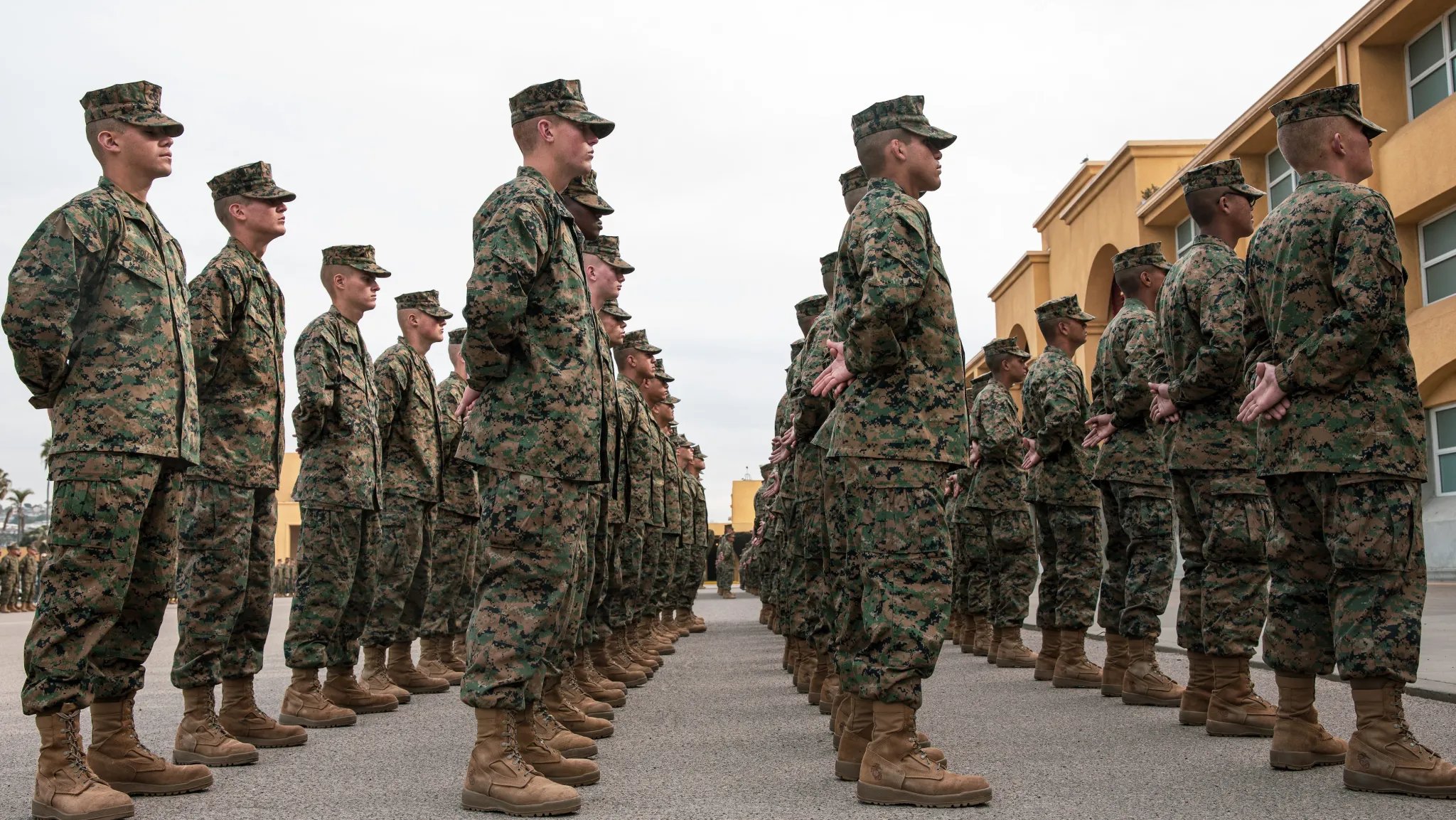
The Marine Corps is speeding up how fast motivated Devil Dogs can pin on sergeant chevrons, marking a significant shift away from the old system that rewarded time served instead of battlefield grit and proven leadership.
The War Department announced that starting in October, the time-in-service requirement for promotion to sergeant will drop from 48 months to just 30.
That’s an 18-month reduction—an eternity in the fast-paced world of the Corps—and one that’s drawing nods of approval from Marines eager to move up based on effort, not simply endurance.
For years, the Corps stiffened its promotion standards under the belief that more time in uniform equated to deeper experience.
MORE NEWS: Pentagon Confirms First Military Execution in Over 60 Years Will Be Publicly Livestreamed
Back in 2018, the brass doubled the requirement from two years to four, hoping to ensure a more seasoned backbone of noncommissioned officers.
The result, however, was more crawling and less climbing for talented corporals who had already proven they were ready to lead.
According to the Marine Administrative Message outlining the change, the old standard “favored longevity over performance,” penalizing those who worked harder, led better, and achieved more in less time. That’s not exactly the Marine way.

“Changing the time in service requirement to 30 months strengthens competition and ensures Marines are promoted based on merit and performance,” the MARADMIN states.
It’s a clear nod to excellence over experience—a merit-based model that mirrors what President Trump and Secretary of War Pete Hegseth have long said should guide the U.S. military: talent, not tenure.
Maj. Jacoby Getty, a spokesman for Manpower & Reserve Affairs, confirmed that the Corps found the four-year rule boxed out some of its best potential sergeants.
“The longer time in service requirement limited promotion opportunities for some of the best-performing corporals,” Getty said.
Promotion boards under this new rule will now have a larger and more competitive field of Marines to consider, Getty added, describing it as “a larger, highly qualified pool” of corporals eligible to compete for advancement.
The promotion quotas themselves won’t increase, meaning competition for the iconic three stripes will be fiercer than ever.
“With an increased number of eligible candidates competing for a fixed number of sergeant allocations, competition will intensify,” Getty explained.
“Thus ensuring that merit, talent, and performance, rather than mere time in service, drive promotion to sergeant, the backbone of our Corps.” That last phrase—“the backbone of our Corps”—isn’t fluff.
It’s a reminder of the central role sergeants play as small-unit leaders, trainers, and mentors who keep the Corps lethal and disciplined.
The policy will not, however, result in more sergeants overall. As Getty clarified, “The Service will not promote over the requirement.” Simply put, this isn’t a numbers game. It’s a shift back toward rewarding excellence and dedication.
The change also means the end of the so-called Small-Unit Leader Initiative, which allowed corporals with three years of service to compete for early promotion if they reenlisted. Introduced in 2023 to fill leadership gaps, the program has now run its course. Because enlistment contracts for new Marines are longer, the initiative no longer fits.
“Changes to first-term enlistment contracts have resulted in longer initial service obligations for new Marines, making the program no longer necessary,” Getty said.
While restructuring promotion timelines might sound like a bureaucratic move from the outside, anyone who’s worn the Eagle, Globe, and Anchor knows that rank advancement carries major operational weight.
Sergeants are the link between command and the line, the infantrymen and the orders, the entire rhythm of the Corps’ small-unit leadership structure. Cutting frustrated talent loose from bureaucratic lag time keeps that leadership chain strong.
This adjustment is also a meaningful signal to junior Marines coming up behind today’s corporals: work harder, lead from the front, and the Marine Corps will notice sooner. It rewards the high-performers and motivates the rest to chase excellence rather than just bide time.
The new policy reflects something larger than an internal personnel tweak—it’s a reflection of a revitalized culture of merit and readiness flowing through the U.S. military in the post-Biden era.
The War Department under Secretary Hegseth has taken clear steps to restore warrior ethos, gut red tape, and emphasize mission over metrics. This promotion reform falls right in line with that return to form.
Whether in the barracks or the battlefield, the change will remind Marines of something they already know: being the best still matters more than being the oldest. The Corps is making that official again.
Join the Discussion
COMMENTS POLICY: We have no tolerance for messages of violence, racism, vulgarity, obscenity or other such discourteous behavior. Thank you for contributing to a respectful and useful online dialogue.