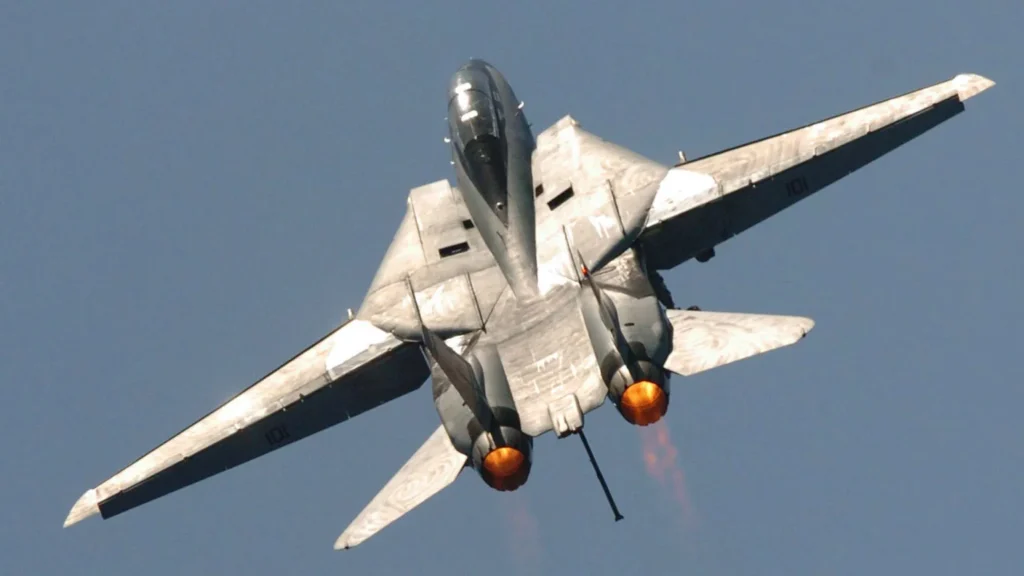
Four decades after America fell in love with the roar of the F-14 Tomcat in “Top Gun,” the legendary fighter jet just got a second chance at life.
Thanks to a bold new bill backed by Republican lawmakers, the Tomcat won’t be condemned to the scrapyard. It’s being preserved, and possibly, readied to soar again.
In late April, the U.S. Senate unanimously approved the aptly named “Maverick Act,” spearheaded by Sen. Tim Sheehy of Montana and introduced by Rep. Abraham Hamadeh of Illinois.
Both are combat veterans who understand that symbols of American airpower shouldn’t be shredded into scrap metal. Their legislation gives the Secretary of the Navy authority to transfer the last three surviving F-14D Tomcats to the U.S. Space and Rocket Center Commission in Huntsville, Alabama.
The goal is simple: display the aircraft as pieces of history, but also allow them to fly in airshows or commemorative events honoring decades of naval aviation. In plain English, that means our Tomcats—stars of both the Cold War and Hollywood—could take to the skies once again.
This move isn’t just nostalgic. It’s a statement. The F-14 wasn’t simply a movie prop; it was a cornerstone of American naval power from the mid-1970s through 2006.
Designed by Grumman, its variable-geometry wings were as iconic as its twin tails, and its power was feared around the world. When bureaucrats retired it, they did more than park an airplane—they mothballed an era of dominance.
Back then, Congress rushed to prevent anything that might give enemies like Iran access to the Tomcat’s technology. After all, Tehran had purchased a fleet of F-14s during the Shah’s reign before 1979, and it remains the only nation still flying the aircraft.
To keep American parts from being smuggled abroad, the War Department went to absurd lengths—ordering the destruction of retired Tomcats stored in Arizona’s famous “Boneyard.”
Contractors were paid nearly a million dollars to literally shred the jets into two-foot chunks of scrap. Yes, that’s right: tens of millions of taxpayer dollars spent destroying symbols of American strength, all because Washington feared black-market smugglers outsmarting the bureaucracy. If that isn’t classic deep-state logic, what is?
But the Maverick Act changes the game. The legislation names the three preserved aircraft by tail number, requiring that they be demilitarized so that no munitions or combat features remain.
They’ll be strictly ceremonial—and that’s fine. Their purpose isn’t warfighting; it’s memory. The goal is to inspire the next generation of pilots and patriots, not to collect dust in a warehouse.
The transfer to Huntsville will come at zero cost to taxpayers. The Space and Rocket Center Commission will handle display, maintenance, and operation for educational or commemorative uses. There’s an explicit ban on restoring combat capability or allowing foreign transfer. No loopholes, no nonsense. Just preservation done right.
Rep. Hamadeh called the effort a labor of love. “I want to thank Senator Sheehy and his colleagues for passing this legislation aimed at preserving for history one of the most iconic aircraft ever flown,” he stated.
As an Army Reserve officer, Hamadeh knows firsthand the value of preserving our military’s proud heritage. His leadership here shows what happens when veterans take charge in Congress.
He’s no stranger to saving American assets. Hamadeh has also moved to keep five retiring T-37 training jets from being destroyed, seeking to pass them along for similar preservation projects. It’s a refreshing change of pace from the bureaucratic waste Americans have come to expect from Washington.
The timing couldn’t be more symbolic. With Iran’s last operational F-14s reportedly wiped out in recent strikes following the escalation of regional conflicts, America now stands alone again as the rightful custodian of this legendary aircraft. The skies are clear for the Tomcat to reclaim its legacy.
And make no mistake: this isn’t just about metal and rivets. It’s about pride, leadership, and remembering what it looks like when America leads with confidence.
For too long, our government’s approach to heritage and history has been to hide it, cut it up, and apologize for it. The Maverick Act says no more.
Under President Trump and Secretary of War Pete Hegseth’s vision for restoring unapologetic American strength, this kind of legislation fits perfectly.
It honors veterans, inspires youth, and reminds adversaries that America doesn’t erase its victories—it celebrates them. The Tomcat may never again launch from a carrier deck at Mach 2, but its spirit—our spirit—lives on.
Because whether you’re a Navy flier, a ground-pounder, or just someone who loves this country, you know exactly what those twin tails mean: freedom in flight, and a nation that still believes in its wings.
Join the Discussion
COMMENTS POLICY: We have no tolerance for messages of violence, racism, vulgarity, obscenity or other such discourteous behavior. Thank you for contributing to a respectful and useful online dialogue.