The War Department is ready to fire up America’s next generation of energy weapons.
Five U.S. military bases are gearing up to receive cutting-edge laser and microwave systems to shoot down hostile drones before they can threaten critical infrastructure, troops, or sensitive operations.
The move signals a major leap in homeland readiness, one that should’ve happened years ago as adversaries have rapidly weaponized cheap aerial drones.
Announced Thursday, the Joint Interagency Task Force 401 confirmed the launch of the “directed-energy counter-unmanned aircraft systems pilot program.”
MORE NEWS: Pentagon Confirms First Military Execution in Over 60 Years Will Be Publicly Livestreamed
Fort Bliss in Texas, Fort Huachuca in Arizona, Grand Forks Air Force Base in North Dakota, Whiteman Air Force Base in Missouri, and Naval Base Kitsap in Washington have been chosen for the initial rollout.
Each plays a critical role in either nuclear deterrence, intelligence gathering, or strategic naval power.
Army Brig. Gen. Matt Ross, who leads the task force, said in the official release that “countering unlawful and adversarial drone activity is a homeland defense imperative.”
He added that no single solution can fully secure American airspace, describing the pilot program as an essential part of an integrated toolkit built to nip drone threats in the bud.

The creation of JIATF-401 last year centralized efforts across all branches to address the rapidly growing threat of unmanned aerial systems (UAS). From terrorist groups to foreign intelligence services, low-cost drones have become the modern era’s most accessible spy tools and potential weapons.
The military’s earlier response involved using everything from anti-drone rounds to flexible airspace engagement policies, but America’s commanders needed more than makeshift fixes—they needed laser precision.
U.S. Northern Command has already sounded alarms over multiple drone incursions near sensitive military installations.
According to Gen. Gregory Guillot, troops on the southern border have encountered dozens of hostile drones, forcing the use of everything from portable “Flyaway Kits” to mobile radar and electronic jamming systems.
Guillot’s congressional testimony made clear that these aren’t isolated nuisances—they’re probing attempts, sometimes by cartels, sometimes by foreign actors testing U.S. awareness.
The five selected bases represent a strategic cross-section of American defense might. Naval Base Kitsap houses submarines and carriers that uphold sea-based nuclear deterrence. Fort Huachuca, a nerve center for Army intelligence and cyber operations, has a special interest in stopping prying eyes in the sky.
Whiteman operates the Air Force’s B-2 Spirit bombers, America’s crown jewels of stealth power and a top target for any enemy surveillance drone. Fort Bliss and Grand Forks bring their own importance to training, testing, and homeland air defense across vast open terrain.
While JIATF-401 didn’t list each system by name, officials confirmed the mix includes high-energy lasers and high-power microwave systems. These directed-energy weapons can fry a drone’s electronics mid-air or slice through its structure within seconds.
The military has tested a range of these technologies in recent years, including the Army’s Multi-Purpose High Energy Laser (AMP-HEL) program at White Sands Missile Range.
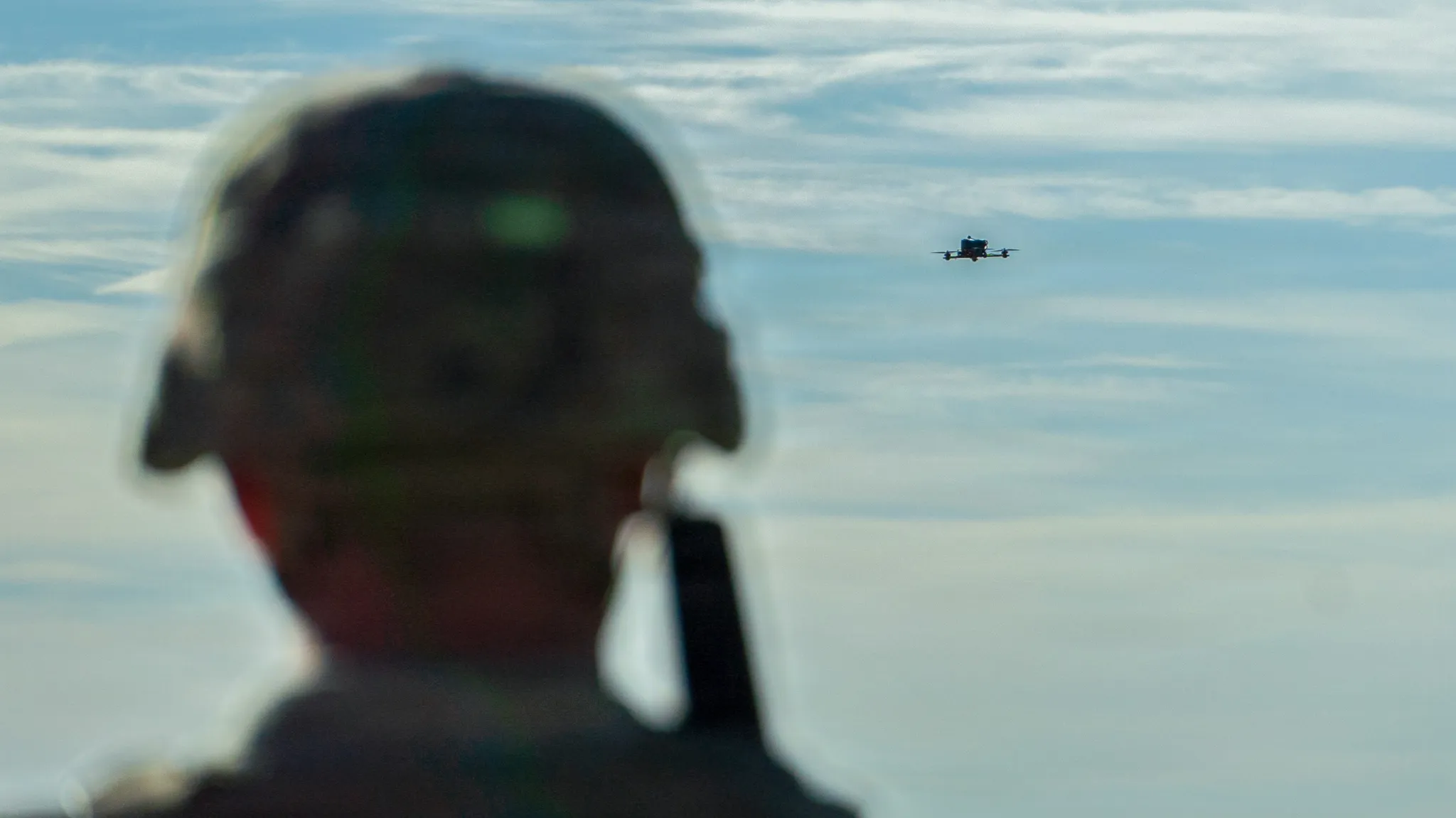
Earlier this year, testing near El Paso temporarily closed airspace twice over safety concerns while the Army and DHS evaluated a laser’s power output. It was a rare moment where cutting-edge military tech literally lit up civilian airspace, prompting fast coordination between the FAA and the War Department. By March, both agencies reached an agreement to ensure directed-energy systems could be deployed domestically without unnecessary bureaucratic slowdowns.
AeroVironment Inc., which produces one of the Army’s laser systems at Fort Bliss, reported that its field tests included destroying both stationary and moving aerial targets, showcasing the precision and reliability of American-made combat technology. Unlike slow missile intercepts or costly electronic jammers, laser and microwave weapons offer practically unlimited “ammo,” limited only by their energy supply.
Army Col. Scott McLellan, deputy director of the task force, emphasized that safety remains a top priority.
“These directed-energy weapons can counter drone threats while preserving the safety of air travelers,” he said. That’s an important reassurance for communities near major military bases, where drone incidents have become far too frequent.
The War Department said it will finalize operational frameworks within 180 days, with base commanders given authority to tailor deployment for their specific airspace challenges.
The goal: get lasers and microwave systems online by year’s end, before bad actors can exploit another technology gap.
This initiative, though long overdue, marks a decisive step toward securing the homeland against drone incursions.
As adversaries keep testing America’s perimeter with plastic-bodied spy craft and small explosive drones, the message now is loud and clear: the laser curtain is coming up. And from Fort Bliss to Whiteman Air Force Base, America’s warriors will soon have a new weapon that won’t miss.
Join the Discussion
COMMENTS POLICY: We have no tolerance for messages of violence, racism, vulgarity, obscenity or other such discourteous behavior. Thank you for contributing to a respectful and useful online dialogue.
It seems rather irresponsible to name where these defensive weapons will first be deployed. Anyone involved in dispensing this sort of information should be considered an agent of those desiring to destroy the USA, her traditions, and her citizens’ way of life!