A retired Air Force fighter pilot has been accused of betraying his oath, teaching American combat tactics to Chinese pilots, and even helping Beijing’s military intelligence gather information on U.S. forces across Asia.
According to new federal filings, Gerald E. Brown, 65, wasn’t just crossing a moral line but actively trying to hide his trail—complete with a fake passport, deleted messages, and evasive driving meant to shake off the FBI.
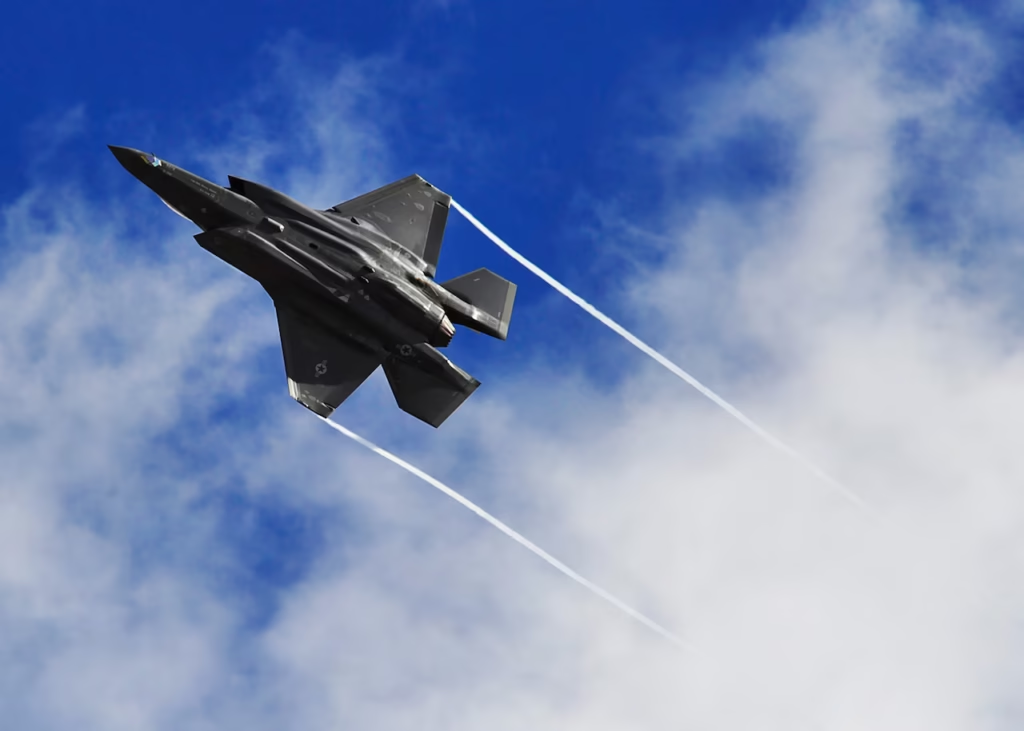
Prosecutors say Brown, who once trained American airmen in the F-35 simulator program, decided to cash out on his expertise and sell it to the Chinese Communist Party’s military arm, the People’s Liberation Army Air Force.
His secret lessons allegedly included classified dogfighting strategies and advanced techniques for suppressing enemy air defenses—skills central to American air superiority.
MORE NEWS: Pentagon Confirms First Military Execution in Over 60 Years Will Be Publicly Livestreamed
Court filings show that Brown worked at a major PLAAF training base in Shijiazhuang, China, where he instructed Chinese pilots through detailed briefings on how U.S. aviators think and fight.
For Beijing’s military planners, the hire was a jackpot: direct access to a man who understood how American stealth pilots train and operate, the kind of information surveillance alone can’t capture.
After a 24-year Air Force career, Brown left the service in 2007 with the callsign “Runner.”
But instead of riding off into a quiet retirement, he hopped through multiple jobs, including a UPS cockpit gig that ended after an in-flight altercation and an F-35 simulator post that ended due to sexual harassment allegations. Losing his footing at home apparently sent him looking for opportunities abroad.
By late 2023, prosecutors say Brown was working for Stratos Aviation, a Chinese front company already known to Western intelligence services for recruiting NATO and Western pilots to share proprietary knowledge.
The retired airman reportedly earned a cushy $18,000 each month, not counting luxury perks like paid vacations in Thailand—money that bought his loyalty to a foreign adversary.
In private encrypted chats, Brown bragged about watching Chinese fighter intercepts and gushed over their aircraft.
“I have been researching the jets, J-11 is awesome!! Watched a J-10 interception on a Canadian airplane. I cannot stop thinking about flying,” he wrote to another pilot. The thrill of speed and combat, not patriotism, seemed to drive his decisions.
According to prosecutors, Brown even referred to the Chinese businessman who recruited him, Stephen Su Bin, as a “master spy.” Su Bin, a known intelligence asset for Beijing with a track record of cyber espionage against the U.S., apparently had no trouble convincing Brown that serving China would be both profitable and exhilarating.
His betrayal didn’t stop with simulator sessions. In May 2024, Brown allegedly took a quiet trip to South Korea to meet with U.S. personnel, gathering documents the Chinese military had requested.
Upon returning to China, prosecutors say he turned his electronics over to Chinese authorities for data exploitation. In other words, the man who once trained America’s top aviators was now helping China understand—and penetrate—U.S. defense operations in Asia.
Brown’s escape plan apparently came to a screeching halt when FBI agents arrested him in February at his home in Indiana. The feds say he was preparing to sell his condo and permanently leave the country, lying to U.S. Customs that he had merely been working overseas as a civilian consultant.
Agents later seized fake currency and a counterfeit passport from his office.
Prosecutors also argue that Brown practiced counter-surveillance while driving, weaving unpredictably through traffic when he suspected an FBI tail. Combined with his communications on encrypted apps and networks like Threema and WeChat, the government says it all points to deliberate tradecraft—learned behavior, not random coincidence.
Despite his alleged espionage activities, a federal judge granted Brown release on a $200,000 bond, placing him under house arrest with GPS and video monitoring at his sister’s Minnesota home.
Authorities remain deeply concerned that he could attempt to escape to Asia, especially given his fascination with life there and his comments about “retiring in China or Thailand.”
“This guy held the ‘keys to the jet,’” said retired F-16 pilot John “Rain” Waters, emphasizing that pilots who worked with top-tier aircraft simulators would have access to mission parameters and response tactics unknown outside restricted circles.
“A guy like that demystifies our playbook for an enemy.”
If proven true, Brown’s actions represent one of the most staggering personal betrayals from an American serviceman in recent memory. The U.S. military invests hundreds of billions to maintain air dominance, and for a veteran to turn that knowledge over to our chief strategic rival is nothing less than treasonous.
Federal prosecutors have charged Brown under the Arms Export Control Act.
They say the former pilot faces six to eight years behind bars—but many in the national security community say that seems far too light for someone who sold America’s air tactics to the highest bidder.
As Washington digs deeper, one thing is certain: the Chinese Communist Party continues to aggressively target Western veterans, fishing for those disillusioned enough to trade honor for money.
Brown, once a guardian of U.S. skies, may serve as the latest warning of just how dangerous that game has become.
Join the Discussion
COMMENTS POLICY: We have no tolerance for messages of violence, racism, vulgarity, obscenity or other such discourteous behavior. Thank you for contributing to a respectful and useful online dialogue.