After nearly a full year at sea, the Navy’s most powerful carrier air wing is finally back on American soil.
The fighter jets and helicopters of the USS Gerald R. Ford Carrier Strike Group returned home Monday after an unprecedented 11-month deployment that kept crews operating across multiple global theaters in support of U.S. warfighters and allies.
Carrier Air Wing 8, attached to the world’s largest and most advanced aircraft carrier, spent 322 days deployed across three major combatant commands.
The long mission demonstrated America’s unmatched naval reach, operating from the Mediterranean to the Middle East to the Caribbean, proving once again that when the U.S. Navy sails, the world takes notice.
MORE NEWS: Pentagon Confirms First Military Execution in Over 60 Years Will Be Publicly Livestreamed
Rear Adm. Rich Brophy, commander of Naval Air Force Atlantic, praised the sailors and aviators for their fortitude and sacrifice.
“The officers and sailors of Carrier Air Wing 8 have served their nation with distinction,” Brophy said. “Throughout their record-breaking deployment, these aviators successfully conducted worldwide operations, embodying the highest ideals of resilience, courage, and selfless service to the nation.”
Their mission tempo was nothing short of extraordinary.
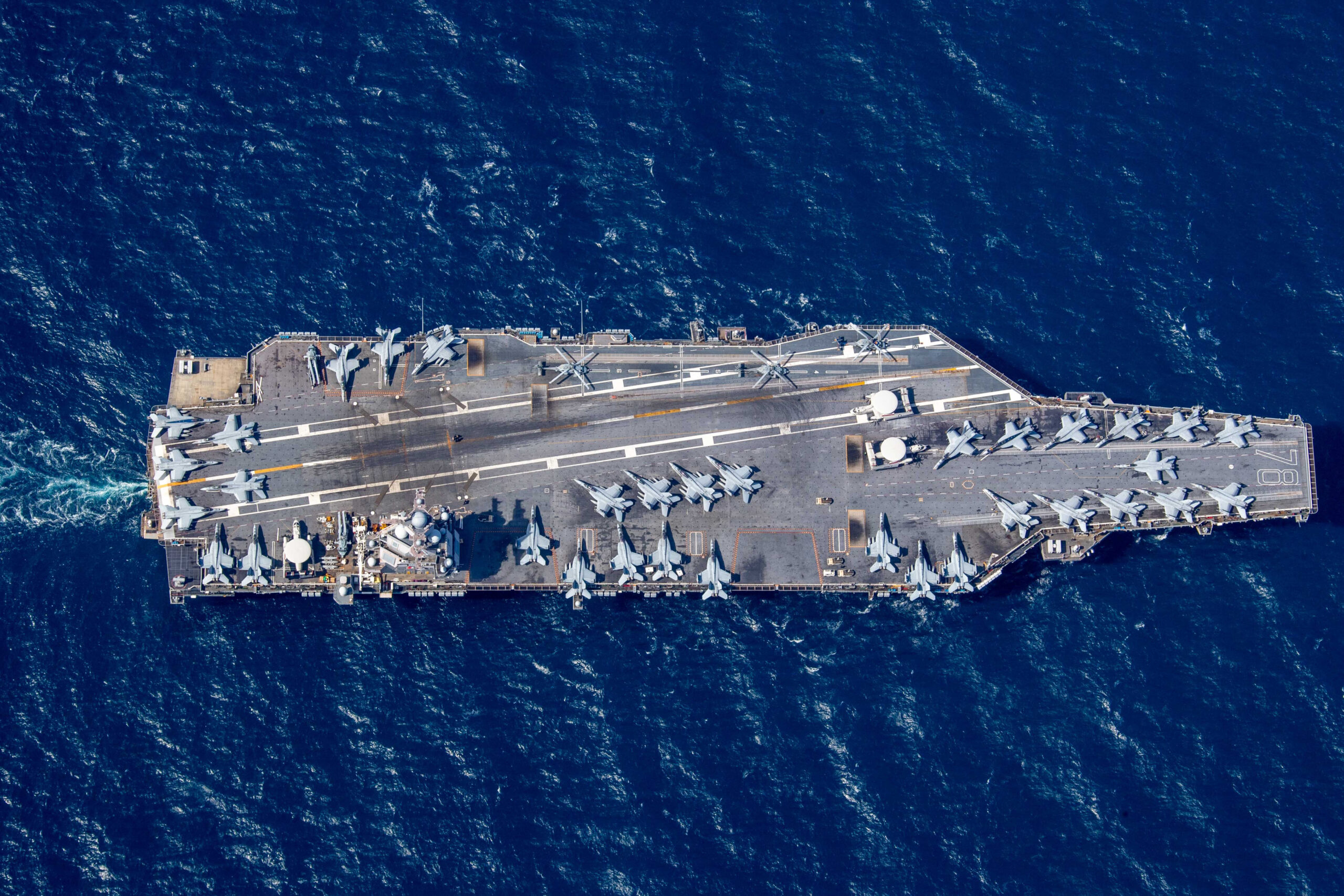
The air wing launched more than 11,500 flight operations, supporting combat missions for Operation Epic Fury in the Middle East, Operation Southern Spear in the Caribbean, and Operation Absolute Resolve throughout the Atlantic and European theaters.
Every launch and recovery marked another step in projecting American airpower to regions where freedom is constantly tested.
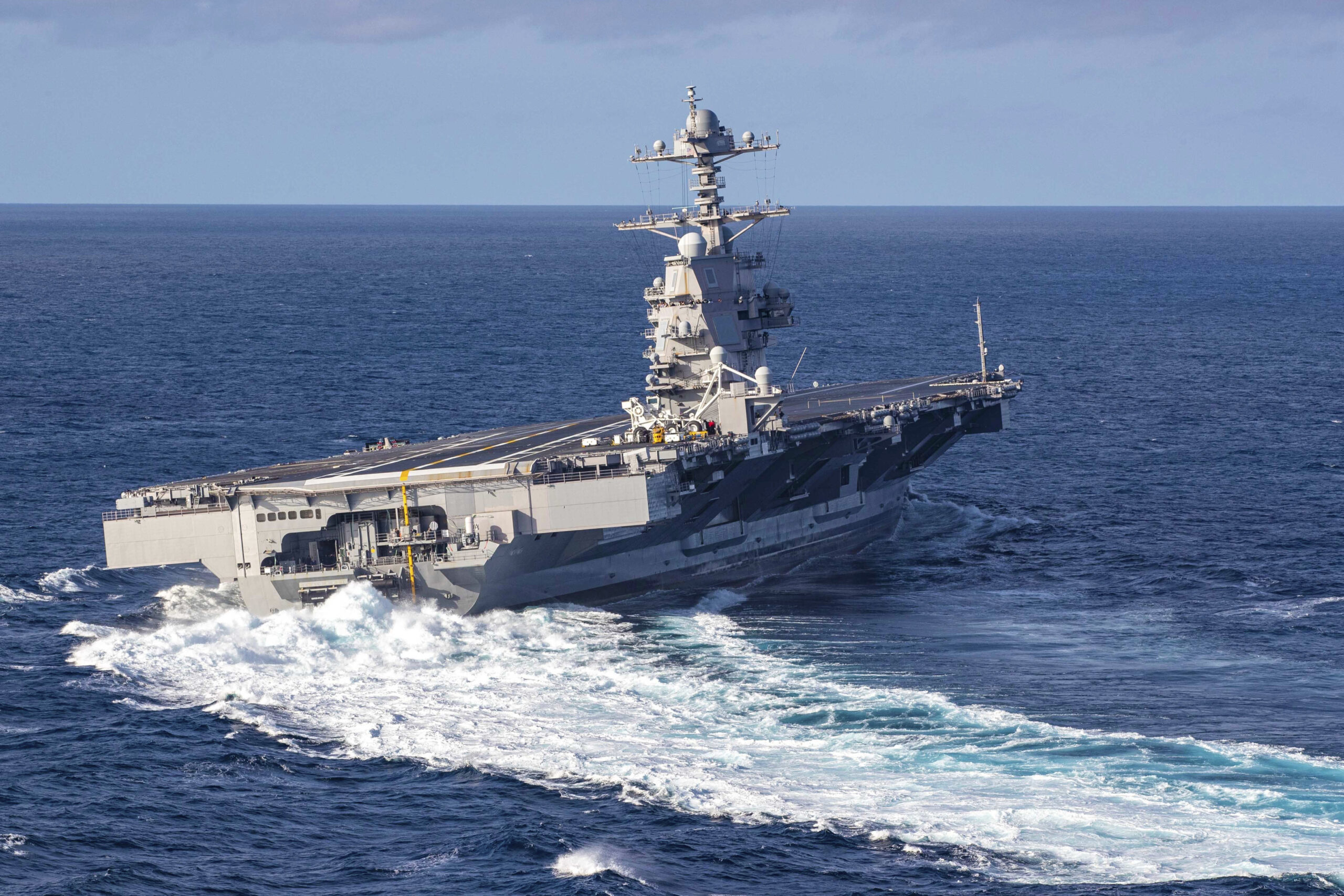
The Gerald R. Ford, America’s newest and most sophisticated carrier, shattered the record for the longest deployment since the Vietnam era. On April 15, it surpassed the USS Abraham Lincoln’s 295-day deployment in 2020.
By the time it wrapped up, 322 continuous days had placed it in the history books and cemented its status as a flagship of endurance and combat capability.
While other carriers like the USS Nimitz and USS Midway still hold distinctions from the past, none faced modern operational challenges quite like those encountered by the Ford Strike Group.
The Nimitz’s 341-day deployment spanned the height of COVID-19 restrictions, with crews forced to remain ashore for extended quarantines—reducing its active forward presence to just 263 days, according to USNI News. The Ford, on the other hand, stayed mission-ready and fully operational the entire time.
The Ford’s Carrier Air Wing 8 is a heavy hitter, boasting some of the most advanced aircraft in the fleet. Its squadrons include Strike Fighter Squadrons 31, 37, 87, and 213 flying the lethal F/A-18E and F/A-18F Super Hornets.
Electronic Attack Squadron 142 brought the E/A-18G Growler’s jamming power to suppress enemy radar and communications. E-2D Advanced Hawkeyes from Airborne Command & Control Squadron 124 provided critical early warning and battle management, while C-2A Greyhounds from Fleet Logistics Support Squadron 40 delivered vital personnel and parts.
Meanwhile, maritime strike and rescue operations were handled by the elite helicopter crews of Helicopter Maritime Strike Squadron 70 and Helicopter Sea Combat Squadron 9.
They flew MH-60R Seahawks and MH-60S Knighthawks, performing everything from anti-submarine warfare to humanitarian rescues, a testament to American versatility at sea.
Commanders have described the Ford’s deployment as a statement to both allies and adversaries. In an increasingly unstable world, the ability to move a floating airbase anywhere on the map within days remains a uniquely American advantage.
The carrier strike group’s performance reinforced President Trump’s longstanding assertion that peace is earned through strength, not slogans.

Under Secretary of War Pete Hegseth’s push for refocused readiness and tactical superiority, deployments like this one show that the U.S. Navy is returning to its roots—dominant, forward-deployed, and unapologetically strong.
While deployments this long test endurance, they also build unmatched expertise among aviators and deck crews. Every takeoff and landing was another chance to refine precision and reinforce the Navy’s warfighting edge.
Sailors faced unpredictable seas, condensed sleep cycles, and relentless operational demands, yet morale among the ranks held strong—driven by patriotism and pride in their mission.
When the carrier strike group operated under U.S. Central Command, jets from the Ford flew deterrence patrols that kept rogue actors in check and protected U.S. assets across critical waters.
At the same time, missions under Southern Command disrupted narcotics traffickers and secured maritime trade lanes that keep the Western Hemisphere stable.
This deployment wasn’t just about numbers—it was about resolve. It demonstrated that American aircraft carriers remain the gold standard of power projection, even as adversaries like China and Russia try to push their influence at sea. The Gerald R. Ford has proven that American exceptionalism isn’t a slogan; it’s a strategic reality.
Now, as its squadrons return home, the sailors of Air Wing 8 will reunite with families who’ve endured nearly a year without them. Behind every sailor is a network of spouses, children, and parents who serve in their own way—quietly carrying the burden of distance while the flag is defended far from shore.
The Gerald R. Ford’s return is a reminder that American steel and American spirit remain unmatched anywhere on the globe. No fleet, no matter how large on paper, can rival the sheer willpower of those who serve aboard these floating fortresses of freedom.
Join the Discussion
COMMENTS POLICY: We have no tolerance for messages of violence, racism, vulgarity, obscenity or other such discourteous behavior. Thank you for contributing to a respectful and useful online dialogue.