The U.S. Army will shift thousands of troops to America’s southern border this summer, with the 1st Armored Division set to take command of the Joint Task Force–Southern Border mission.
The move represents a continued hardening of America’s border security posture under President Trump’s renewed effort to stem the flow of illegal immigration and reassert control over U.S. sovereignty.
The War Department confirmed the changes on Tuesday, outlining a full rotation of combat, aviation, and sustainment units that will bolster the mission’s strength through the summer months.
The 1st Mobile Brigade of the famed 101st Airborne Division will deploy to the border to relieve the 2nd Brigade, 1st Armored Division.
Meanwhile, the 1st Armored Division’s Combat Aviation Brigade will replace the 1st Air Cavalry Brigade from the 1st Cavalry Division, and its sustainment brigade will take over for the 10th Mountain Division’s sustainment unit.
Headquarters for the 1st Armored Division, based at Fort Bliss, Texas, will now oversee the mission, assuming command from the 101st Airborne Division. For a formation steeped in combat tradition and tied deeply to the southwestern border region, the assignment is both symbolic and operationally practical.
Maj. Gen. Curtis Taylor, the division’s commanding officer, stated, “We are honored to assume command of this mission.

For most of living memory, our soldiers have fought for the freedom and security of our allies abroad, but now we have been asked to defend our own borders. This mission resonates with the soldiers of 1st Armored Division because the borderland is our home.”
That statement reflects a new sense of purpose among soldiers serving on domestic soil—a mission linked directly to the protection of American territory rather than far-off battlefields.
It also underscores the Trump administration’s firm belief that border enforcement is a matter of national defense, not mere bureaucracy.

Since President Trump’s return to office, the U.S. military’s involvement along the southern border has expanded significantly. In his first six months back in the White House, troop deployments to the border tripled compared to the final year of civilian-led border enforcement under the previous administration.
The approach has been clear: treat uncontrolled migration and cartel activity as national security threats requiring a military-grade response.
The Joint Task Force–Southern Border operates out of Fort Huachuca, Arizona, a historic post known for its intelligence and surveillance operations.
From there, troops are dispatched “across a variety of locations along the southern border to carry out directed missions and protect the territorial integrity of the United States,” according to an Army release.
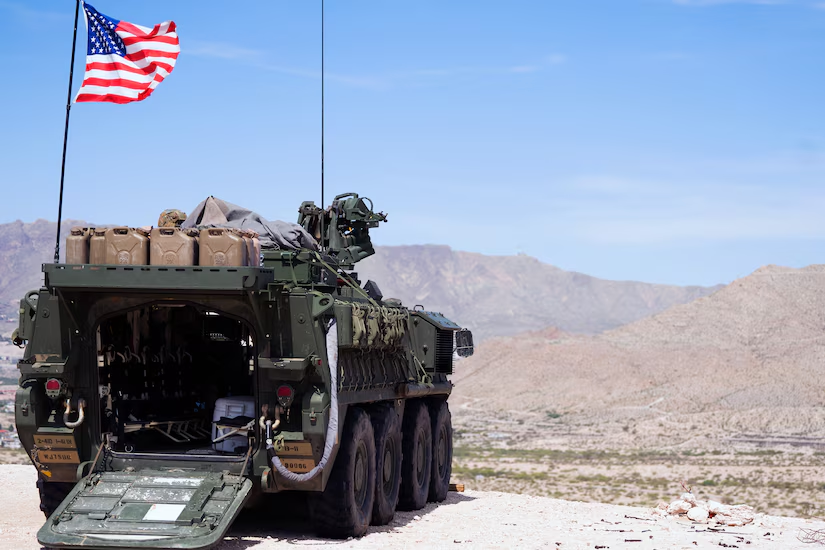
The mission is not new, but its scale and leadership structure continue to evolve as conditions demand.
Soldiers on the ground provide logistical and technological support to Customs and Border Protection, but they also conduct patrols, maintain observation posts, and handle aerial reconnaissance operations designed to spot and deter illegal crossings.
The move comes amid escalating tensions with drug cartels and transnational gangs operating on both sides of the U.S.-Mexico boundary. Smugglers continue to exploit weak areas of the border, forcing American troops to act as both deterrent and stopgap.
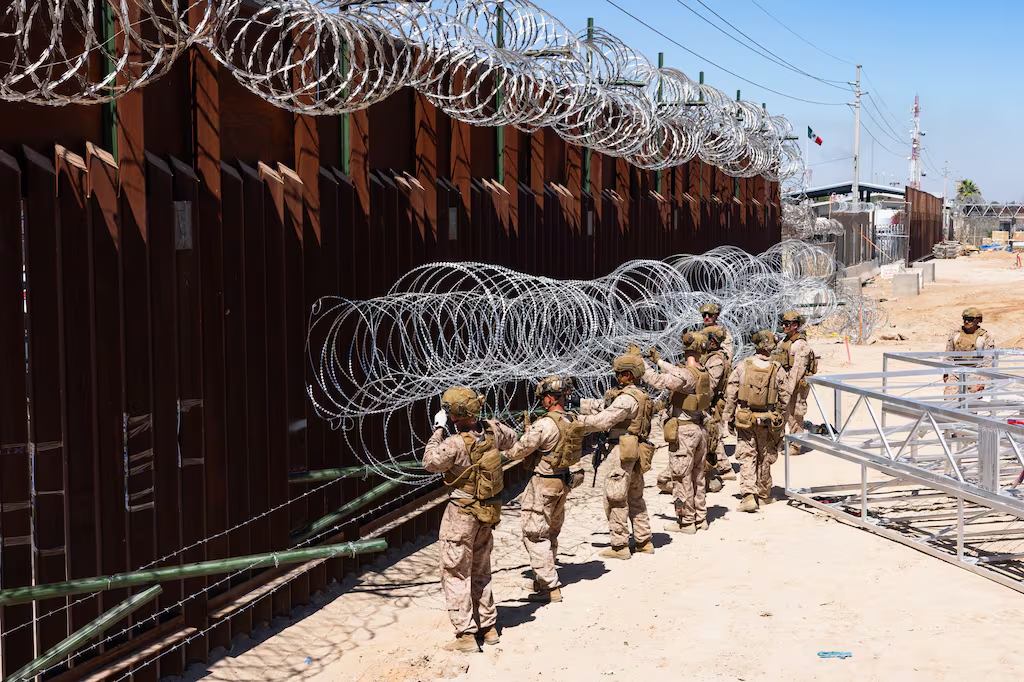
The presence of armored, airborne, and aviation elements sends a clear message: the United States is serious about defending its borders and will not back down to criminal enterprises that profit from chaos.
Furthermore, the integration of aviation units like the Combat Aviation Brigade demonstrates the multimodal nature of the mission.
Helicopters and surveillance aircraft provide critical overwatch capability across difficult terrain, giving ground troops the advantage in spotting illegal crossings before they happen. It’s the kind of coordination only the military can execute—precise, disciplined, and relentless.
Critics on the left will undoubtedly claim the Army’s role at the border is “militarization” or “politicization.”
But to seasoned soldiers, it’s simply a return to their oath—defending America from all threats, foreign and domestic. For the 1st Armored Division, the assignment is as personal as it is professional, as many soldiers stationed at Fort Bliss call the border region home.
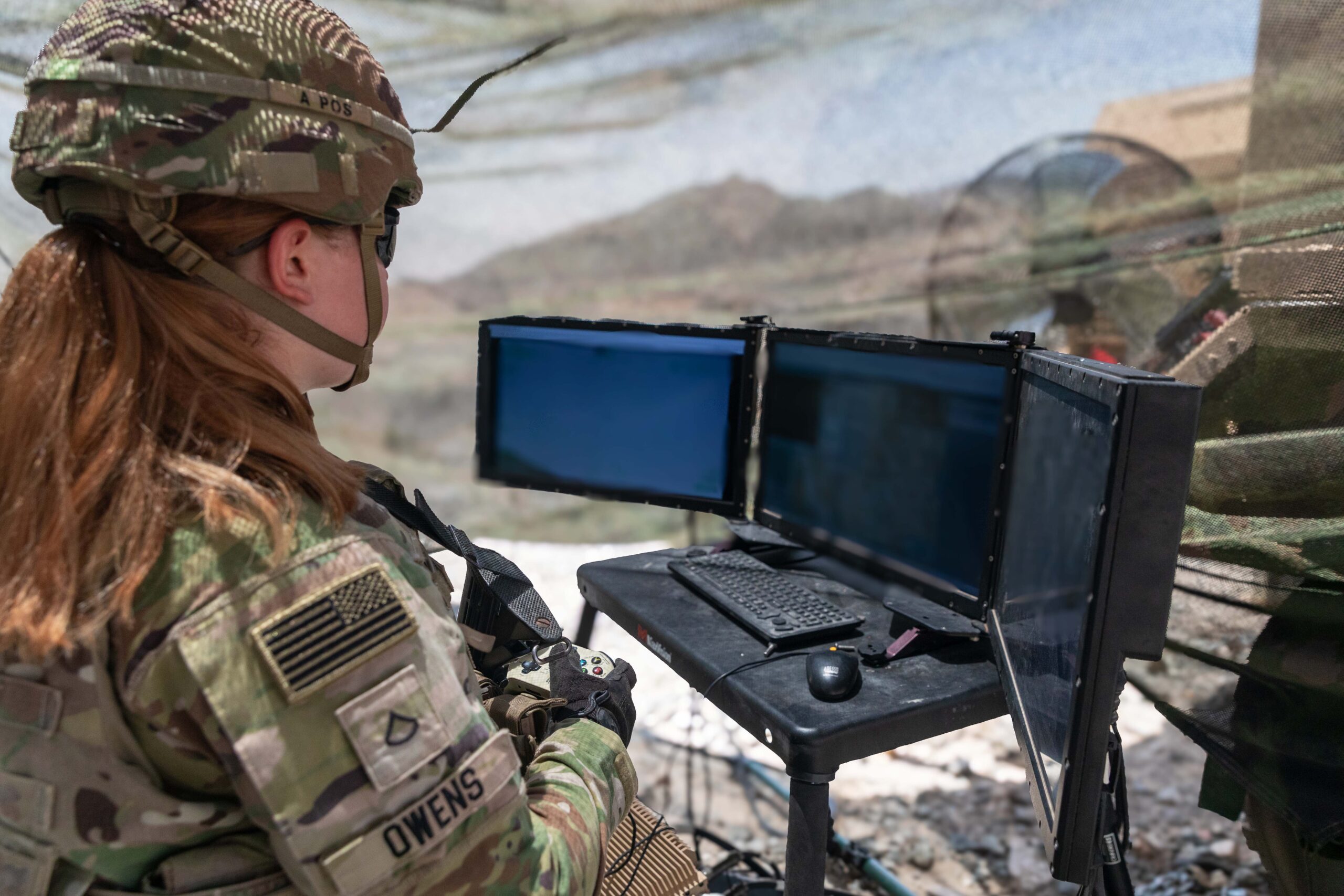
As the summer heats up, expectations are that troop rotations will coincide with seasonal spikes in illegal crossings and cartel activity. While the War Department did not release exact troop numbers, past border support missions have involved several thousand service members operating under joint task force conditions.
The rotation of high-readiness units like the 101st Airborne and 1st Armored Divisions underscores a growing truth in Washington’s national security circles: the border crisis is not just a law enforcement issue, but a defense imperative.
Under Trump’s watch—and with War Secretary Pete Hegseth’s unyielding backing—the military is once again at the tip of the spear, standing firm on U.S. soil to protect American lives and uphold national sovereignty.
For soldiers gearing up this summer, the mission may not be overseas, but its importance is no less vital. The southern border is the front line of America’s defense—and the Army is taking its post.
Join the Discussion
COMMENTS POLICY: We have no tolerance for messages of violence, racism, vulgarity, obscenity or other such discourteous behavior. Thank you for contributing to a respectful and useful online dialogue.