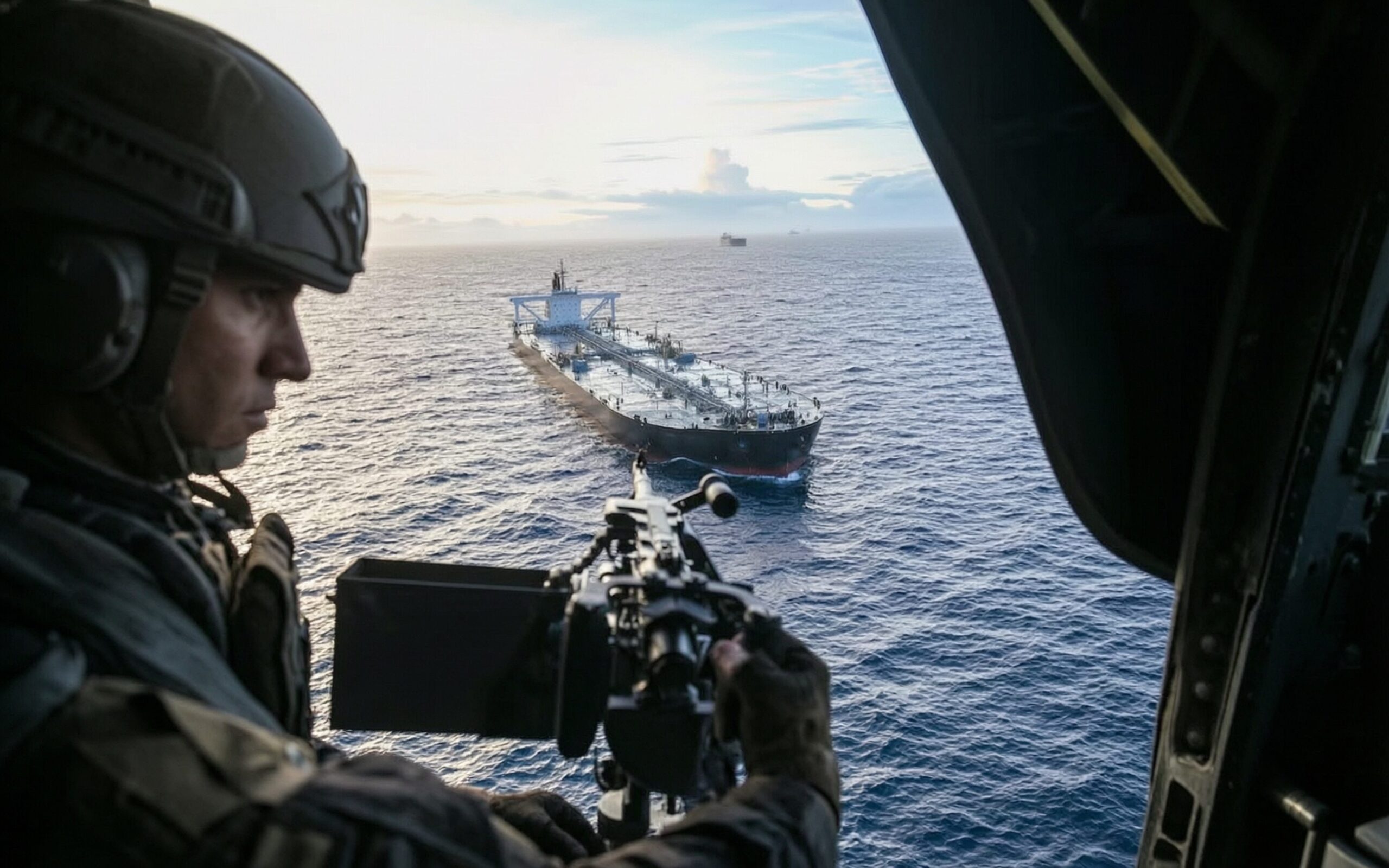
U.S. Marines and sailors boarded an alleged cartel support vessel in international waters off Ecuador on Friday, searched it without resistance, and later sent it to the bottom. U.S. Southern Command described the ship as a “floating refueling station” serving narcotics traffickers in the eastern Pacific.
The USS San Antonio tracked and intercepted the vessel before personnel from Littoral Combat Force 24 launched from the amphibious ship.
The boarding team secured and searched the suspected drug vessel without incident, according to SOUTHCOM.
American officials said the ship supplied fuel to smaller boats used by narcotics traffickers operating across the region.
That made the vessel more than another suspicious ship at sea because it allegedly functioned as a logistics node keeping cartel traffic moving.
The operation was conducted in coordination with the Ecuadorian government, which has been working with Washington against increasingly aggressive criminal networks.
SOUTHCOM identified the vessel as an asset operated by Los Choneros, a major Ecuador based drug trafficking organization.
Once American forces took control of the ship, its crew was transported back to Ecuador, SOUTHCOM said.
The captured vessel was then sunk, permanently removing the alleged cartel fuel stop from the eastern Pacific instead of leaving it available for another criminal crew.
SOUTHCOM released video showing the ship disappearing beneath the water.
The footage resembled previous military videos documenting strikes against alleged drug boats in the Caribbean and eastern Pacific.
Gen. Francis Donovan, the commander of SOUTHCOM, said the action delivered a “decisive blow to a narco-terrorist operation responsible for moving significant amounts of drugs through the region.”
It was a blunt assessment of an operation that targeted the support structure behind the smugglers, not merely one disposable speedboat.
The seizure followed new financial pressure against Los Choneros and Los Lobos, another Ecuadorian criminal organization.
The U.S. Treasury Department sanctioned several people and companies allegedly connected to the two groups after the U.S. government designated both as foreign terrorist organizations last September.
American military activity around Ecuador has expanded noticeably during the past two weeks.
The latest boarding came one week after the governor of Ecuador’s Esmeraldas province said Army Green Berets from the 7th Special Forces Group Airborne were conducting joint operations against cartels near the Colombian border.
Ecuador’s defense minister also announced that two American warships were arriving to assist operations targeting drug boats near the port city of Manta.
Those ships were later identified as the USS San Antonio and the Arleigh Burke class destroyer USS Gridley.
The U.S. also resumed airstrikes against alleged small drug boats on Aug. 23 following a two month pause.
One vessel was sunk in the eastern Pacific as American forces renewed a campaign that has already included dozens of strikes, searches, seizures, and maritime interdictions.
President Donald Trump’s administration has intensified diplomatic and military pressure against Latin American narcotics networks since the beginning of the summer.
Instead of treating heavily armed trafficking organizations like misunderstood neighborhood clubs, the administration has increasingly confronted them as threats to American security and regional stability.
Littoral Combat Force 24 deployed to the Caribbean earlier this year with roughly 1,300 Marines from the 24th Marine Expeditionary Unit.
The force operates from Puerto Rico and the USS San Antonio, giving commanders a flexible platform for raids, boarding missions, and other operations across the region.
Its mission was described as targeting “networks utilized by Designated Terrorist Organizations and narco-terrorists,” language reflecting the Trump administration’s harder approach to cartel activity. The term “narco-terrorists” makes clear that these organizations are not ordinary smugglers looking to make a quick buck.
The Coast Guard continues its longstanding maritime interdiction mission while the War Department conducts strikes and other direct military actions.
Together, those operations are putting pressure on both the cartel boats carrying narcotics and the support vessels that keep those boats fueled and moving.
The San Antonio and Gridley are assigned to Joint Task Force Western Hemisphere, which succeeded Joint Task Force Southern Spear.
The task force supports the Americas Counter Cartel Coalition, an American led regional partnership created to pursue cartel networks throughout Latin America.
Operations in Ecuador represent the coalition’s first significant campaign.
Friday’s boarding and sinking showed that cartel logistics vessels can now expect something more serious than a warning when American Marines appear over the horizon.
Join the Discussion
COMMENTS POLICY: We have no tolerance for messages of violence, racism, vulgarity, obscenity or other such discourteous behavior. Thank you for contributing to a respectful and useful online dialogue.