WHAT YOU NEED TO KNOW
- The Army Blood Link project seeks two prototype UAVs capable of carrying 20 units of blood products.
- The drones must carry 35 to 50 pounds, travel as far as 100 kilometers and reach altitudes up to 18,000 feet.
- Temperature controlled containers must protect blood for up to three hours in conditions ranging from 15°F to 120°F.
- The Army wants precise landing or aerial delivery within 10 meters of the designated location.
The U.S. Army is searching for drones capable of moving blood supplies in the field, outlining a prototype effort through a new sources sought notice.
The service calls the initiative the Army Blood Link project and wants two prototype unmanned aerial vehicles from a selected contractor.
Each aircraft must be able to transport 20 units of blood products.
Responses to the notice are due Sept. 21, while the two drones must be delivered within three months after the contract is awarded.
Here's What They're Not Telling You About Your Retirement
That schedule leaves little room for contractors to start from scratch.
The notice emphasized, “Due to the compressed timeline, we recommend focusing on further development and adaptation of existing commercial off-the-shelf (COTS) UAS solutions.”
The request for proposals was issued on behalf of the XVIII Airborne Corps Joint Operations Innovation Outpost.
It calls for a UAV that can carry at least 35 pounds and as much as 50 pounds during blood transport missions.
This Could Be the Most Important Video Gun Owners Watch All Year
The Army wants the aircraft to have a one way transport radius of 30 kilometers and a maximum range of 100 kilometers.
Although the request does not identify a maximum speed, it calls for operations at altitudes reaching 18,000 feet.
Speed on the ground also matters under the proposed requirements.
The UAV should provide a “maximum 30-minute response time from mission request to launch under standard operating conditions,” giving operators a defined window to prepare and send the aircraft.
Protecting the blood during flight is a central requirement because the supplies are perishable.
The Army wants a cargo container able to regulate temperature while the aircraft moves through a wide range of weather and environmental conditions.
According to the notice, the container should “maintain required temperature for up to [three] hours of transport time, within an ambient environment of 15°F to 120°F with high humidity.” The Army estimates each total mission would last between three and six hours.
Blood could remain inside the required temperature limits for no more than three hours, according to the request.
That requirement places a firm boundary on the transportation window even though an entire mission could take twice that amount of time.
The container also must accommodate blood bags measuring roughly 8 inches long and 5 inches wide. Beyond temperature control, the cargo bay should resist vibration, rain, sand, chemical contamination and other environmental hazards that could threaten the shipment.
Delivery accuracy is another major part of the Army’s specifications.
After reaching its destination, the drone must place its cargo within 10 meters of the desired location, according to the request.
The Army is also considering delivery without the aircraft landing.
The notice describes a “drop capability from 10 to 15 meters above ground level with landing accuracy sufficient to remain within the 10-meter delivery-location requirement and not damage the blood products or compromise container integrity.”
The envisioned aircraft would operate with partial autonomy while remaining under operator supervision. The Army specifically wants “autonomous waypoint navigation and return-to-base functions, under operator supervision,” pairing automated flight capabilities with continued human oversight.
Durability requirements apply to the UAV and its supporting ground equipment.
The service wants the complete system to provide an operational lifespan ranging from 500 to 1,500 flight hours, allowing the prototype aircraft and associated equipment to sustain repeated use.
The Army has already devoted attention to the problem of carrying blood toward the front lines.
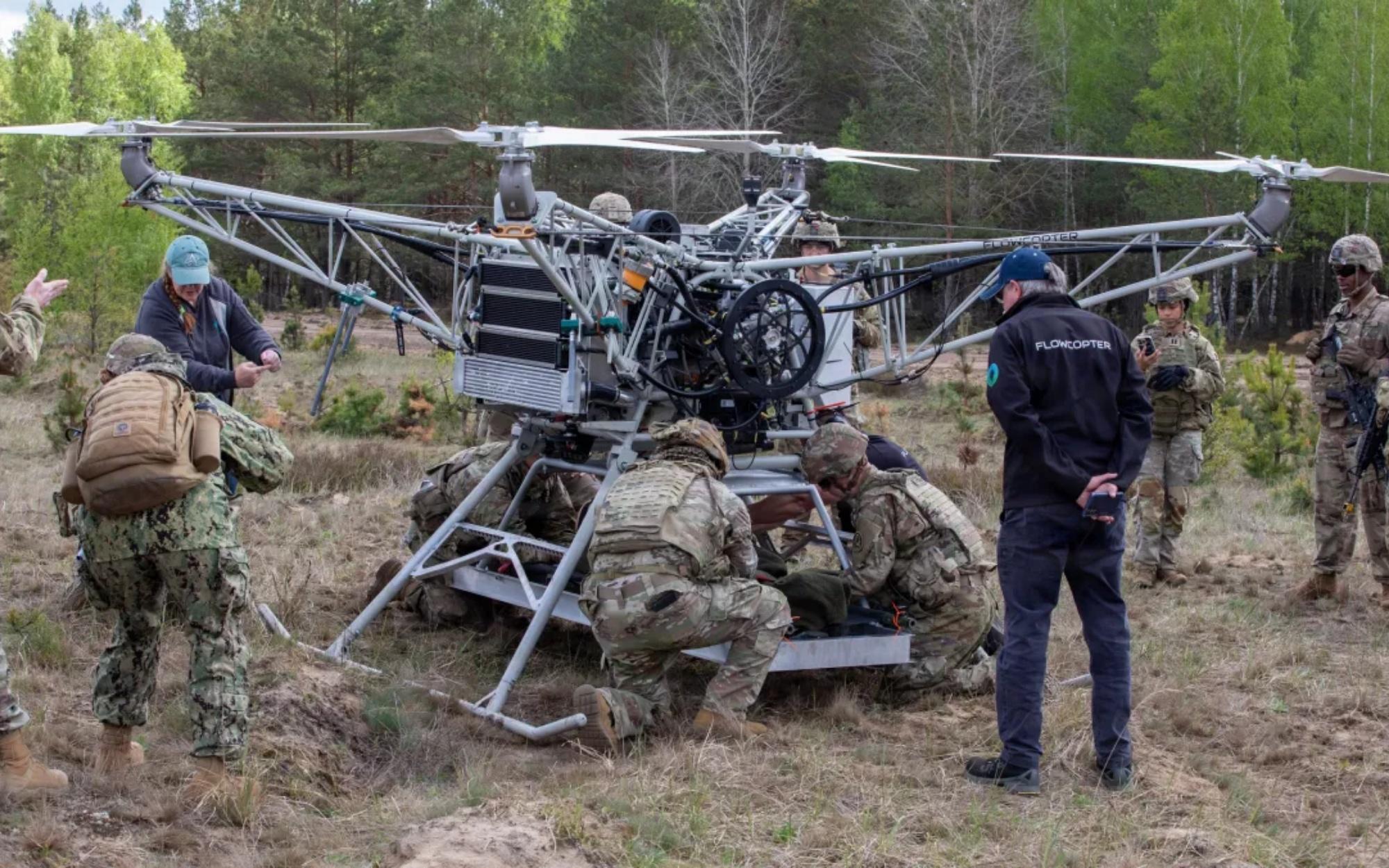
In May 2025, the 173rd Airborne Brigade used drones to transport blood during the Swift Response exercise in Lithuania, providing a recent example of the concept in an exercise.
Join the Discussion
COMMENTS POLICY: We have no tolerance for messages of violence, racism, vulgarity, obscenity or other such discourteous behavior. Thank you for contributing to a respectful and useful online dialogue.