WHAT YOU NEED TO KNOW
- CSIS argues that the United States should target China’s growing aircraft carrier fleet instead of focusing exclusively on protecting American carriers.
- The proposed strategy combines submarines, missiles, surveillance, cyber warfare and uncrewed vessels to make Chinese carrier operations prohibitively risky.
- China operates three carriers, while a 2025 Pentagon study estimated its navy will build six more by 2035.
- CSIS recommends a Navy divided between 300 crewed vessels and 300 uncrewed vessels, alongside larger submarine and torpedo investments.
China is pouring enormous effort into weapons designed to destroy American aircraft carriers, including submarines and ballistic missiles.
The Center for Strategic and International Studies argues that the United States should flip that strategy around and target China’s expanding carrier fleet.
The think tank laid out its plan in a report titled “Flip the Script.”
It presents Chinese carriers not simply as a challenge to American naval power, but as a vulnerability that the United States and its Pacific allies could exploit.
Here's What They're Not Telling You About Your Retirement
“China’s expanding carrier force presents a strategic vulnerability that the United States and its allies can exploit, rather than merely a challenge to U.S. dominance,” the report argues.
China has spent years putting American carriers in its sights, even building a full sized mockup of a U.S. carrier in the Taklamakan Desert.
CSIS now proposes some poetic justice by applying similar pressure to Beijing’s own flattops.
The report compares the political and military stakes surrounding both fleets.
This Could Be the Most Important Video Gun Owners Watch All Year
Losing a Ford-class carrier would humiliate Washington, while the destruction of a Fujian-class carrier could deliver a similarly devastating blow to Beijing.
Chinese carriers serve as prestige projects and as important platforms for future sea control and expeditionary operations, according to CSIS.
Like American carriers, they are valuable assets that are difficult to replace and vulnerable to strikes from long range weapons.
China currently operates three aircraft carriers. A 2025 Pentagon study estimated that the People’s Liberation Army Navy will build six more by 2035.
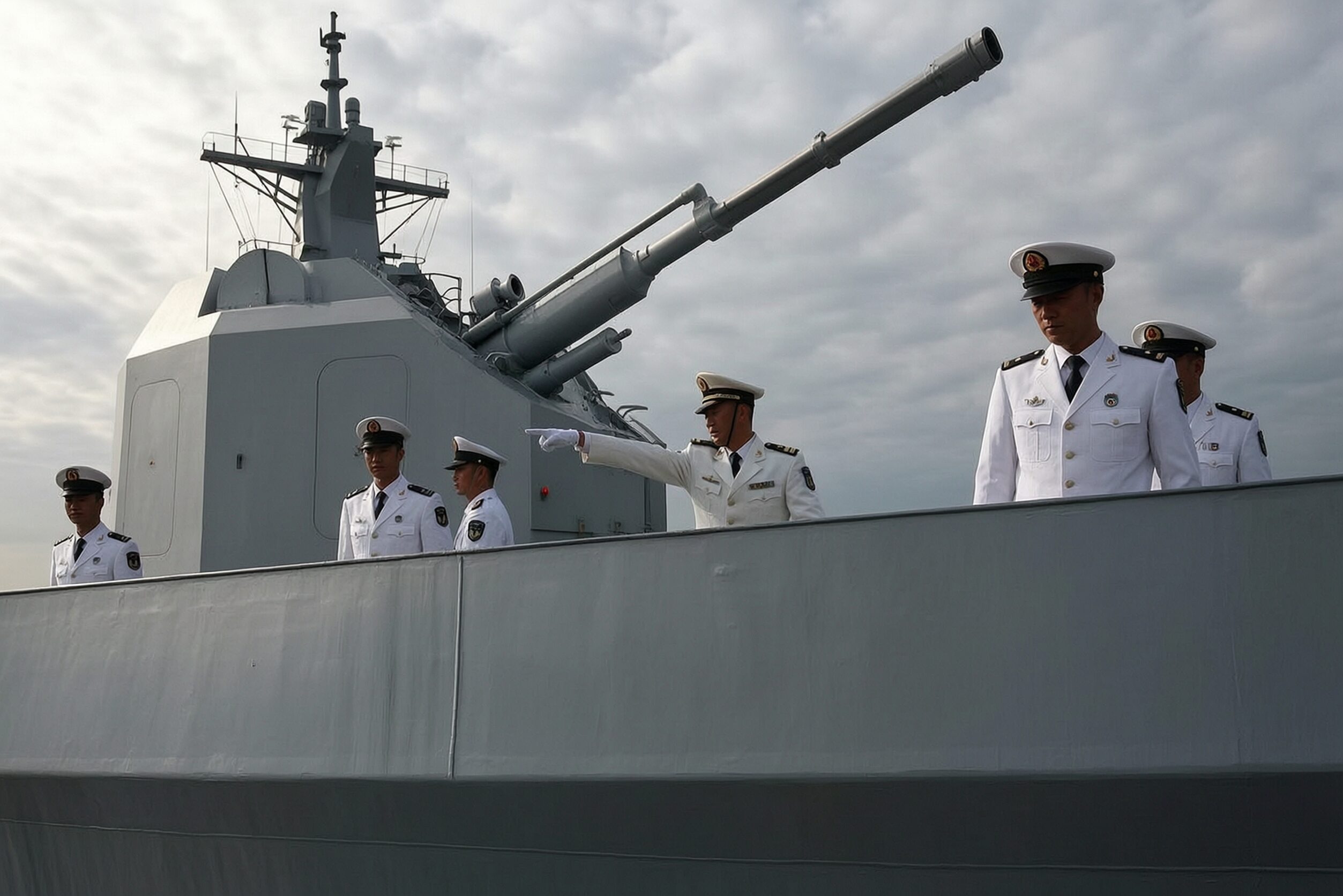
The CSIS report suggests that China’s effort may be driven partly by a desire to be viewed as a first rate power, rather than solely by military requirements.
That dynamic turns the carriers into concentrated sources of military, political and symbolic risk.
The proposed American strategy relies heavily on submarines, including crewed and uncrewed vessels positioned to ambush Chinese carriers.
The force could include U.S. nuclear submarines and quiet diesel electric boats from allies such as Australia, Japan and South Korea.
“The key is to turn the undersea domain into a continuous threat envelope that forces Beijing to invest heavily in escorts, ASW aviation, and fixed sensors simply to move carriers out of its home waters,” the report said.
CSIS also recommends using missiles based on land, mirroring China’s investment in ballistic weapons designed to kill carriers.
Weapons launched from bases stretching from Japan to the Philippines could threaten chokepoints through which Chinese carriers would have to travel.
The report argues that the expected presence of dense allied missile fire, backed by reconnaissance and targeting, could raise the perceived cost of sending carriers such as the Fujian or Sichuan into the Philippine Sea. That pressure could make them less useful as tools of coercion.
American forces could also employ missiles launched from aircraft and supported by satellite surveillance.
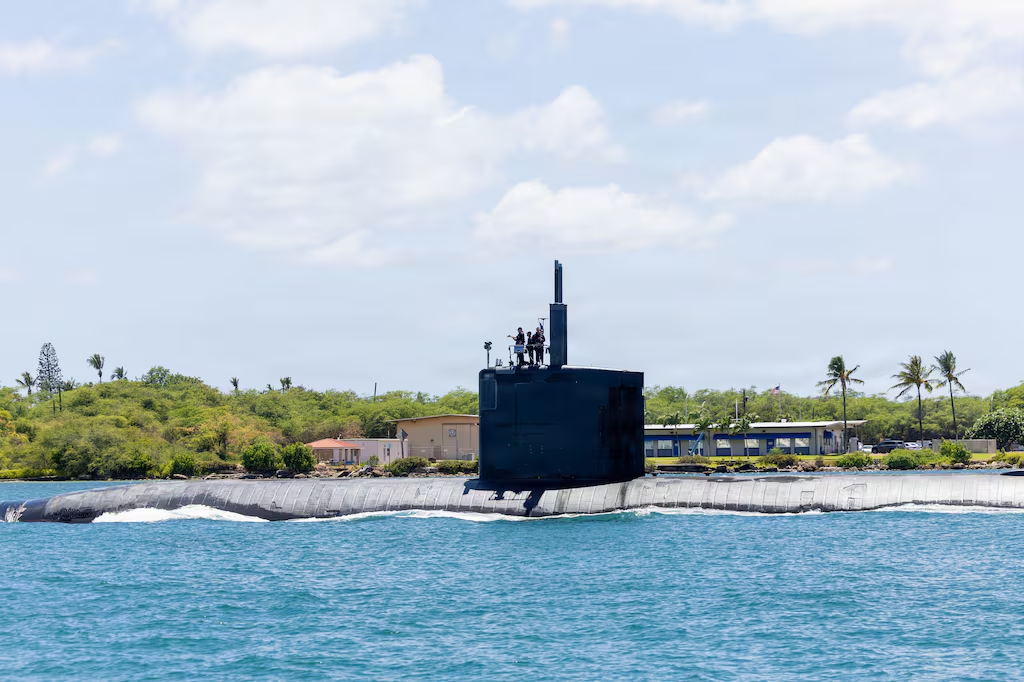
Electronic and cyber warfare would seek to disrupt Chinese command networks, much as China would attempt to interfere with American operations.
The plan also borrows from Ukraine’s campaign against the Russian Navy in the Black Sea. Swarms of uncrewed surface vessels could strike Chinese ships and the ports sheltering them.
“The central idea is to make a carrier’s routine employment around Taiwan, the South China Sea, or beyond the first island chain appear prohibitively risky, day in and day out,” the report said.
Political risk could matter as much as battlefield danger. An anonymous U.S. expert on China said that the Chinese Communist Party spent substantial political capital building public support for a carrier fleet and used naval nationalism to mobilize resources for the expansion.
Putting the strategy into practice would require changes in U.S. defense planning, particularly the construction of more submarines.
The study questioned whether American shipyards could produce enough nuclear attack submarines to sustain a dense ambush belt against Chinese carrier groups.
CSIS offered three additional measures: purchasing more uncrewed underwater vehicles, investing in allied bases capable of hosting naval drones and procuring more torpedoes. The report described the existing torpedo stockpile as inadequate.
The plan would also reshape the Navy’s proposed fleet. Instead of 350 crewed vessels and 150 surface and underwater drones, CSIS recommends an evenly divided force of 300 crewed vessels and 300 uncrewed vessels.
Army and Marine Corps units armed with missiles for attacking ships would contribute to the effort.
The United States would also work with Pacific allies to produce guided munitions, reducing dependence on weapons manufactured and shipped from North America.
CSIS ultimately challenges the argument that American carriers are uniquely vulnerable in an era of missiles and drones.
China is building its own large deck capital ships, and the report contends those vessels are at least as targetable as the American carriers Beijing has worked so hard to threaten.
Join the Discussion
COMMENTS POLICY: We have no tolerance for messages of violence, racism, vulgarity, obscenity or other such discourteous behavior. Thank you for contributing to a respectful and useful online dialogue.