WHAT YOU NEED TO KNOW
- General Dynamics Land Systems selected the Rolls-Royce MTU 8V 199 engine for its Wolf XM30 prototype.
- The Army expects 8 vehicles each from General Dynamics Land Systems and American Rheinmetall for soldier evaluations.
- The Wolf carries two crew members, six infantry soldiers, an XM913 50mm cannon, and Switchblade 300 loitering munitions.
- If selected, the Wolf’s engine would be manufactured at Rolls-Royce’s facility in Aiken, South Carolina.
One of the two vehicles competing to replace the Army’s M2 Bradley Infantry Fighting Vehicle will rely on a Rolls-Royce engine. General Dynamics Land Systems has selected the MTU 8V 199 to power its Wolf XM30 prototype.
A Rolls-Royce representative confirmed the engine choice to Task & Purpose. The MTU 8V 199 builds upon the company’s Series 199 engines, which have also been used in modern military vehicles such as the M10 Booker.
“The variant of the 8V 199 used in XM30 is a new model variant with increased displacement and power versus the M10,” the Rolls-Royce representative wrote in an emailed statement. “The power requirement is higher on XM30 due to increased weight and performance targets.”
That additional power is intended to meet the Wolf XM30’s greater weight and performance requirements. General Dynamics Land Systems is competing against American Rheinmetall to produce the Army’s eventual Bradley replacement.
MORE NEWS: Pentagon Confirms First Military Execution in Over 60 Years Will Be Publicly Livestreamed
The engine uses a pump line nozzle fuel system rather than a common rail system. Rolls-Royce said the design is intended to increase durability while making maintenance easier, two practical considerations for an armored vehicle intended to carry soldiers and advanced combat systems.
The MTU 199 series is available in 6 cylinder, 8 cylinder, 10 cylinder, and 12 cylinder arrangements. The General Dynamics Land Systems Wolf uses the 8V version, according to the Rolls-Royce representative.
“The increased displacement on this variant coincides with the development and introduction of the 10V and 12V configurations that are being introduced for heavier vehicles, including main battle tanks,” the Rolls-Royce official added. The company is pursuing broader engine commonality across several vehicle types.
“With this strategy, we will have a common platform and interchangeable parts across multiple vehicle platforms within a given brigade,” the official said. That approach would put related engine configurations and shared components into different vehicles serving within the same brigade.
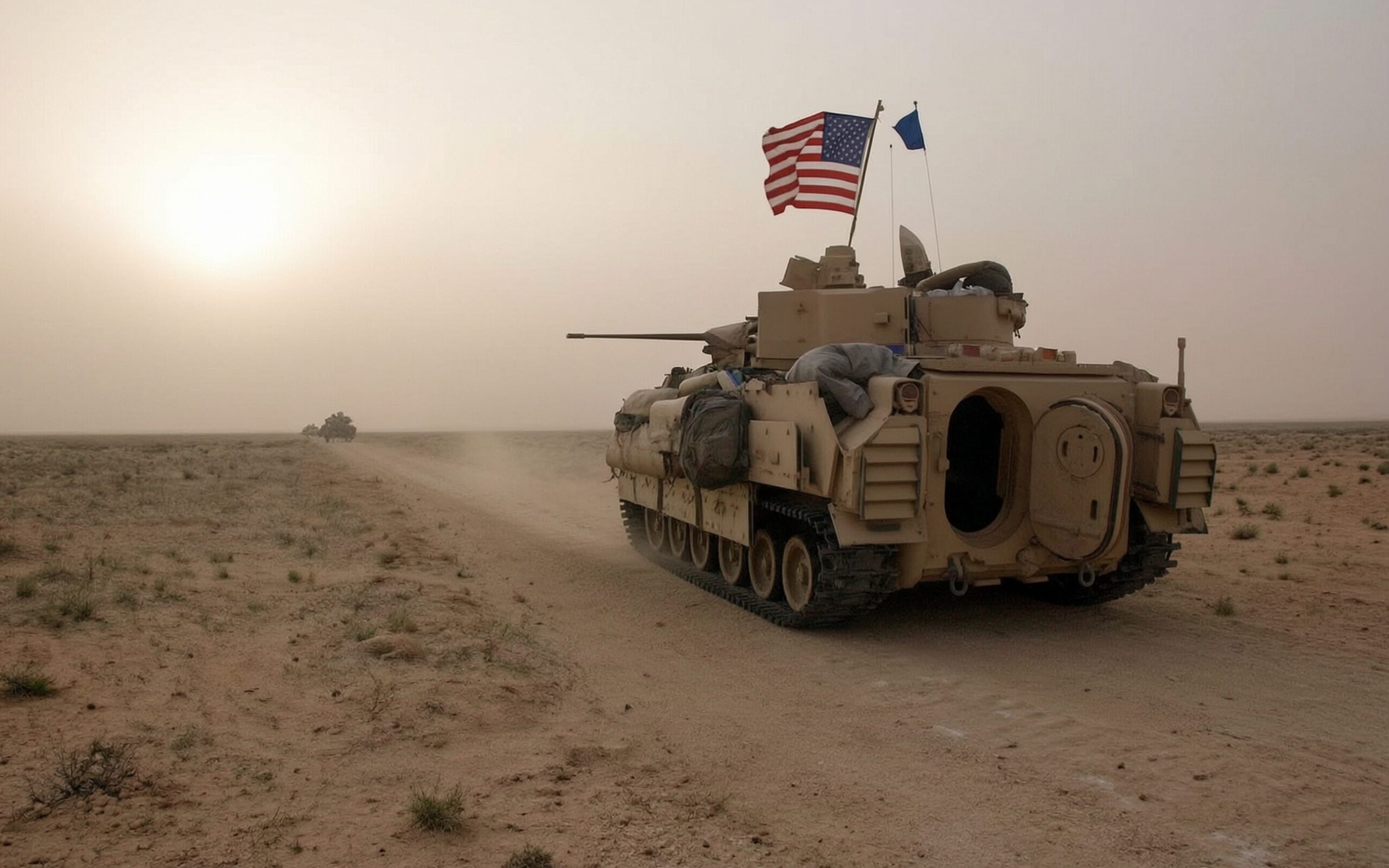
Both XM30 competitors have delivered their first prototypes. General Dynamics Land Systems delivered its first Wolf XM30 prototype on Aug. 21, while American Rheinmetall delivered the first Lynx XM30 prototype on Sept. 1.
Each company is expected to deliver a total of 8 vehicles for evaluation by soldiers. The Army will use that process to examine the rival designs as it considers which vehicle should succeed the Bradley.
The XM30 is expected to detect and kill enemy fighting vehicles from beyond those vehicles’ effective range. The Army also wants sufficient space, weight capacity, and electrical power preserved for future upgrades instead of boxing the vehicle into yesterday’s technology.
The service wants the XM30 to operate alongside drones, a capability that has become part of the envisioned vehicle design. The Bradley has recently been seen traveling with drones, while both XM30 competitors include systems intended to support that broader battlefield role.
To accommodate drones and other future technology, the Army required a modular, government defined open architecture. That requirement is intended to allow new weapons, sensors, and software to be integrated without leaving every upgrade under the original manufacturer’s control.
The open architecture could also help keep the XM30 from becoming obsolete before it enters service. That matters for a vehicle expected to carry increasingly sophisticated sensors, weapons, software, and electrical systems while retaining room for additional changes.
General Dynamics Land Systems’ Wolf and American Rheinmetall’s Lynx each carry two crew members and six infantry soldiers. Both vehicles feature an unmanned turret armed with the XM913 50mm cannon.
The Wolf also uses a hybrid electric drivetrain and is expected to incorporate active protection, advanced sensors, and 360 degree situational awareness. Those features form part of the vehicle’s approach to protection, battlefield awareness, and future combat requirements.
One notable difference involves the vehicles’ additional weapons packages. General Dynamics Land Systems has integrated AeroVironment’s Switchblade 300 loitering munitions into the Wolf, while the Lynx offers the Coyote.
If the Army selects General Dynamics Land Systems’ Wolf, Rolls-Royce would manufacture the MTU 8V 199 engine at its facility in Aiken, South Carolina. The competition now gives soldiers 16 expected vehicles to evaluate across the two companies, with the Bradley replacement hanging in the balance.
The article was updated after publication on Oct. 9, 2026, with additional information from a Rolls-Royce representative about the MTU 199 series. That information included details about displacement, engine configurations, maintenance, and the company’s strategy for interchangeable parts.
Join the Discussion
COMMENTS POLICY: We have no tolerance for messages of violence, racism, vulgarity, obscenity or other such discourteous behavior. Thank you for contributing to a respectful and useful online dialogue.