WHAT YOU NEED TO KNOW
- The Pentagon selected four directed energy weapons for a homeland counter drone pilot at five U.S. military installations.
- The systems include three lasers from AeroVironment, Kord and Boeing, plus Epirus’ Leonidas microwave weapon.
- The one year pilot will examine performance, costs, operations and maintenance requirements under operational conditions.
- The FAA said proper safety controls allow tested laser systems to operate without undue risk to passenger aircraft.
The Pentagon on Monday identified four directed energy weapons for a homeland counter drone pilot, marking the first systems the military will field and test at U.S. bases under a program ordered by Congress.
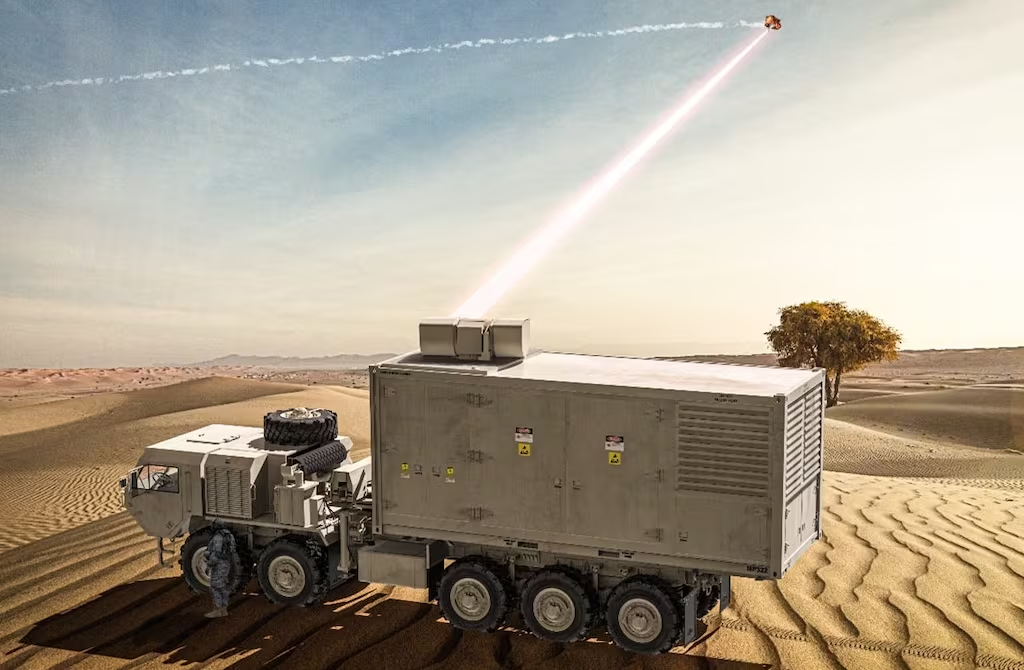
AeroVironment’s Palletized High-Energy Laser, Epirus’ Leonidas microwave, Kord’s Firefly laser and Boeing’s Compact Laser Weapon System were selected, according to a War Department release.
The pilot is managed by Joint Interagency Task Force 401, also known as JIATF-401, an Army led organization established last year to coordinate counter drone work across the military and other federal agencies. The task force is coordinating the pilot with the services, U.S. Northern Command and the Federal Aviation Administration.
“High-energy lasers and high-powered microwave systems are tools that can be effectively used in a layered drone defense,” Army Brig. Gen. Matt Ross, the task force director, said in the release. “This pilot program will test these capabilities in an operational environment so we can understand how best to integrate and sustain them to defend the homeland.”
The pilot will collect real time information about system performance, costs, operations and maintenance requirements. Ross said in August that the program will run for one year, with service members operating and maintaining the weapons at participating bases.
JIATF-401 selected five pilot locations in May. They are Fort Huachuca, Arizona; Fort Bliss, Texas; Naval Base Kitsap, Washington; Grand Forks Air Force Base, North Dakota; and Whiteman Air Force Base, Missouri.
Fort Huachuca and Fort Bliss are both connected to the southern border mission. Officials said deployment plans would be developed with installation commanders over 180 days, with operations expected later this year.
Monday’s announcement did not identify which weapon will be assigned to each installation. It also did not disclose how many systems will be fielded or how much the individual systems and the overall pilot will cost.
Cost is a central selling point for lasers and microwaves because firing them costs a fraction of launching a missile or firing a gun round. Neither option leaves unexploded ordnance on the ground, although the pilot is intended to examine expenses under operational conditions.
Ross warned reporters in August against relying on shot cost alone. “If I procure that system and it costs me $6 million and I take one shot a year, you can’t tell me that that shot only costs 8 cents,” he said.
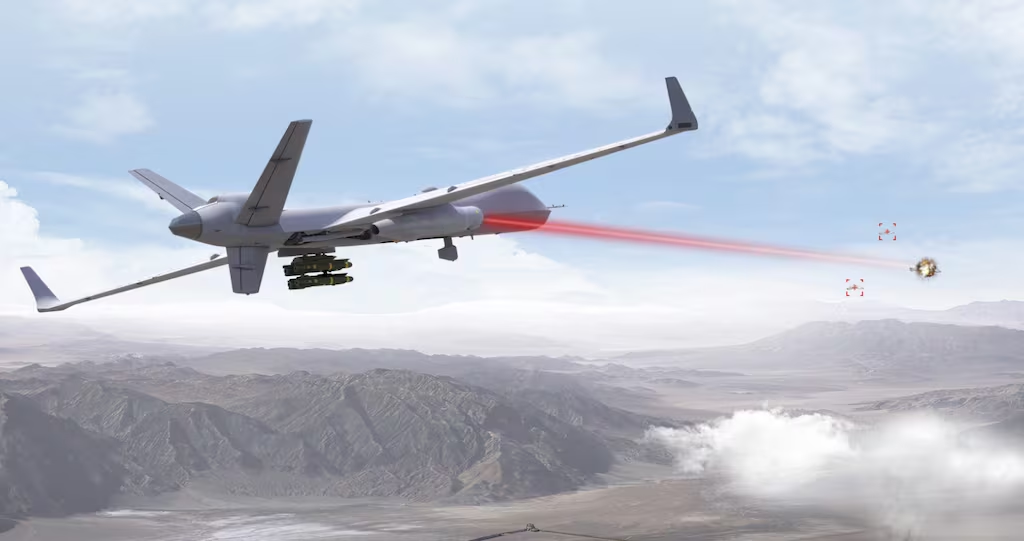
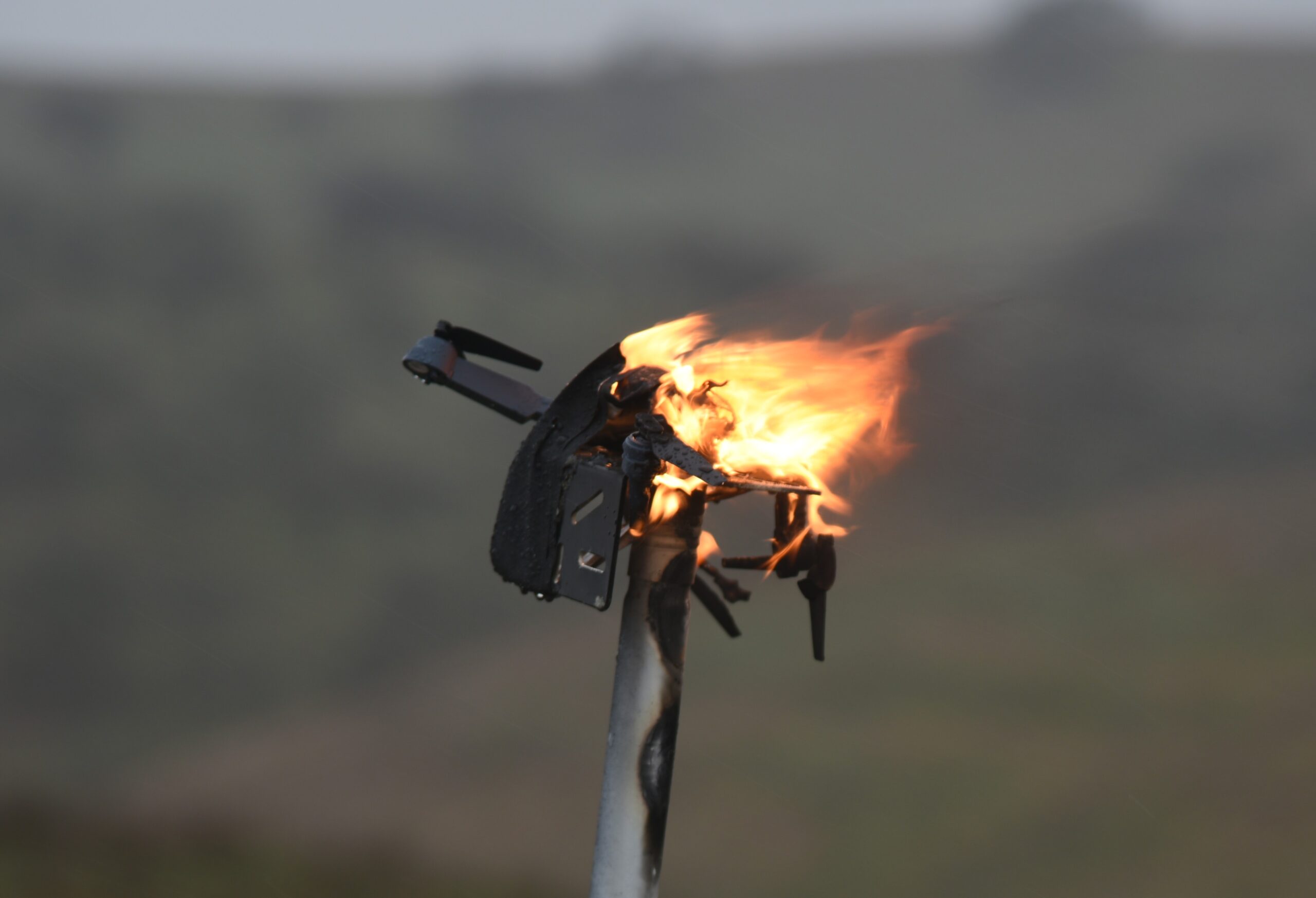
The technologies also confront drone threats differently. A high energy laser focuses on one drone until it burns through, while a high powered microwave can disrupt an entire swarm in one burst by overwhelming its electronics.
The wider footprint of a microwave raises concerns about effects on nearby systems. Leonidas is the pilot’s only microwave weapon and forms the basis of an Army prototype designed to defend troops and locations against drone swarms under the Indirect Fire Protection Capability program.
The Army awarded Epirus $66.1 million in December 2022 for four prototypes, followed by another $43.5 million in July 2025 for a newer version. Epirus said in September 2025 that Leonidas disabled all 61 target drones across five scenarios at Camp Atterbury, Indiana, including a swarm of 49 drones in one burst.
AeroVironment’s selected system uses the company’s LOCUST laser in a roll-on, roll-off configuration placed on a pallet that can move by truck or ship. The company said in April that a palletized LOCUST tracked and defeated target drones aboard the aircraft carrier George H.W. Bush during an October 2025 live fire event.
In September, the Army awarded AeroVironment a $464.8 million agreement to produce its 30 kilowatt LOCUST X3 under the Enduring-High Energy Laser program. The Pentagon announcement did not say whether systems for the pilot will come from that purchase.

Boeing’s Compact Laser Weapon System is a lower power weapon that may require more time on a target but can be smaller and easier to move. Boeing said in 2024 that a 5 kilowatt system defeated Group 3 drones weighing up to about 1,320 pounds during the Red Sands counter drone exercise in Saudi Arabia.
Kord, a KBR subsidiary, markets Firefly as a mobile, palletized laser scalable from 5 to 40 kilowatts. Company officials said during an August demonstration near Guntersville Dam in northern Alabama that a version mounted on a truck typically required a few seconds to destroy a small drone.
The pilot follows a February incident in which the FAA briefly closed airspace over El Paso, Texas, after a counter drone laser was used near Fort Bliss without FAA coordination, according to an Associated Press report. War Department and FAA officials later conducted a live fire demonstration in March at White Sands Missile Range, New Mexico.
On April 10, the FAA said its safety review determined the tested laser systems, with proper safety controls, “do not pose undue risk to passenger aircraft.” The War Department also plans a December shoot off at Dugway Proving Ground, Utah, for additional laser and microwave systems.
Join the Discussion
COMMENTS POLICY: We have no tolerance for messages of violence, racism, vulgarity, obscenity or other such discourteous behavior. Thank you for contributing to a respectful and useful online dialogue.