WHAT YOU NEED TO KNOW
- Australia and the Philippines signed a Nov. 15 agreement streamlining troop deployments, military coordination, training, intelligence sharing, and infrastructure discussions.
- The pact could help Australian forces operate across the Philippines while supporting disaster response, logistics, and regional security activities.
- Exercise ALON is expected to expand next year alongside additional aerial, land, cyber, amphibious, and multidomain training.
- Australia may invest in Philippine military infrastructure needed to sustain small, mobile forces across widely dispersed islands.
Australia and the Philippines have signed a sweeping agreement intended to accelerate military coordination, streamline rotational troop deployments, and open the door to Australian investments in Philippine military infrastructure. The pact places the Philippines deeper inside Australia’s evolving regional strategy.
The Nov. 15 Defense Cooperation Agreement, known as the DCA, is designed to cut administrative bottlenecks and establish a more efficient system for approving bilateral defense activities. Until now, much of the cooperation rested on older agreements and plenty of bureaucratic machinery.
Military exchanges have largely operated under a 1995 memorandum of agreement. Troop exchanges were guided by the Status of Visiting Forces Agreement, signed in 2007 and effective since 2012.
According to Australia’s Department of Defence, the new pact covers intelligence sharing, military training, maritime activities, military infrastructure, and transfers of aerial and surface drones. It also creates a broader framework for the two nations to coordinate practical military efforts.
“This new Defence Cooperation Arrangement will deepen practical cooperation between our defense forces and create new opportunities to work together in support of regional security,” Deputy Prime Minister Richard Marles said in a statement.
Philippine War Secretary Gilberto Teodoro Jr. said the agreement would reduce bureaucratic barriers, especially those affecting troop deployments. He said it would also allow Australia to deploy troops rapidly to assist with disaster response in the Philippines.
“Rather than 100 steps to do a single thing, it will just now take 10 … and it will be more purposeful and not ad hoc,” Teodoro told reporters after the signing.
The agreement arrives as Australia adjusts its military posture in response to China’s expanding capabilities, growing missile reach, gray zone tactics, and economic coercion in the Indo Pacific. Australian Strategic Policy Institute senior fellow Euan Graham described the Philippines as a critical part of that posture.
“From Australia’s point of view, the Philippines is our first line of defense,” Graham told Defense News.
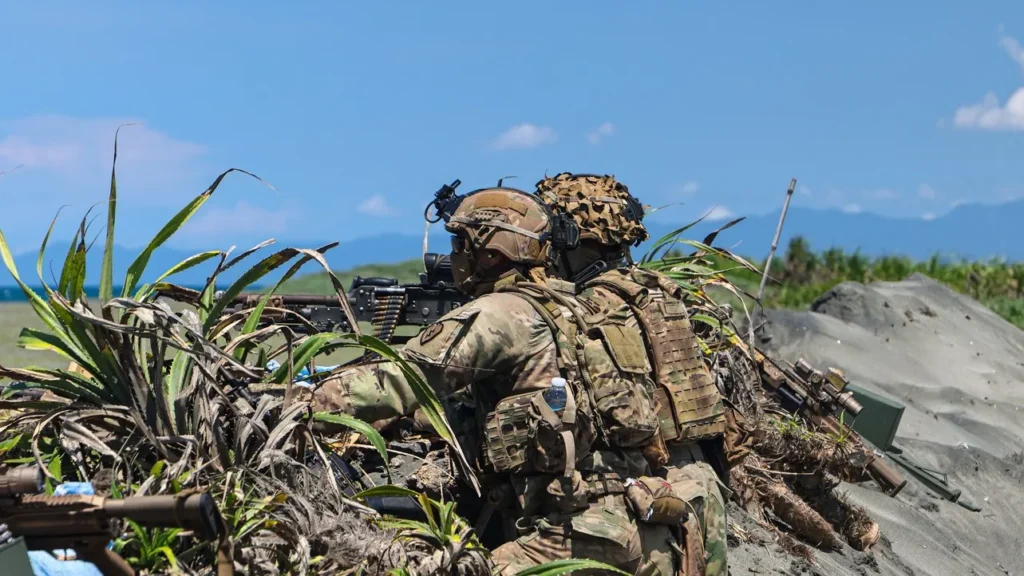
Australia has faced harassment by PLA forces involving dangerous maritime maneuvers, laser targeting in its northern exclusive economic zone, and the use of sonar and flares near Royal Australian Navy vessels. The Philippines has faced Chinese ships using high powered water cannons, military grade lasers, ramming, and attacks against Philippine vessels and personnel.
Asked whether the DCA was intended to strengthen deterrence in the Taiwan Strait, Teodoro said it would bolster deterrence in the West Philippine Sea and Philippine territory. The focus reflects the immediate pressure confronting Manila in waters it considers central to national security.
Australia began a historic peacetime shift toward a strategy of denial in 2023, which was most recently codified in its 2026 national defense strategy. The objective is to reshape the Australian Defense Force into an integrated and focused military able to deny access to Australia’s northern approaches.
Earlier this year, Australia created the Littoral Maneuver Group under the 18th Sustainment Brigade in Brisbane to operate farther north. Graham cautioned that Australia can deploy only small units and that sustaining mobile forces across the Philippines’ widely dispersed islands will remain difficult.
The DCA is expected to support talks concerning possible Australian investments in Philippine military infrastructure. Five Luzon bases were expected to receive funding for eight infrastructure projects, although officials said only one base had been discussed in detail.
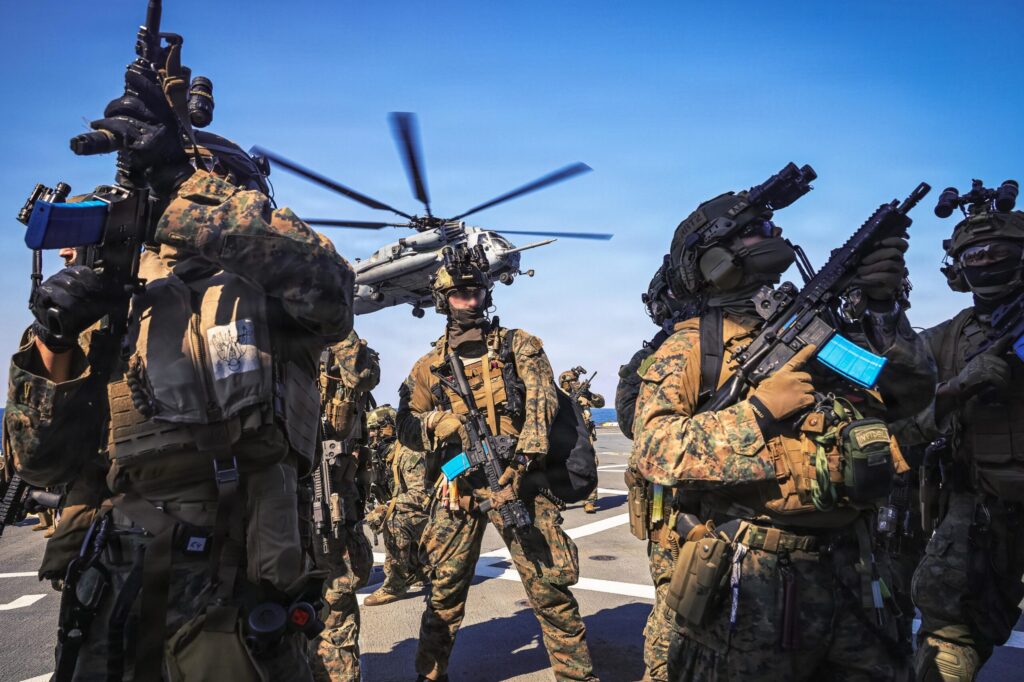
Teodoro previously said Australian arrangements would follow a different model from the Enhanced Defense Cooperation Agreement between the Philippines and the United States. Rather than emphasizing a large basing presence, Australia needs access to locations capable of sustaining forces during operations and contingencies.
Discussions have addressed logistics and sustainment for joint operations across remote and challenging terrain. Canberra and Manila also signed the Mutual Support Logistics Arrangement in 2021, covering fuel, supplies, transportation, logistics, and coordination for aircraft and vessels.
“The importance of logistics can’t be underestimated. It’s not just about getting your fighting force fighting. You’ve got to supply them with food, fuel, and ammunition during all of that,” Graham said.
Teodoro said Exercise ALON, the countries’ flagship biennial joint exercise, will be larger next year. First held in 2023, the exercise focuses on amphibious operations, while future cooperation will include additional aerial, land, cyber, and multidomain training.

The 2025 edition became Australia’s largest overseas military exercise of the year and demonstrated the Australian Defense Force projecting combat forces into the contested West Philippine Sea. Army training has also become a priority as both countries adapt their land forces for modern conflict.
Philippine Army spokesperson Col. Louie Dema-ala said exchanges since 2023 have focused on amphibious techniques, tactics, and procedures. Future exercises will include advanced training as the Philippine Army moves beyond its jungle and urban warfare expertise toward coastal defense.
Australia also stands to learn from Philippine experience in dense jungle terrain. “This is not just a one-way process. We can learn from the jungle warfare fighting skills, and I think that’s important to stress. No one can tell us about the Philippines better than the Filipinos,” Graham said.
Join the Discussion
COMMENTS POLICY: We have no tolerance for messages of violence, racism, vulgarity, obscenity or other such discourteous behavior. Thank you for contributing to a respectful and useful online dialogue.