Western special forces are descending beneath the hills of northern Italy, seeking the kind of battle training that modern warfare increasingly demands: survival and dominance underground.
The setting is a chilling remnant of Mussolini’s fascist regime—massive underground fuel cisterns now repurposed for elite military training.
Built in the 1930s under orders from the Italian dictator, these cavernous, bombproof chambers once stored aviation fuel for Italy’s war machine.
Today, they serve a new purpose: preparing NATO and allied special operations teams for tunnel warfare—the shadowy, claustrophobic battlegrounds of modern conflict in Gaza and Ukraine.
Here's What They're Not Telling You About Your Retirement
MORE NEWS: House Approves Historic $1.15 Trillion War Budget with Major Troop Pay Raise and Housing Changes
The training site, named La Carona, lies buried beneath woodland near Fornovo Taro outside Parma. Inside, five enormous cylindrical fuel tanks connect through over two kilometers of narrow tunnels.
Additional passageways once ferried fuel to nearby rail lines but now channel highly trained warriors through drills that simulate the world’s darkest battlefields.
“The Gaza conflict accelerated the use of places like this,” said one site manager, speaking on condition of anonymity.
“Even with all their technology, the Israelis learned fast that tunnel combat is a unique beast. You can’t rely on GPS, drones, or satellites when you’re underground.”
This Could Be the Most Important Video Gun Owners Watch All Year
Israel’s experience battling Hamas within the so-called Gaza Metro—a vast underground web of tunnels—proved how crucial subterranean warfare skills have become.
After those operations, Israel joined fifteen other nations in sending troops to train at La Carona, including forces from Belgium, France, Germany, Poland, Turkey, Greece, and the United States.
U.S. Army Green Berets have made use of the facility, according to local sources, alongside Italy’s specialized tunnel combat unit drawn from the elite Folgore paratrooper brigade.
For these warriors, the decades-old Italian structure provides something impossible to replicate in most modern training centers: realism.
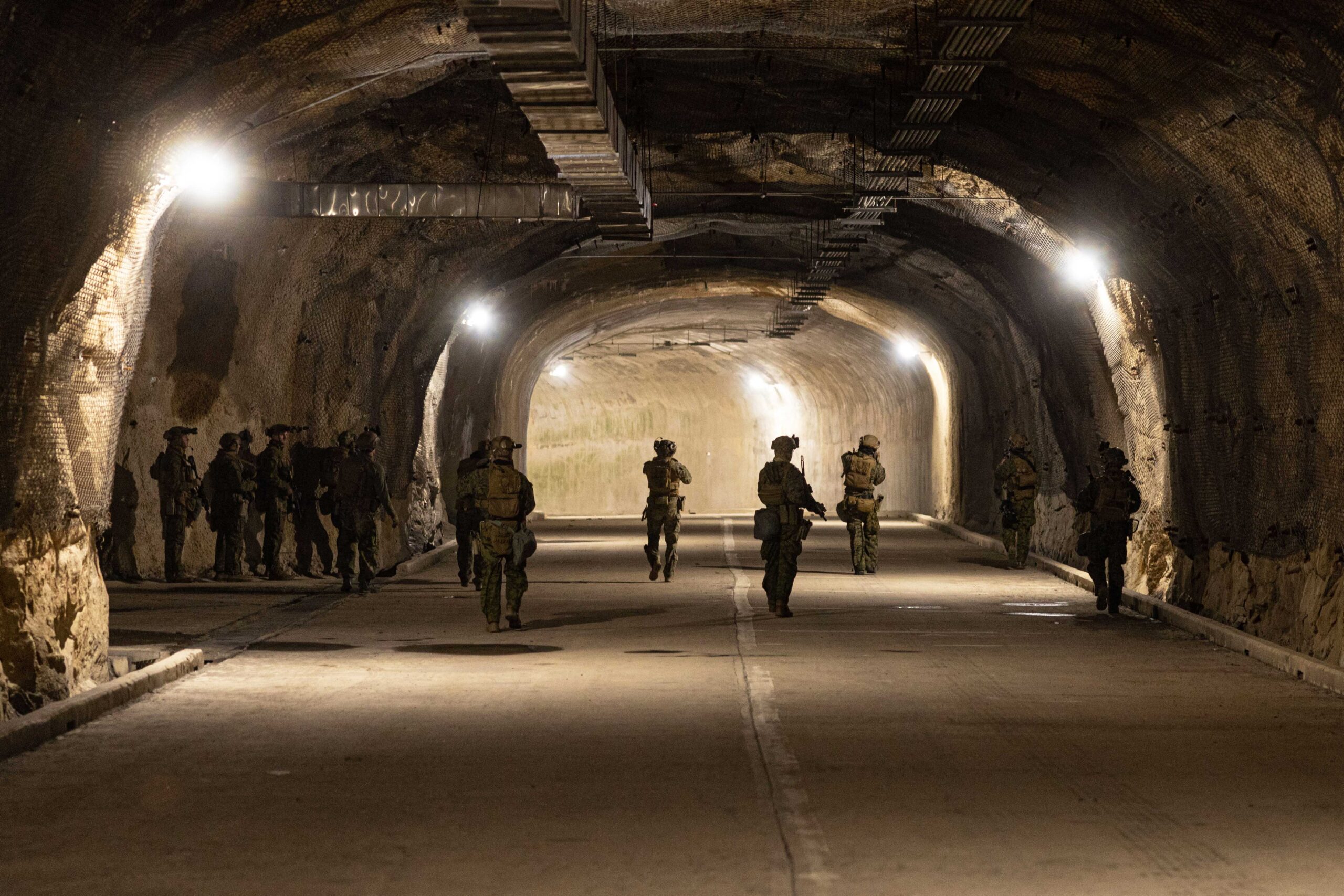
Each movement within the tunnels feels authentic. Soldiers navigate pitch darkness, minimal visibility, choking smoke, the sound of explosions generated by trainers—and the eerie silence that makes tunnel combat so unnerving. Communication systems are limited to simulate the real struggles underground fighters face.
Robot canines, drones capable of functioning without GPS, and trained military dogs are all used during drills to enhance realism. For operators, it’s about mastering confinement, learning to map subterranean terrain, and coordinating amid chaos.
“The key ability to learn here is how to map underground spaces,” the manager emphasized.
The need for this kind of warfare expertise is growing fast. In Ukraine, tunnel networks and basements became lifelines and traps alike during the brutal siege of Mariupol, where Ukrainian forces fought Russian troops inside the sprawling Azovstal steelworks.
That underground “fortress within a city” became a symbol of resistance—and an education in how vital tunnel tactics have become.
As the manager explained, urbanization is rewriting the battlefield. “Most of the world’s population now lives in an urban setting and war is increasingly fought in cities.
Underground combat can make the difference,” he said. With modern enemy forces exploiting tunnels for ambushes, troop concealment, and weapon caches, armies that ignore subterranean warfare risk being left behind.
La Carona itself is nearly indestructible. During World War II, it withstood 150 Allied bombing runs without taking a fatal hit. The concrete chambers, each 20 meters wide and seven meters high, were engineered to defy even direct attacks.
For decades, after the war, the Italian Air Force continued to use the site to store aviation fuel until it was drained and abandoned in 2000. Then, in 2020, private owners acquired it and recognized its potential for an entirely different mission—training the warriors of the 21st century.
What started as a relic of fascist-era engineering has turned into an international hub for high-end underground warfare education.
Unlike sterile training laboratories or computer models, La Carona allows soldiers to physically adapt—handling darkness, constrained movement, and unpredictable terrain. The lessons learned in its cold, damp chambers could one day decide life or death beneath modern war zones.
For Western special operations, preparing for tunnel warfare isn’t optional anymore—it’s strategic necessity.
As far-left policy makers debate military priorities or fixate on environmental wokeism, these elite troops are dealing with the harsh reality that future battlefields may be fought entirely underground.
From the shadow of Mussolini’s bunkers rises a new kind of readiness—one built not on ideology, but on hard, gritty survival.
La Carona may have been born of the fascist era, but now it’s shaping the warriors of freedom’s frontline, ensuring America’s allies and special operators have the edge when the fight moves beneath the surface.
Join the Discussion
COMMENTS POLICY: We have no tolerance for messages of violence, racism, vulgarity, obscenity or other such discourteous behavior. Thank you for contributing to a respectful and useful online dialogue.